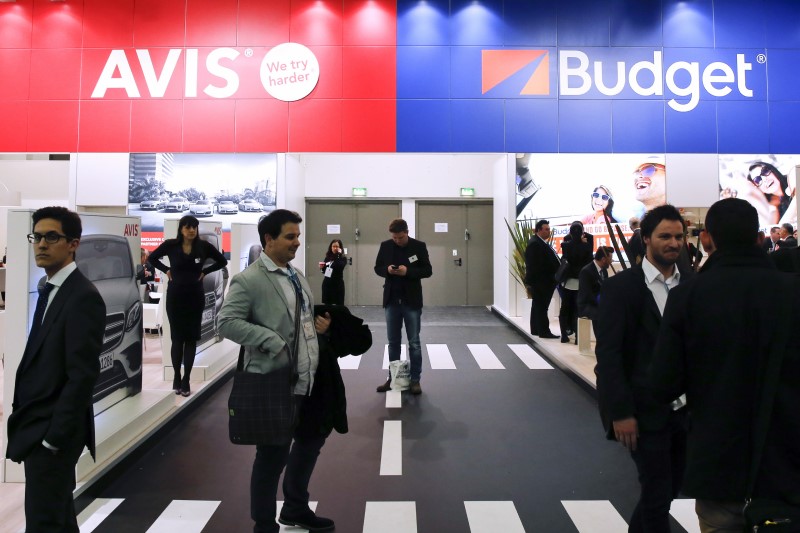
Avis Budget launched an at-the-market equity offering to sell up to 5.0 million shares; the stock fell 3.3% on the announcement. The company agreed an Equity Distribution Agreement with ten sales agents including BofA, J.P. Morgan and Morgan Stanley and will pay up to a 2.00% commission; proceeds are for general corporate purposes. Avis filed a Form S-3ASR shelf registration and a prospectus supplement; it has no obligation to sell shares and may suspend the offering at any time.
The ATM program is a classic corporate-liquidity lever that lowers the hurdle for incremental equity issuance and therefore increases the probability of incremental float rather than an outright strategic capital raise. Practically, even a low-single-digit percent expansion in share count can compress per-share metrics for a company trading at modest multiple — the market is front-running that dilution and re-pricing optionality into the stock within days.
Second-order winners and losers are non-obvious: firms in the used-car remarketing chain (auction platforms, finance arms that buy fleets prior to resale) will see more supply into wholesale channels if the issuer monetizes fleet assets or liquidates off-lease vehicles; that could pressure used-vehicle prices over the next 1–4 quarters and widen loss reserves for captive finance arms. Conversely, banks and investment banks that underwrote the program receive fee income and create trading flow, but their exposure is fee-driven and reputational rather than balance-sheet risk.
Key catalysts that will drive price action are binary and time-bound: visible executions under the shelf (days–weeks), quarterly earnings and guidance that show the use of proceeds (quarter), and used-car price indices (IAA/KAR) that will transmit margin pressure over 2–6 quarters. Tail risks include rapid, large-block sales that trigger stop-loss chains and a credit-stretch scenario if refinancing windows tighten; a reversal would look like a clear reduction in sell-side issuance or a targeted buyback program funded by operational cash within 1–3 quarters.
A contrarian read is that the market reaction is likely overbaked in the short run because the company retains full discretion to delay or limit issuance; absent imminent covenant stress, an ATM is cheap insurance. If travel demand and used-car pricing remain supportive, downside is capped and any modest sell-off could create a tactical buying opportunity within weeks rather than months.
AI-powered research, real-time alerts, and portfolio analytics for institutional investors.
Request DemoOverall Sentiment
mildly negative
Sentiment Score
-0.25
Ticker Sentiment
