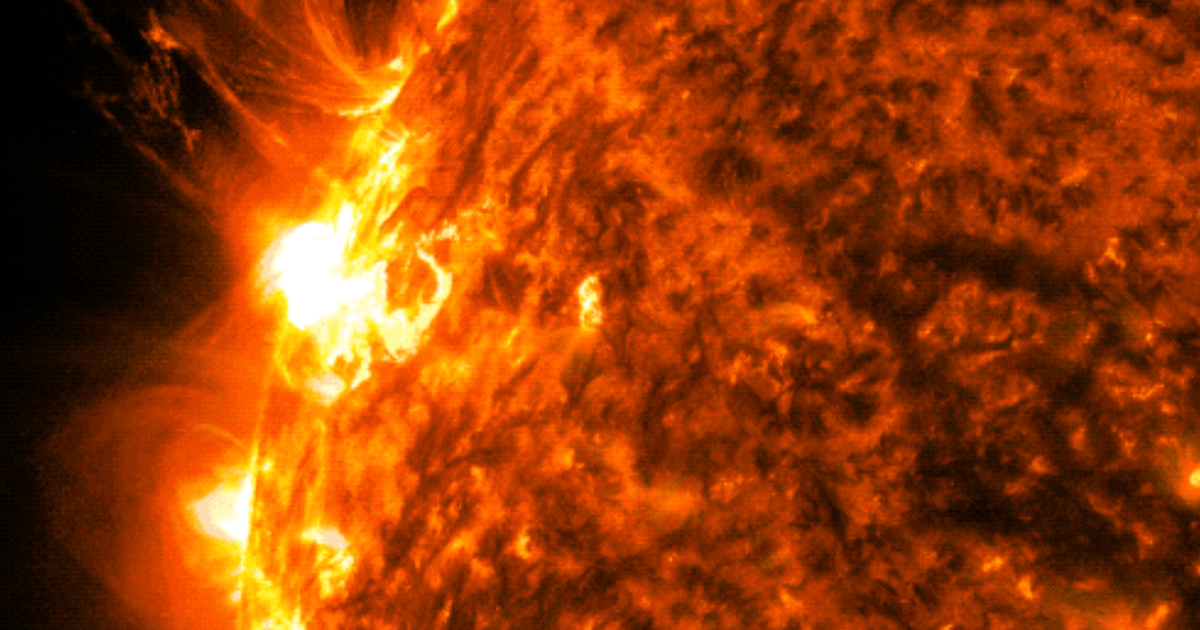
A strong X1.9 solar flare from sunspot region AR4299 peaked at 9:49 p.m. EST on Nov. 30 and produced a coronal mass ejection (CME), prompting NOAA to issue a geomagnetic storm watch for Dec. 4 (with possible arrival as early as Dec. 3). The event briefly disrupted radio communications across Australia and parts of southeast Asia, and while the CME is not expected to directly hit Earth NOAA warns of manageable effects to technological infrastructure—potential minor impacts to power grids, navigation signals and satellites; aurora could be visible across northern U.S. states. The forecast retains some uncertainty as the active region rotates to face Earth, warranting monitoring by utilities, satellite operators and transportation firms.
Market structure: Near-term winners are vendors of hardened space, aviation and grid hardware (aerospace & defense primes, transformer/UPS manufacturers) and reinsurers; losers are carriers, satellite comm operators and regional utilities in affected geographies if outages occur. Pricing power for specialist vendors can tick up quickly after confirmed equipment damage — expect discretionary capex cycles (quarterly to yearly) to reprice suppliers by +5–15% in tradeable windows, while service providers face revenue interruptions measured in days to weeks.
Risk assessment: Immediate risk (Dec 3–5) is communication/navigation blips; watch NOAA Kp index crossing >=5 (G1) and especially >=7 (G3) as a 1–7 day trigger for operational disruption. Tail risks (low probability, high impact) include transformer damage leading to multi-week blackouts; assign subjective probability 1–5% for that outcome from this event but note second-order impacts on commodities (spot power/gas spikes) and insurers’ loss accruals over months.
Trade implications: Execute short-dated, event-driven trades around confirmed geomagnetic impact windows: (a) protective long exposure to defense/space hardware on 3–12 month view; (b) tactical put spreads on airlines/air traffic sensitive names if NOAA upgrades to G3 or direct outage reports emerge; (c) volatility trades — sell near-term IV in carriers if the watch expires without material impact. Monitor Kp, NOAA alerts, and initial outage tweets within 0–72 hours as trade triggers.
Contrarian angles: Consensus will underprice hardware demand from even modest damage — markets typically shrug off watches but re-rate after visible asset damage; conversely, implied vols in airlines often overshoot on warnings and mean-revert if no event (>30% IV compression possible in 3–7 days). Historical parallels (March 1989/2003 minor storms) show localized outages create concentrated, tradable winners in vendors rather than broad market moves.
AI-powered research, real-time alerts, and portfolio analytics for institutional investors.
Request DemoOverall Sentiment
neutral
Sentiment Score
-0.10
