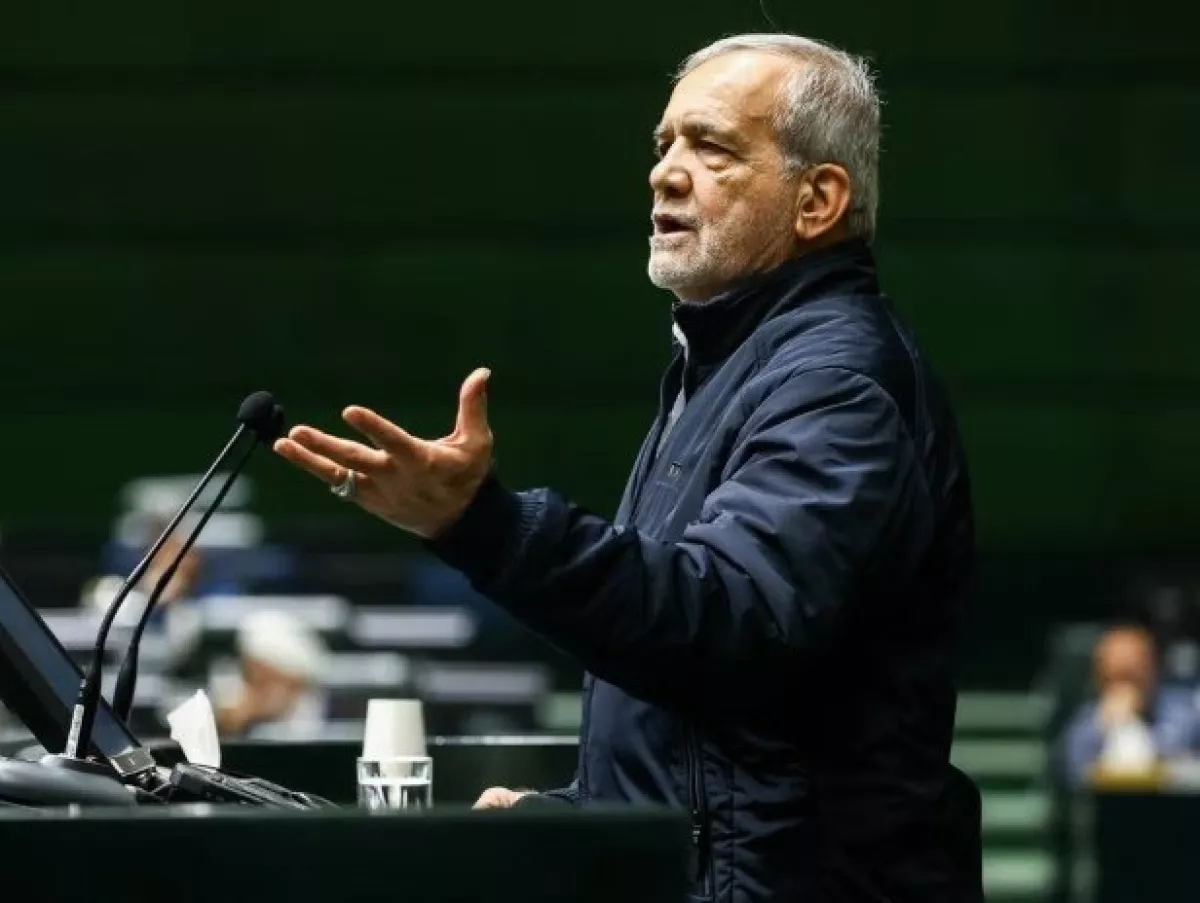
Iranian President Masoud Pezeshkian reportedly condemned the IRGC’s May 4 missile and drone strikes as "completely irresponsible" and "madness," warning of irreversible consequences and pushing for an urgent halt to further operations. The internal split comes amid fragile ceasefire mediation, contested reporting on Strait of Hormuz shipping, and heightened risk of broader U.S.-Iran confrontation that could threaten Gulf energy and trade flows. The article points to elevated geopolitical instability and potential retaliation against key infrastructure.
The key market signal is not the headline escalation itself, but evidence that Iran’s coercive capability may be becoming less centralized and therefore less predictable. That raises the probability of a short-lived, high-conviction repricing in Gulf risk premia: shipping insurance, tanker rates, and prompt energy volatility can gap on any “rogue” IRGC action even if broader state policy remains nominally restrained. For energy, the asymmetry is in the tail — a low-probability strike on export or port infrastructure would create an immediate supply shock, but the more durable effect is a sustained higher geopolitical floor for Brent and refined products if traders conclude Tehran cannot reliably self-deter. Second-order beneficiaries are the obvious physical-risk hedges: tanker owners, LNG/shipping logistics, and defense primes with missile defense exposure. The less obvious loser is any asset whose economics depend on a stable Strait of Hormuz risk discount, including regional transport, port operators, and airlines with Middle East exposure. If the internal split is real, it also weakens Iran’s bargaining position in negotiations: fragmented command structures typically produce more frequent but smaller provocations, which are harder for markets to price and can keep implied vol elevated longer than spot prices remain elevated. The market may be underestimating timing. This is a days-to-weeks catalyst for shipping/energy vol, but a months-long catalyst for persistent risk premium if the episode convinces counterparties that any ceasefire is tactical rather than durable. The reversal condition is not diplomacy headlines alone; it is observable discipline in maritime behavior and a multi-week absence of disruptive incidents. Until then, selling vol into Gulf headline risk looks premature, while owning convexity is attractive because the downside is limited and the upside on a single infrastructure event is large.
AI-powered research, real-time alerts, and portfolio analytics for institutional investors.
Overall Sentiment
strongly negative
Sentiment Score
-0.78
