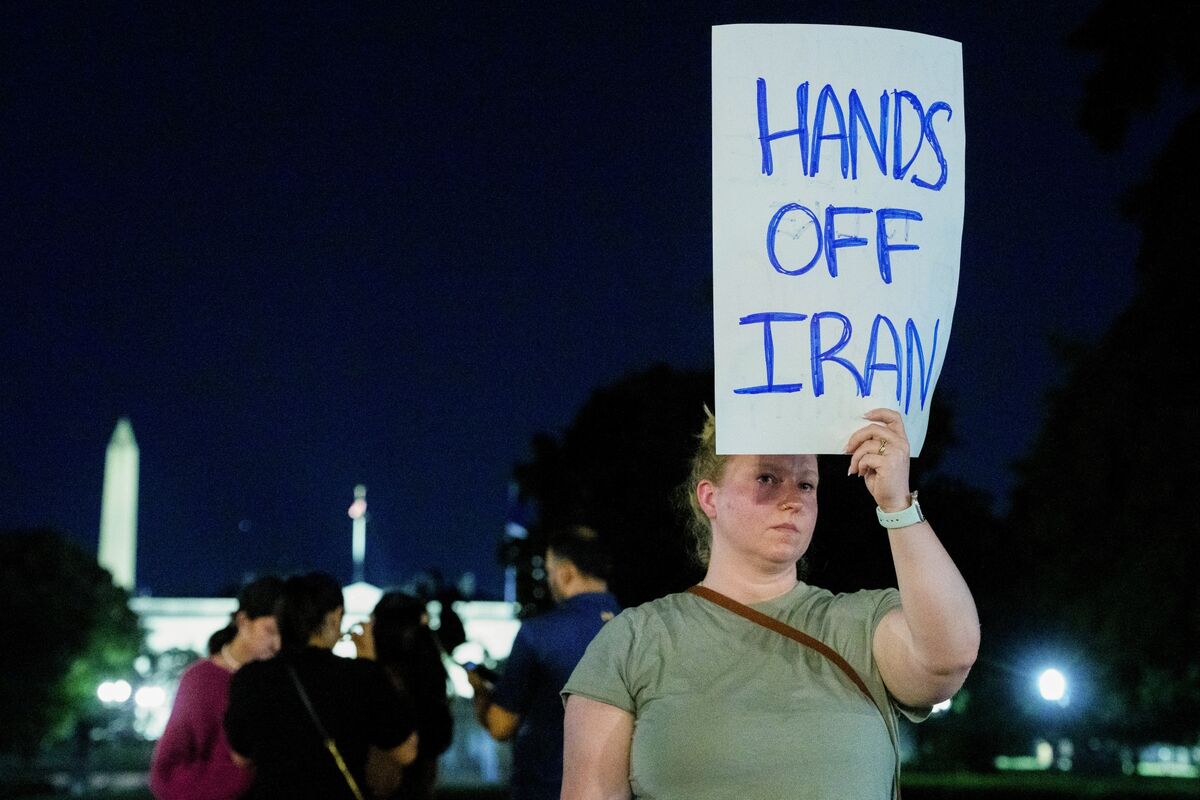
Following US strikes on Iranian nuclear facilities, the future hinges on Iran's response and the extent of damage to the Fordow site, presenting two potential paths forward. The first involves Iran carefully avoiding direct military escalation while rebuilding its nuclear program, potentially leading to negotiations. The second, favored by Netanyahu, aims to destabilize the Khamenei regime and install a pro-Western government, though the article suggests this is less likely and carries significant risks of regional chaos, further complicated by the unknown status of Iran's enriched uranium stockpiles.
The recent US airstrike on Iran's Fordow nuclear facility has created a highly volatile and uncertain geopolitical landscape, with the market impact score of 0.8 reflecting significant potential for disruption. The outcome hinges on two unknown variables: the actual extent of damage to Iran's nuclear infrastructure and the subsequent strategic response from Tehran's leadership. One potential path involves a pragmatic de-escalation, where a severely damaged program forces Iran to avoid direct military confrontation, leading to renewed negotiations. The alternative, a more aggressive scenario, envisions the conflict destabilizing the regime, a goal favored by Israel. However, the article posits this is a high-risk strategy, drawing parallels to the disastrous 2003 Iraq invasion but noting key differences, such as the verified nature of Iran's advanced nuclear program—which has enriched uranium to 60%—and its greater capacity to disrupt the global economy. A critical risk has emerged from the loss of IAEA surveillance over Iran's enriched uranium stockpiles, which were moved before the strike, creating a dangerous and unmonitored proliferation threat. The prospect of a stable, pro-Western regime change is deemed low; a more likely internal shift would involve the Islamic Revolutionary Guard Corps (IRGC), with unpredictable consequences that could range from de-escalation to a hardline entrenchment or even state collapse, amplifying regional instability.
AI-powered research, real-time alerts, and portfolio analytics for institutional investors.
Overall Sentiment
moderately negative
Sentiment Score
-0.50
