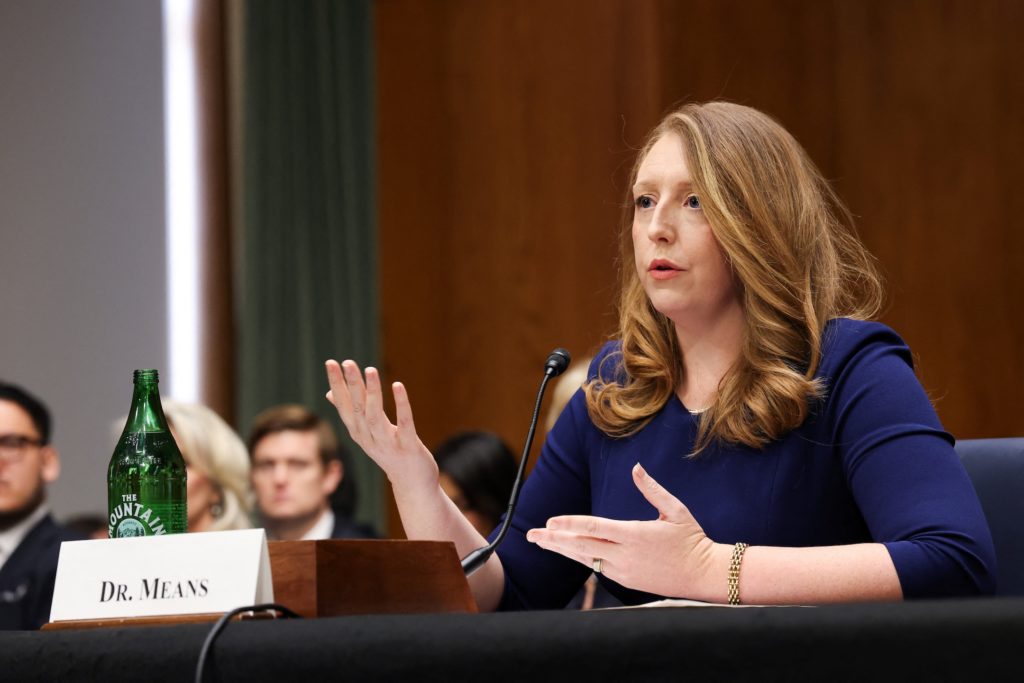
President's surgeon general nominee Dr. Casey Means, a wellness influencer allied with HHS Secretary Robert F. Kennedy Jr., faced a contentious Senate confirmation hearing over past comments on vaccines, birth control and raw milk; she acknowledged support for vaccination but declined firm public recommendations and does not hold an active medical license or completed residency. Democrats opposed her nomination on safety and scientific-credibility grounds, but Republican Senate control makes confirmation likely, raising the prospect that her views could influence federal public-health messaging and regulatory priorities.
Market Structure: A Surgeon General nominee skeptical of standard vaccination messaging and vocal on ultra‑processed foods shifts regulatory risk onto large CPGs (KHC, GIS, MDLZ, PEP, KO) and agrochemical firms (BAYRY, DE) while creating tailwinds for organic/natural food suppliers and wellness brands (HAIN, COST, KR). Expect incremental margin pressure from forced reformulation and advertising restrictions: model a 1–3% EBITDA hit for exposed snack/beverage teams over 12–24 months if federal/state ad limits materialize. Vaccine OEMs (PFE, MRNA) face reputational noise but <1–2% top‑line risk absent broader policy moves.
Risk Assessment: Tail risks include federal campaigns discouraging childhood vaccination or a ban on junk‑food TV ads; low probability but high impact for PEP/KO ad models and for Bayer if pesticide curbs gain traction. Timeline: immediate (days) — confirmation vote volatility; short (1–3 months) — HHS memos and state legislative copies; long (6–24 months) — rulemaking, litigation, consumer behavior shifts. Hidden dependency: successful policy requires alignment with HHS leadership and DOJ/FDA — watch funding lines in FY27 budget and state preemption fights.
Trade Implications: Tactical trades should be small, event‑driven and hedged: lean long selective organic/retail exposure (COST, KR, HAIN) and hedge with short positions in marketing‑dependent CPGs (KHC, MDLZ) via put spreads. Use options to limit downside: buy 3–6 month put spreads on KHC and BAYRY sized to 1–2% portfolio risk; consider short dated strangles on PEP/KO around confirmation to monetize elevated IV spikes. Rotate into staples defensives (PG) and retailers with private‑label/organic capability if regulatory language appears within 90 days.
Contrarian Angles: Consensus treats this as reputational noise — that underestimates concentrated regulatory action (ad bans + school vaccine guidance) that can compress multiples in marketing‑heavy CPGs by 5–15% if enacted. Historical parallel: FDA nutrition guidance shifts (2010s) produced multiquarter re‑ratings for snack makers; similar re‑rating could occur here but is binary. Unintended consequence: accelerated reformulation/ad spend could benefit large multinationals with R&D scale (PG, PEP) — consider pair trades long PG, short KHC if clarity emerges.
AI-powered research, real-time alerts, and portfolio analytics for institutional investors.
Request DemoOverall Sentiment
neutral
Sentiment Score
0.00
