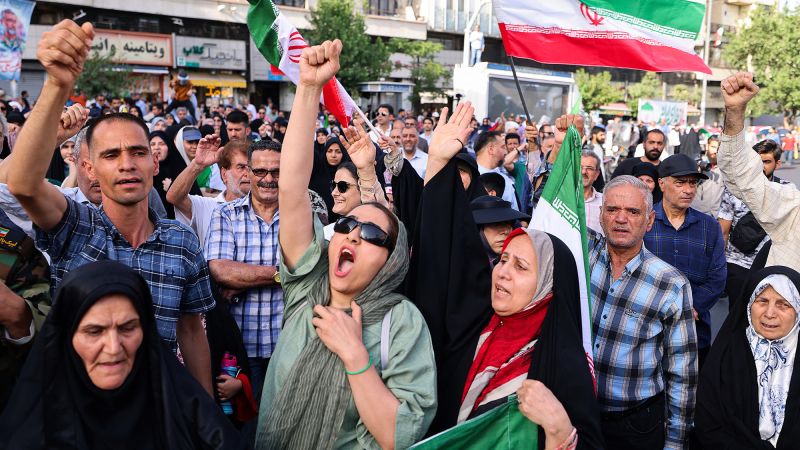
US President Trump ordered direct strikes on three key Iranian nuclear facilities, including Fordow and Natanz, igniting widespread anger and a surge of nationalism across Iran. Large protests in Tehran unified even regime critics behind the Supreme Leader, with many urging strong retaliation, including targeting US bases and potentially closing the critical Strait of Hormuz. While the strikes are seen by some as potentially fostering Iranian nationalism and reshaping US-Iran relations, others suggest the regime's credibility may be challenged if it fails to deliver a forceful response, potentially weakening its domestic support.
Direct US military strikes on three key Iranian nuclear facilities, including Fordow and Natanz, have precipitated a significant escalation in geopolitical risk, underscored by a high market impact score of 0.85 and a strongly negative sentiment reading. The primary market concern stems from explicit calls within Iran for retaliation, including the potential closure of the Strait of Hormuz, a critical chokepoint for one-third of global seaborne oil trade. This threat introduces a substantial risk of an oil supply shock. The domestic political situation in Iran presents a complex variable; while the attacks appear to have unified even regime critics in a wave of nationalism, they also place the government in a precarious position. A failure to mount a credible response could severely damage its legitimacy among supporters, creating a binary risk scenario for markets. The long-term implications, as noted by an academic source, point towards a potential strategic pivot by Iran towards Russia and China and a fundamental shift in its defense and nuclear posture, signaling prolonged regional instability.
AI-powered research, real-time alerts, and portfolio analytics for institutional investors.
Overall Sentiment
strongly negative
Sentiment Score
-0.75
