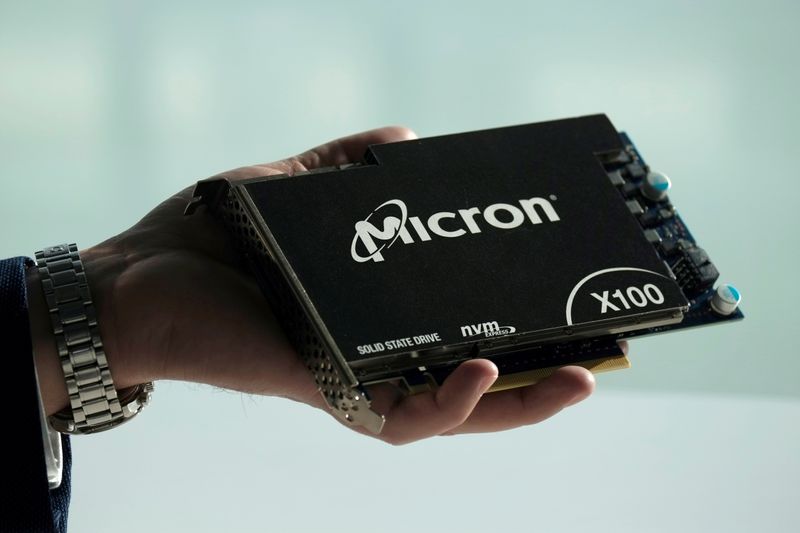
UBS warns global stocks could fall 30% in an extended conflict scenario. Micron set records in fiscal Q2 for revenue, gross margin, EPS and free cash flow but shares fell ~1% after capex guidance came in above consensus. Five Below beat Q4 EPS by $0.35 at $4.31 and revenue of $1.73B vs $1.70B consensus, while DLocal reported revenue of $337.9M vs $293.59M and record total payment volume of $13.1B (+70% YoY). Rocket Lab gained after a Clear Street upgrade and a $190M contract for 20 HASTE launches.
An extended geopolitical shock would re-price risk assets unevenly: defense, sovereign-debt resilience, and select industrials tied to government contracts would see permanent risk-premia compression relative to growth tech, which would suffer larger liquidity-driven mark-downs over 0–6 months. For securities exposed to cyclical capital spending in semiconductors and space launch, the path of realized margins will be determined not by near-term revenue prints but by the cadence of capacity coming online and the timing of government program payments; that creates a 6–24 month window where supply-driven margin dilution can outpace demand growth. Payments platforms with rapid TPV expansion enjoy durable network effects, but that growth amplifies three second-order vulnerabilities: settlement/counterparty credit, cross‑border FX volatility, and regulatory friction in onshore markets. Over 3–18 months, those risks can flip revenue growth into margin compression if chargeback rates, FX hedging costs, or local compliance requirements rise. Conversely, small-format retail merchants and adtech ecosystems will be quickest to show consumer demand inflection — they are high-frequency indicators for discretionary spend and thus act as an early signal for macro regime shifts. Because space/launch and semiconductor equipment/service chains are funded very differently (contract milestone vs. capital-led), tradeable windows diverge: expect binary moves around launch manifest cadence and wafer-equipment shipments. Short-term volatility drivers are Fed decisions and China activity; medium-term drivers are realized memory ASPs and delivery reliability on government-backed launch contracts. Position sizing should reflect asymmetric binary outcomes: insurance (options) for the binary events and directional exposure for persistent trend changes.
AI-powered research, real-time alerts, and portfolio analytics for institutional investors.
Overall Sentiment
mixed
Sentiment Score
0.05
Ticker Sentiment
