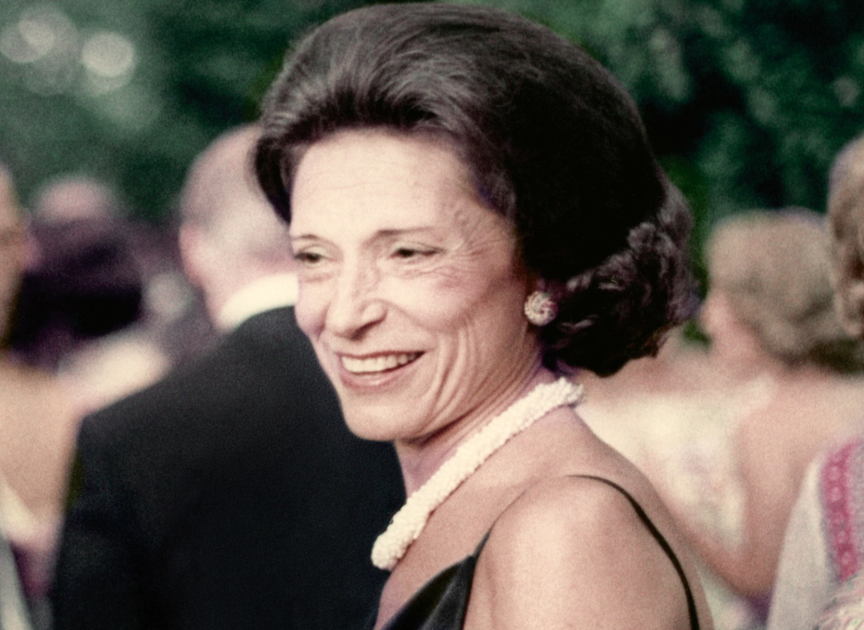
Doris Fisher, cofounder of Gap Inc. and the firm’s original brand architect, has died at age 94. The obituary highlights her role in building Gap into a $15.4 billion-sales retailer with more than 3,500 stores, along with her philanthropic impact through more than $70 million in donations to KIPP and a major SFMoMA art loan. The news is primarily legacy-focused and should have limited direct market impact on Gap shares.
This is not a near-term operating event for GAP; it is a governance and brand-continuity signal. The market already treats family-led legacy retailers as vulnerable to key-person drift, and the Fisher family’s continued control removes one of the larger sources of strategic uncertainty: capital allocation won’t be forced into a sale, breakup, or activist-driven reset in the next 12 months. That stabilizes the base case, but it also caps takeover optionality, which is the main hidden upside many investors would otherwise ascribe to a simplification story. The second-order effect is on ESG/reputation and talent retention more than on same-store sales. The company’s ability to recruit merchandising and product talent depends on whether it can translate the founder-era “mission” into a modern brand point of view; that matters because GAP’s multiple is largely a trust premium on turnaround credibility. If leadership can use this moment to accelerate creator/mentorship initiatives and sharpen cultural relevance, it may modestly support brand heat into the back-to-school and holiday windows; if not, the memorial coverage fades quickly and the stock reverts to being judged on traffic and margin execution. Contrarianly, the risk is that investors overread a sentimental catalyst and underestimate how little it changes the core operating math. The real swing factor over the next 2-3 quarters remains promotional intensity and inventory discipline, not founder legacy. Any post-announcement strength is therefore more likely a tradable event move than a durable rerating unless management couples it with a concrete merchandising or capital return surprise. From a competitive-dynamics standpoint, the broader winner is the small set of apparel names that can credibly own “heritage + modern relevance” without legacy overhead. For GAP, the opportunity is to use the legacy narrative to deepen customer affinity in women’s basics and denim, but the danger is complacency: a nostalgic brand story can mask weak product cycle momentum until markdowns show up in gross margin.
AI-powered research, real-time alerts, and portfolio analytics for institutional investors.
Request DemoOverall Sentiment
neutral
Sentiment Score
0.05
Ticker Sentiment
