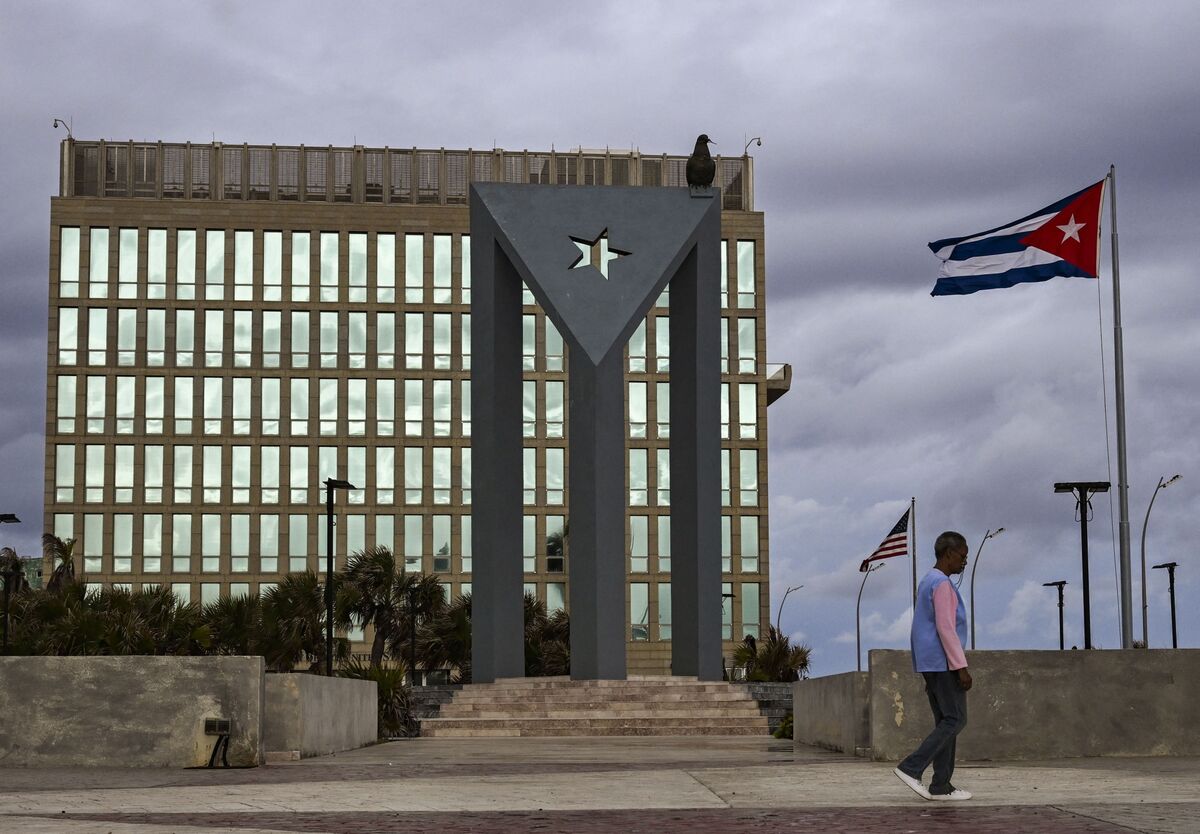
President Trump said he believes he’ll have the “honor of taking Cuba,” raising the prospect of heightened U.S. pressure as Cuba faces major blackouts and a squeeze on its oil supply. The comments and worsening energy/utility conditions put the regime’s survival into question and increase geopolitical risk for the region. Market impact is likely limited but could trigger risk-off moves in emerging-market and energy-exposed assets while warranting monitoring for sanctions or supply disruptions.
Rhetoric and sanctions around Cuba create an outsized knock-on for regional energy trade and risk premia rather than an immediate land-grab macroshock. Removing a Cuba-sized marginal oil inflow (small in absolute barrels but concentrated in short-haul tanker routes and barter arrangements) forces incremental barrels into longer-haul markets or out of the system, tightening Atlantic basin balances within 4–12 weeks and widening local freight and refining spreads by a figure similar to past Red Sea/Libya disruptions (think high-single-digit $/bbl on spreads and 10–30% on short-haul freight). Insurance/reinsurance and shipowners take a structural margin hit first, then refiners and traders capture the residual economics.
Second-order winners include US coastal refiners and merchant traders able to source alternative crude and capture wider crack spreads; losers are small Caribbean bunkering/refining operators, PDVSA-linked counterparties, and regional FX/sovereign credit where remittance and tourism flows amplify balance-of-payments strain. Politically, expect migration flows and Florida electoral pressure to shorten policymakers’ tolerance for prolonged instability — that introduces binary intervention or waiver catalysts on a 1–6 month horizon. A reversal scenario (diplomatic waivers, Russian/Venezuelan substitution) can normalize spreads quickly in 30–90 days, but geopolitical escalation (direct Russian involvement, proxy arms shipments) lengthens disruption to years.
Valuation-wise, markets underprice concentrated logistics risk: freight/insurance indices and short-haul crude buffers are thin and can gap higher with modest flow changes. That makes short-duration, convex instruments (options on energy/refining and insurance-linked exposures) more efficient than outright directional oil longs. Monitor: tanker AIS deviations, PDVSA liftings, and Florida political signals as high-frequency catalysts; watch longer-dated CDS moves in Venezuela/Nicaragua as leading indicators of substitution risk.
AI-powered research, real-time alerts, and portfolio analytics for institutional investors.
Request DemoOverall Sentiment
mildly negative
Sentiment Score
-0.20
