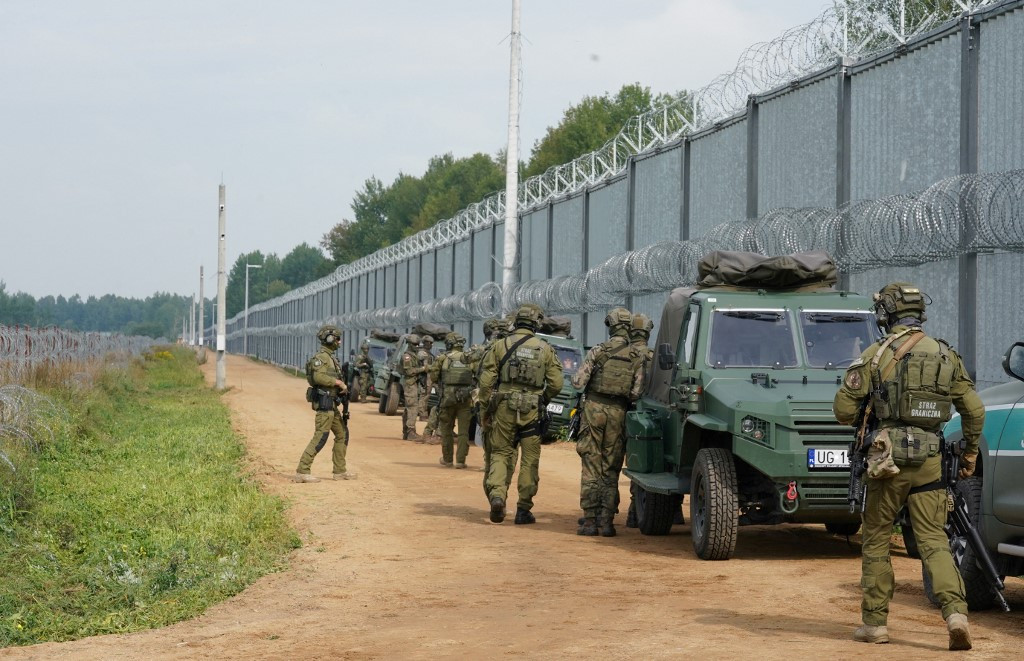
Poland's closure of its border with Belarus, citing security concerns ahead of upcoming joint military exercises and a recent drone incursion, has frozen a critical €25 billion annual rail freight route for Chinese exports to the EU. This disruption impacts 90% of China-EU rail traffic, significantly raising logistics costs for e-commerce platforms and other goods due to the lack of viable alternatives. Consequently, China is pressuring Poland to reopen the link, with Foreign Minister Wang Yi visiting Warsaw for high-level talks to address the economic and geopolitical ramifications.
Poland's decision to close its border with Belarus has effectively severed a critical artery for EU-China trade, freezing a rail freight route valued at €25 billion annually. The impact is significant, as 90% of all rail freight between the two economic blocs transits through Poland. This disruption occurs amidst a period of explosive growth for the route, which saw freight volumes increase 10.6% and cargo value surge 84.9% in 2024, driven largely by booming European demand for Chinese e-commerce platforms like Temu and Shein. The closure forces a difficult trade-off between more expensive air freight, which could absorb up to 30% of parcels, and substantially slower sea transport, threatening both logistics costs and delivery timelines. The situation is now a point of high-level geopolitical tension, with China's Foreign Minister scheduled to meet his Polish counterpart to pressure for a reopening. This diplomatic effort is complicated by Poland's security justifications, including recent Russian drone incursions, and simultaneous U.S. pressure on the EU to curb trade with China, placing Poland at the center of competing global interests.
AI-powered research, real-time alerts, and portfolio analytics for institutional investors.
Overall Sentiment
moderately negative
Sentiment Score
-0.55
