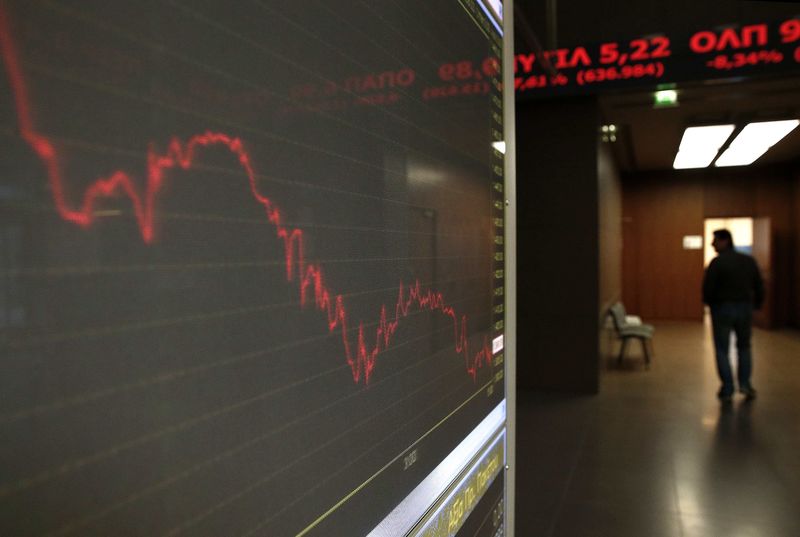
Athens General Composite rose 2.90% on the session; top gainers included Intralot +8.65% to 0.92 and Viohalco +7.48% to 12.64, while Allwyn fell 1.58% to a three‑year low of 13.09. Gold futures (June) jumped 1.65% to $4,632.60/oz, Brent June rose 0.47% to $107.89/bbl and WTI (May) climbed 1.16% to $104.07/bbl. EUR/USD strengthened 0.51% to 1.15 and the US Dollar Index futures slipped 0.40% to 99.95. The article also flags geopolitical risk — a Trump comment on Hormuz and reported White House discussions on an Iran exit — which likely underpins the commodity moves and raises near‑term volatility risk.
The risk of a deliberate or contested control point in the Strait of Hormuz raises a persistent shipping/insurance premium that is not a one-off price shock — it effectively creates a higher marginal cost of moving oil and refined products for as long as transit risk is elevated. Rerouting around the Cape of Good Hope increases voyage time by ~8–12 days and fuel/charter costs by a low-double-digit percent per voyage, which for spot VLCC/Tanker markets can translate into 20–50% upside in freight rates before crude spot prices fully reflect the added friction.
Second-order winners are businesses owning physical shipping capacity and short-duration producers with spare takeaway optionality; losers are high-frequency travel/leisure operators and airlines where fuel is a non-hedgeable portion of near-term unit costs and insurance surcharges hit margins immediately. Banks in tourism-heavy economies face a medium-term credit test as operating profits of small-to-mid travel firms compress; this can surface as higher NPL formation in 6–12 months if elevated costs persist.
Catalysts that will determine directionality are binary and time-staggered: immediate headlines and military escalation can spike Brent/WTI within days, while a coordinated diplomatic de-escalation or reserve release typically reverts the risk premium over 4–12 weeks. The contrarian case is that markets are pricing a permanent regime shift when in fact conventional supply-response (US shale restarts, strategic stock releases, insurance rate normalization) can erode the premium over 2–3 months — trade sizing and option selection should assume multi-state outcomes with convex payoffs rather than linear directional exposure.
AI-powered research, real-time alerts, and portfolio analytics for institutional investors.
Request DemoOverall Sentiment
mildly positive
Sentiment Score
0.12
