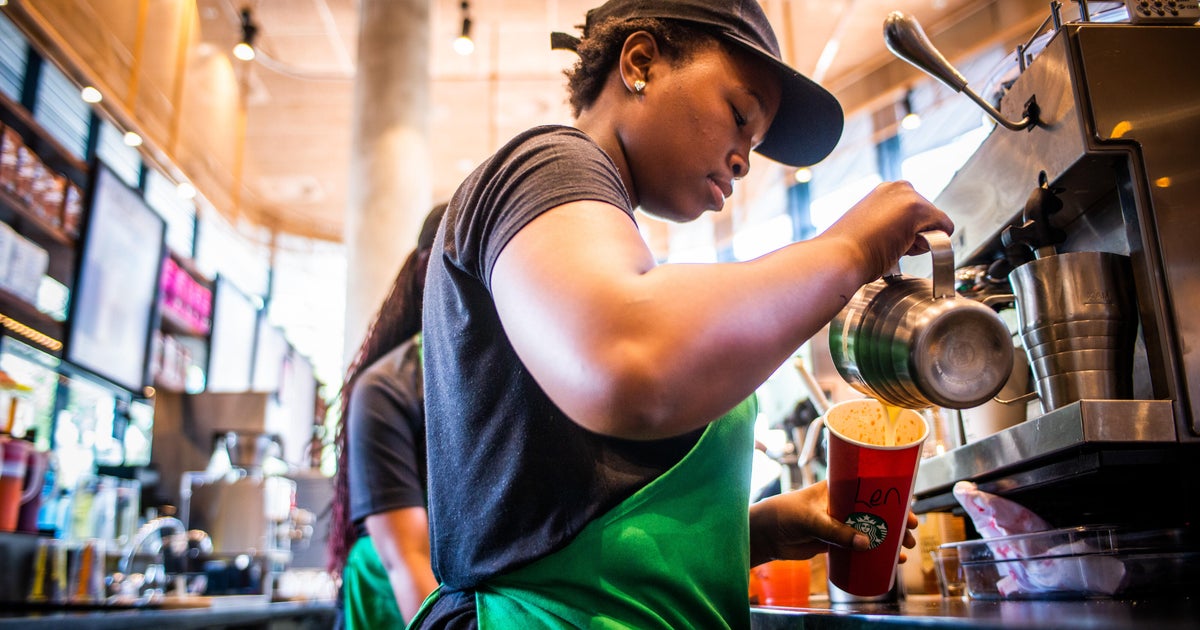
Starbucks will offer baristas up to $1,200 annually ($300 per quarter) in performance-linked bonuses and move to weekly pay beginning in July to boost sales and customer service. Same-store sales rose 4% in the most recent quarter, and the company expects tipping changes in its app and at-register scans could raise barista tips by 5%–8%. The incentive and pay changes support CEO Brian Niccol’s 'Back to Starbucks' turnaround and are likely to modestly improve operational metrics and investor sentiment.
Linking individual-store outcomes to pay creates a lever that shifts labor from a fixed to a semi-variable cost — if executed cleanly this reduces hourly labor rigidity and can buy ~30–60 bps of operating margin for every 2–3 percentage-point lift in transactions by cutting overtime and churn-related hiring/training costs. The mechanical benefit is faster throughput and higher conversion on peak windows; expect the P&L impact to manifest over 2–4 quarters as learning curves and managerial scorecards roll out across regions.
Second-order winners include digital payments and POS partners because any sustained increase in mobile app adoption raises payment volume and ancillary fees; conversely, small independents with thin margins and fewer incentives will be most exposed to share loss in high-traffic urban corridors. On the supply side, a skew toward higher-margin beverage mix increases sensitivity to specialty-bean and dairy input costs — a ~1–2% lift in premium beverage mix can raise commodity pass-through and hedge needs within a fiscal year.
Key reversal risks are behavioral and governance: metric gaming, intra-store tip disputes, or unionization friction could erode customer experience and reverse any revenue gains inside a single quarter. Watch 2–6 quarter catalysts — regional rollout performance, same-store transaction trends, and any regulatory or labor headlines — as they will determine whether this is a durable operating lever or a short-lived sales bump.
AI-powered research, real-time alerts, and portfolio analytics for institutional investors.
Overall Sentiment
mildly positive
Sentiment Score
0.25
Ticker Sentiment
