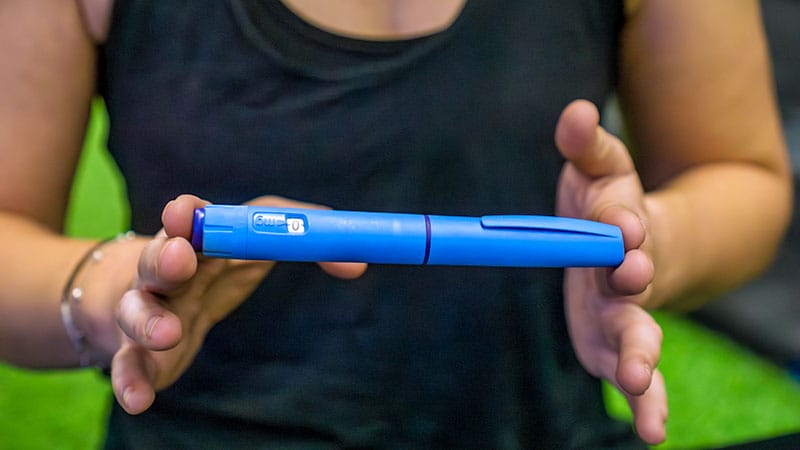
A retrospective case series of 30 adults switching semaglutide or tirzepatide from once-weekly to every-other-week dosing maintained weight in ~88% of patients and showed a mean additional 2% weight loss; BMI decreased from ~30 to ~25 and to 24.6 with metabolic measures retained or slightly improved. Mathematical modeling indicates half-frequency dosing could preserve roughly 70–75% of weight loss and lower drug costs/expand access, but clinicians stress this is for selected, motivated patients (many exercised ~1 hour/day) and maintenance dosing may be required for comorbidities.
Dose-sparing (every-other-week or longer) is a structural wild card for GLP-1 economics: if real-world practice shifts even modestly toward half-frequency the per-patient unit demand could fall by ~40–50% while clinical benefit (weight maintenance) may only decline to ~70–75% of on-label results. That arithmetic creates a direct tension between manufacturers’ top-line growth and payers’ incentives to stretch limited budgets — payers can credibly argue for coverage limits or step therapy if modelled outcomes show substantial cost savings with acceptable clinical tradeoffs.
Second-order supply-chain effects are non-trivial and time-sensitive: lower per-patient consumption eases capacity constraints (reducing urgency for multi-year capex and CMO expansion) and shifts bargaining power toward payers and pharmacy benefit managers within 6–18 months. Conversely, the subgroup effect (patients exercising heavily are most likely to succeed at de-escalation) means aggregated clinical benefit could bifurcate cohorts into high-persistence “maintenance” patients and early dropouts, increasing churn risk and complicating lifetime-value modelling for both Novo and Lilly.
The main contrarian risk is that the market overweights broad access upside and underweights per-patient revenue dilution and potential regulatory/payer countermeasures. A neutral-to-favorable path for manufacturers requires either: (a) evidence showing maintenance dosing still delivers necessary cardiometabolic protection (which sustains chronic-use labeling and pricing), or (b) new commercial models (indication-linked pricing, maintenance-dose pricing tiers) that preserve margin; absence of those over 12–36 months pressures multiples even if patient counts rise.
AI-powered research, real-time alerts, and portfolio analytics for institutional investors.
Request DemoOverall Sentiment
mildly positive
Sentiment Score
0.20
Ticker Sentiment
