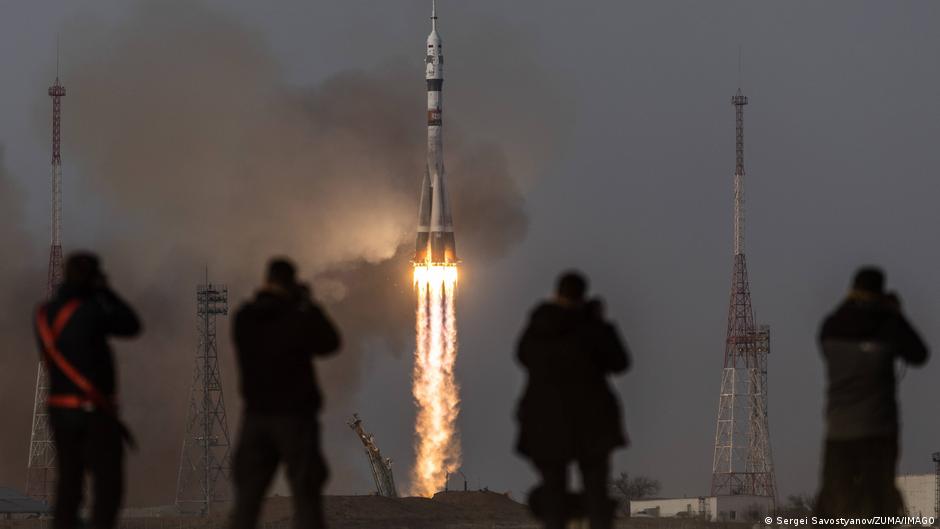
A Russian Soyuz launched from Baikonur successfully docked at the ISS carrying cosmonauts Sergey Kud-Sverchkov and Sergey Mikaev and NASA astronaut Chris Williams for an eight-month mission, joining a multinational crew aboard the station. Roscosmos reported damage to multiple elements of the Baikonur launch pad during liftoff and said repairs would be made quickly, though independent observers warn the site—the sole Russian manned launch facility—may be unable to conduct further launches for some time, creating operational risk to Russia’s crewed launch cadence and potential short-term disruptions for partners and insurers.
Market structure: A damaged Baikonur raises demand for non-Russian crew/launch capacity and insurance; near-term winners are Western launch/defense primes and ETFs that capture those (e.g., LMT, NOC, ITA), while Roscosmos/Kazakh ground-service providers are direct losers. Expect 1–3 month pricing power for alternative launch slots and a 5–15% rise in short-term launch insurance premia if manifest backlogs exceed 2–3 missions.
Risk assessment: Tail risks include a prolonged Baikonur outage (>60 days) or secondary geopolitical escalations that suspend cooperative ISS ops—each would materially re-route manifests and raise sovereign credit spreads for Russia. Immediate (days) risks are operational (repair timelines); short-term (weeks–months) are schedule cascades; long-term (quarters–years) are structural shifts to commercial crew providers and diversified basing.
Trade implications: Allocate into defense/aerospace exposure overweight for 3–9 months: prefer diversified ETF (ITA) and selective primes (LMT, NOC) while trimming Boeing (BA) exposure due to Starliner execution risk. Use options to control downside: 3–6 month 10–15% OTM call spreads on ITA/LMT to express upside and 3–6 month put spreads on BA to express downside with capped risk.
Contrarian angles: Consensus will underweight the probability that this accelerates permanent shift to non-Russian launches—create asymmetry by buying optionality on U.S. non-Russian launch providers. Monitor for mispricings if Roscosmos repair statements prove optimistic; a >30-day official suspension should trigger a re-rate and incremental allocations to Western launch exposure.
AI-powered research, real-time alerts, and portfolio analytics for institutional investors.
Request DemoOverall Sentiment
mildly negative
Sentiment Score
-0.25
