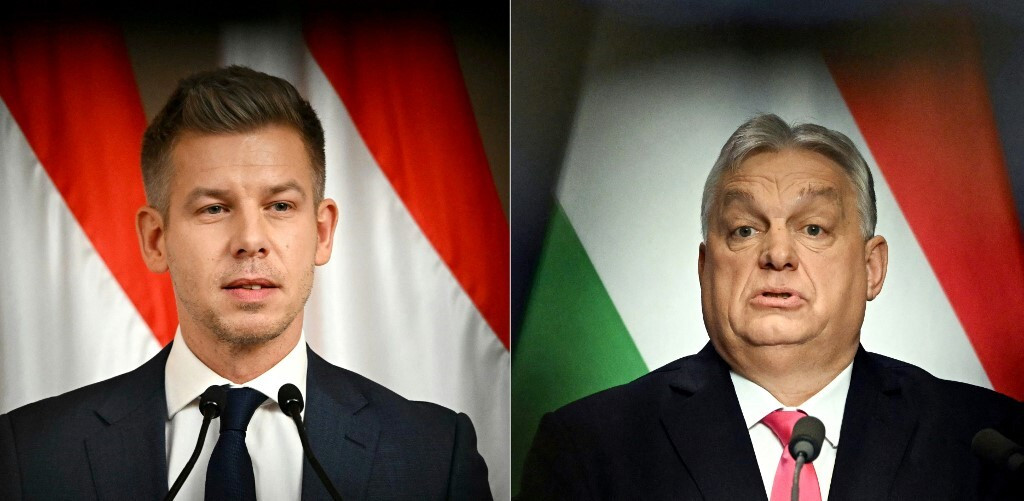
April 12 elections in Hungary will determine whether Viktor Orbán’s government continues 14 years of institutional consolidation and drift toward Russia/China. A continued Orbán victory risks prolonged EU fund freezes, greater energy dependence on Russia and worsened sovereign/country risk that could accelerate capital flight and a brain drain, increasing political risk for Hungarian assets and regional security cooperation.
Orbán-era political risk is now an idiosyncratic sovereign/sovereign-contagion story that bleeds into defense, energy and bank credit cycles across Central Europe. A continuation of the current trajectory increases the probability of prolonged conditionality on EU transfers and higher bilateral friction, which will compress Hungarian fiscal room and likely push 5y HUF sovereign CDS +150–300bps within 6–12 months absent a policy reset. That loss of trust creates measurable second-order demand hits: EU-funded infrastructure contractors and Hungarian corporates that relied on front-loaded EU capex face delayed revenues and tighter bank lending, pressuring local bank NPL formation and wholesale funding needs. Industry winners are not Hungarian: expect accelerated procurement for EU/neighbor defense primes and diversified energy suppliers as member states seek to reduce single-point political risk. Over 12–24 months this can translate into +5–15% incremental revenue for listed European defense names versus peers, and persistent volatility in TTF/European gas markets as politics complicates sanctioning and transit decisions. The main reversal catalysts are obvious and binary: a credible pro-EU coalition or legally binding commitments (clean-up of judicial/media capture) within 3–9 months would materially repair funding access; conversely, further admissions of intelligence-sharing with Moscow or fresh vetoes on EU defense aid will entrench the negative path. Near-term (days–weeks) the market will price headline-driven knee-jerks around the April 12 outcome; medium-term (3–12 months) is where real value transfer occurs via fiscal transfers, sovereign-credit spreads and defense procurement cycles. Position sizing should reflect that asymmetric tail risk: cheap insurance is attractive now and selective exposures to EU defense/energy suppliers offer a directional way to capture reallocation of budget flows, while targeted short positions on Hungary-exposed credits and equities capture sovereign-contagion risk if the election confirms the negative trend.
AI-powered research, real-time alerts, and portfolio analytics for institutional investors.
Request DemoOverall Sentiment
strongly negative
Sentiment Score
-0.80
