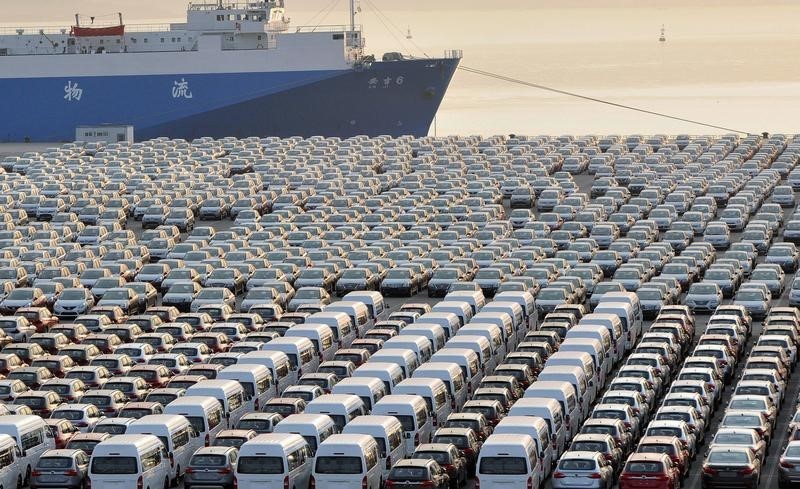
Capital Economics warns that China's chronic industrial overcapacity, stemming from its investment-heavy growth model and exacerbated by weak domestic consumption, is driving down global goods prices significantly and is no longer just a disinflationary force but a growing geopolitical threat. Chinese export prices have plunged over 20% from their pandemic peak due to "vicious price wars" and excess capacity, leading to an estimated 30% of manufacturers losing money, sustained by state support. This structural problem, which has triggered alarm in major economies like the U.S. and EU, threatens global economic stability and is transforming China from a growth engine into a source of international friction.
According to a Capital Economics report, China's chronic industrial overcapacity has evolved from a global disinflationary force into a significant geopolitical threat. This structural issue, driven by an investment-heavy growth model where investment constitutes roughly 40% of GDP, is exacerbated by weak domestic consumption and a declining real estate sector. The resulting excess capacity is being offloaded onto global markets through "vicious price wars," which have caused Chinese export prices to plummet by over 20% from their pandemic-era peak and factory gate prices for consumer durables to fall at the fastest rate since the 2009 financial crisis. These price cuts are not a result of productivity gains; an estimated 30% of Chinese manufacturers are now losing money and are being sustained only by government support and soft loans. This dynamic, which has already reduced goods prices in advanced economies by an estimated 0.4 percentage points, is now triggering alarm in the US, EU, Japan, and emerging markets, transforming China from a global growth engine into a source of international friction that threatens global economic stability.
AI-powered research, real-time alerts, and portfolio analytics for institutional investors.
Overall Sentiment
strongly negative
Sentiment Score
-0.70
