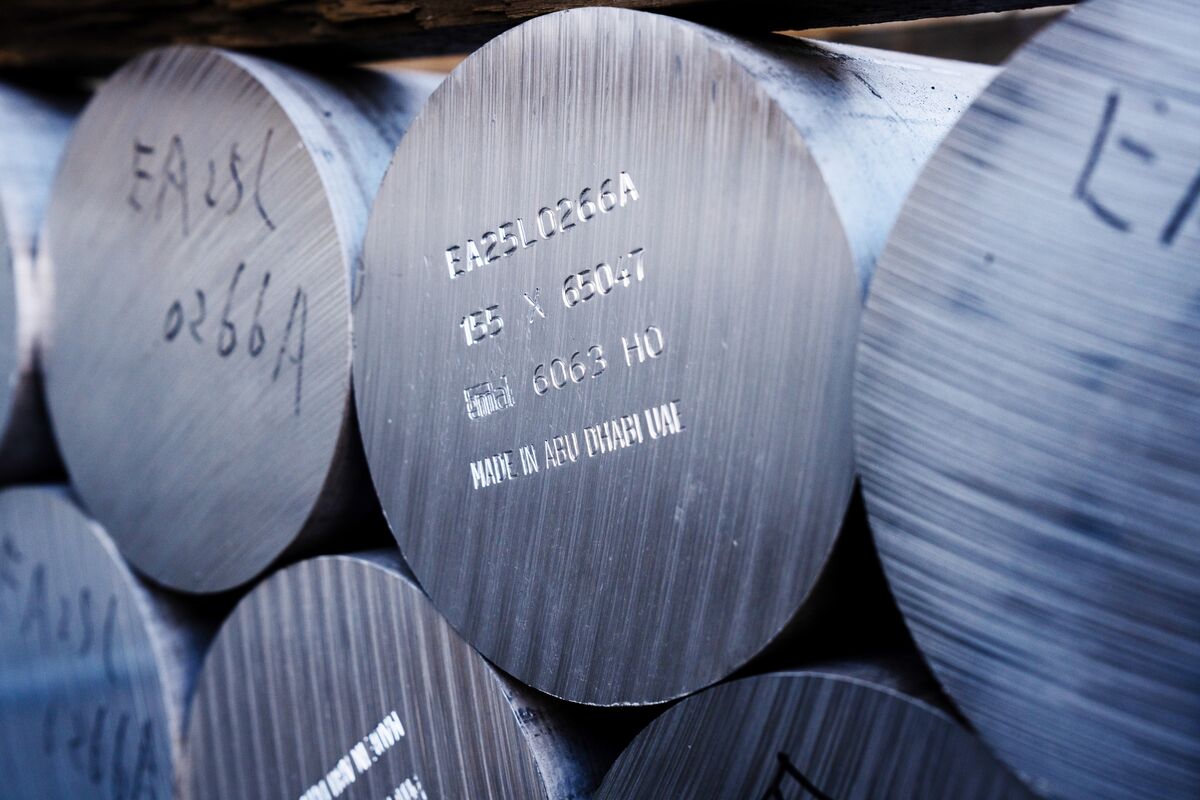
Aluminum topped $3,500/ton in London and is set for a monthly gain of more than 12%, its largest monthly rise since April 2018. The gains are driven by supply disruptions and damage to local production facilities from the Middle East war, tightening the global market. The move contrasts with a broader downtrend for metals in March, implying tighter aluminum fundamentals and potential upside pressure on prices and related commodity positions.
Winners in an Iran-driven supply shock are concentrated, short-term price-sensitive aluminum producers and traders who can capture physical premia and LME backwardation; marginal smelters with low-cost power will see outsized incremental margins if prices persist above $3,300–3,600/ton for multiple months. Second-order beneficiaries include alumina producers and trading houses that can reroute shipments, plus freight players (bulk/roll-on) where capacity bottlenecks push regional premia; conversely, downstream consumers (cans, autos, aerospace) face immediate gross-margin pressure and will either pass costs cyclically or cut volumes.
Tail risks cluster around political and logistical fixes that can unwind the premium quickly: a negotiated ceasefire, reopening of key ports, or a targeted sanctions/diplomatic corridor that restores ~30–50% of disrupted flows within 2–8 weeks would collapse risk premia. Over 3–12 months the elasticity of supply matters — recycled aluminum and mothballed smelters can add meaningful tonnage, so sustained price elevation requires prolonged physical damage or energy constraints, not just headline risk.
Technically, the market is signaling a fast move in front-month liquidity and premiums (regional spreads likely to widen before global stocks adjust), so trading should differentiate calendar spreads (front vs back) from outright exposure. The optimal tactical approach is to capture near-term premium via futures/options while hedging the medium-term option that scrap flows and alternative supply will cap prices; size should be adaptive to realized volatility and spare capacity indicators (SHFE/LME stock flows, freight lines, outage reports).
AI-powered research, real-time alerts, and portfolio analytics for institutional investors.
Overall Sentiment
mildly positive
Sentiment Score
0.30
