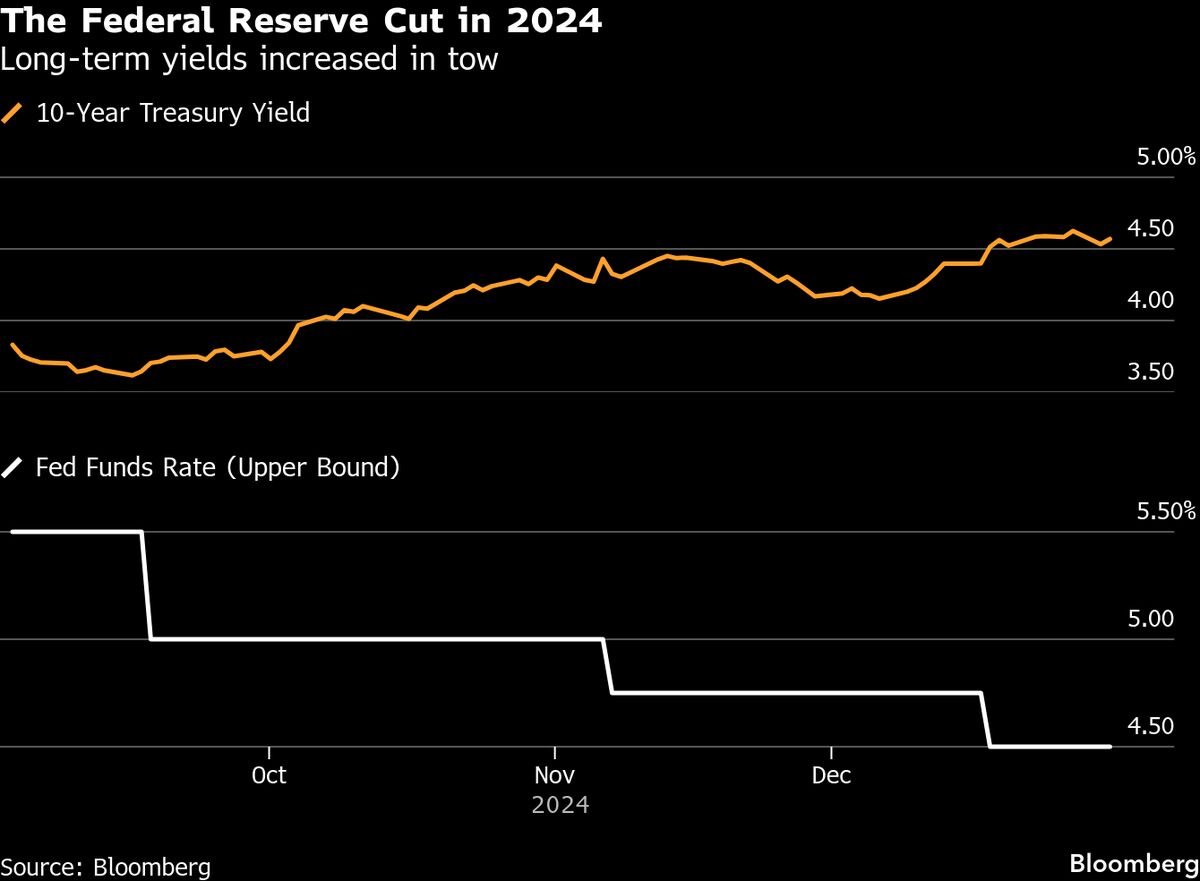
Black Friday data and resilient consumer spending bolster a bullish case for stocks, driven in part by ongoing artificial intelligence investment and sustained government deficits. However, the piece warns that higher borrowing costs are likely to persist, implying that political pressure for rate cuts may not translate into materially cheaper mortgages or lower long-term borrowing costs. Tariff policy and potential Supreme Court rulings are flagged as secondary risks, but the outlook depends on continued strength in AI-related spending.
Market structure: Persistent higher policy and real rates (think 10y in 3.5–4% range vs pre-2024 lows) favors AI infrastructure (chips, cloud), commercial banks with NIM tailwinds, energy and industrial cyclicals while penalizing rate-sensitive sectors—housing, mortgage REITs, long-duration growth. Pricing power concentrates in mega-cap cloud/AI vendors (NVDA, AMZN, MSFT) and foundries (TSM, ASML) as AI capex raises semiconductor demand vs constrained supply, widening gross margins for incumbents.
Risk assessment: Tail risks include a Fed policy overshoot causing a 10y spike >4.5% (material hit to equities) or an AI-capex pullback that would erase the fiscal-driven growth premium; SCOTUS tariff rulings or sudden fiscal consolidation are 5–15% downside catalysts over 3–12 months. Near-term (days–weeks) volatility will track CPI/PCE prints and Fed rhetoric; medium-term (3–12 months) depends on corporate capex cadence and MBS technicals that keep mortgage spreads wide; long-term (1–3 years) equilibrium real rates may be structurally higher due to deficits and capex.
Trade implications: Tilt into AI/security of earnings—establish focused 2–3% longs in NVDA and 1–2% in AMZN/MSFT over 4–8 weeks on <10% pullbacks; hedge duration risk with 3–5% allocations to floating-rate loans (BKLN/FLOT) and short long-duration Treasuries (inverse TLT) if 10y >4%. Short homebuilders (PHM/ITB) and mortgage REITs (NLY) with 3–12 month horizons; implement put spreads on ITB (3–6mo) and call spreads on NVDA (3–6mo) to leverage asymmetric payoff.
Contrarian angles: Consensus expects Fed cuts to immediately lower mortgage rates—misses MBS spread, bank funding and credit-risk dynamics that can keep mortgage rates 100–200bp above policy. The market may underprice concentrated AI crowding risk (top 5 names >50% of capex), creating pair trade opportunities (long AI infra, short leisure/housing). Historical parallel: 2003–07 tech capex lifted cyclical growth but also sustained higher long-term rates; similar bifurcation can persist here.
AI-powered research, real-time alerts, and portfolio analytics for institutional investors.
Request DemoOverall Sentiment
mixed
Sentiment Score
0.00
