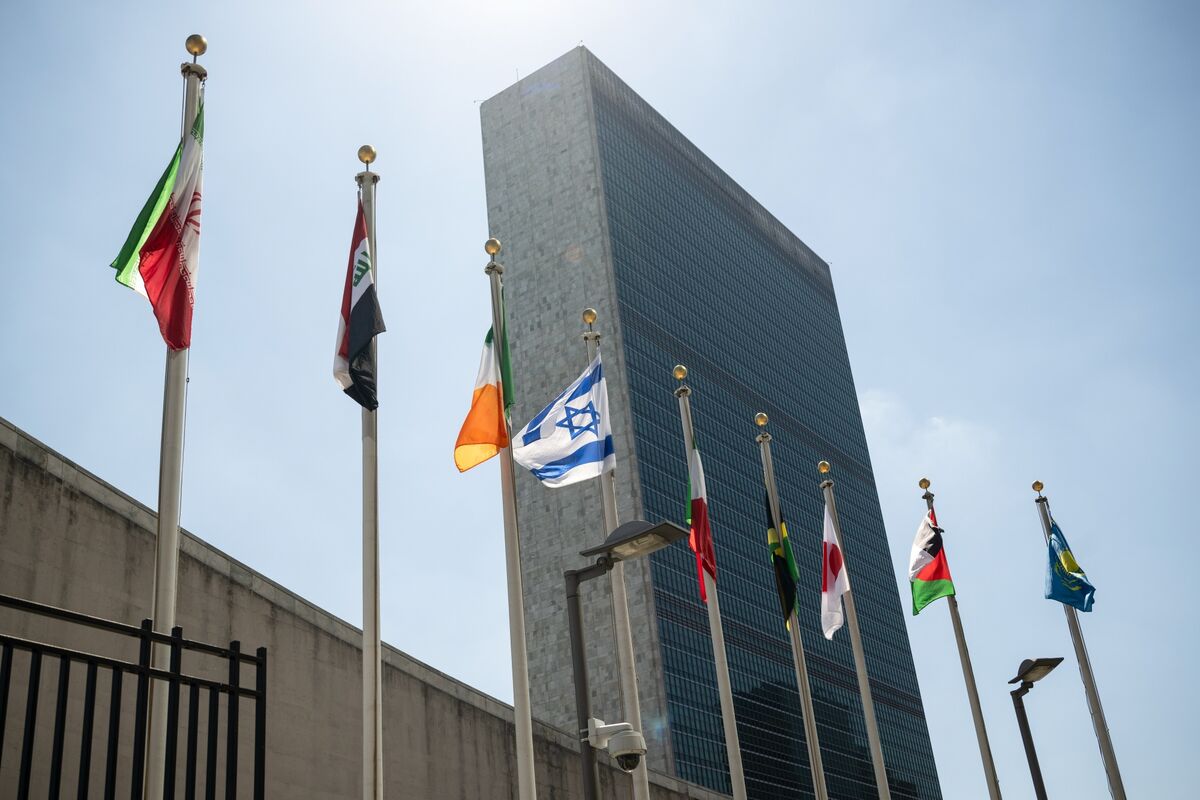
The United Nations has officially opened the search for the next secretary-general: presidents of the General Assembly and the Security Council have invited member states to nominate candidates to succeed António Guterres when his second five-year term ends next year. The announcement begins a diplomatic selection process that will shape the UN's leadership and multilateral agenda but is unlikely to have immediate direct effects on financial markets.
Market structure: The UN leadership contest is a multi-quarter geopolitical event with asymmetric winners — defense contractors (Lockheed LMT, Northrop NOC, RTX) and risk-off assets (gold GLD, USD via UUP, long-duration Treasuries TLT) if the process polarizes P5 members and raises conflict risk. Losses hit cyclical exporters and EM assets tied to trade corridors if multilateral coordination weakens; credit spreads in stressed EMD could widen 50–150bps in severe scenarios. Pricing power shifts toward defense and security services providers while demand for political-risk insurance and commodities hedges increases.
Risk assessment: Tail risks include a P5 stalemate or a provocative shortlist causing regional escalation that triggers sanctions and oil shocks (+$10–$30/bbl) over 3–12 months; low-probability but high-impact. Immediate market effect (days) should be muted; expect statement-driven volatility (weeks) and policy/operational effects materializing over 6–24 months. Hidden dependency: outcome heavily conditioned on opaque Security Council bargaining — watch P5 voting patterns and public endorsements as key information flow.
Trade implications: Tactical positioning: overweight defense equities and buy-duration hedges now with staggered adds on clear P5 splits or shortlist release (expected within 3–6 months). Use 6–12 month call spreads on LMT/NOC to limit cost, pair with short cyclical industrials (CAT) to isolate geopolitical beta. Maintain a 1–2% GLD allocation + 3–5% TLT as portfolio insurance for 3–9 months.
Contrarian angles: Consensus assumes “no market effect”; that understates option value in defense names and sovereign CDS. If a consensual, pro-multilateral candidate emerges, EM risk premium could compress — offering a contrarian 3–4% tactical long in EEM or EIDO for 6–12 months. Unintended consequence: a strengthened UN push on climate could accelerate regulatory risk for thermal coal/miners — identify short candidates if policy momentum picks up.
AI-powered research, real-time alerts, and portfolio analytics for institutional investors.
Request DemoOverall Sentiment
neutral
Sentiment Score
0.00
