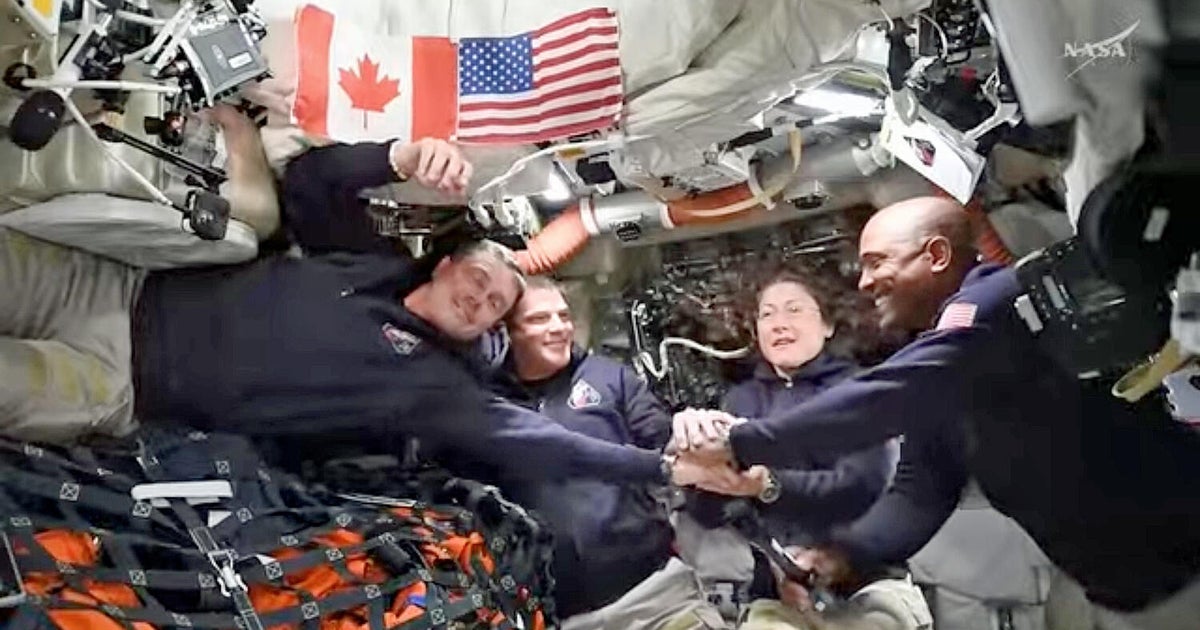
Artemis II is en route to a far-side lunar flyby with the crew reporting Earth receding and the Moon growing larger; mission telemetry noted a distance figure of ~118,000 nautical miles and a planned close approach on the lunar far side at ~4,100 miles altitude at 7:03 p.m. EDT Monday. The spacecraft trajectory is near-perfect (planned correction thruster burn canceled), and the crew will perform manual piloting and unique far-side observation tasks. Operationally, a partially frozen waste-water vent has prevented full tank dump, forcing temporary use of contingency collapsible urinals (CCUs) but not affecting core mission capability. Overall systems are performing well with high crew morale and anticipated scientifically valuable observations on the far side.
Defense primes and geospatial-capable contractors are the non-obvious near-term beneficiaries: incremental program momentum from a successful crewed cislunar flight increases the probability of follow-on NASA awards and O&M contracts over the next 12–36 months, favoring firms with existing flight hardware, avionics and imaging payload capabilities. Equally important is the spotlight on life‑support and fluid‑handling reliability; the toilet incident raises procurement incentives for niche suppliers of capillary/thermal plumbing, valves and redundancy systems that typically sit below the radar of large-cap investors.
Market responses will bifurcate by company scale and contract exposure: large primes (program-level contractors) see steadier multi-year cash flow optionality tied to appropriations, while small suppliers face lumpy idiosyncratic upside or downside around single contract awards; expect volatility spikes of 15–30% in small-cap aerospace contractors on award/no-award headlines within 3–6 months. Near-term sentiment is supportive (days–weeks) but the structural re-rating requires confirmed follow-on budgets and contractor win rates—key catalysts over 6–24 months.
Primary tail risks: a high-visibility hardware failure, major cost overrun, or a political shift in appropriations could reverse the nascent positive flow, compressing small-cap supplier multiples by >20% in under a quarter. The consensus trade—crowding into big primes—is defensible but incomplete; underappreciated opportunities lie in dual-use ECLSS and thermal/valve specialists and in geospatial data monetization from unique far-side observations, which could unlock recurring commercial analytics revenue streams over 18–36 months.
AI-powered research, real-time alerts, and portfolio analytics for institutional investors.
Request DemoOverall Sentiment
mildly positive
Sentiment Score
0.12
