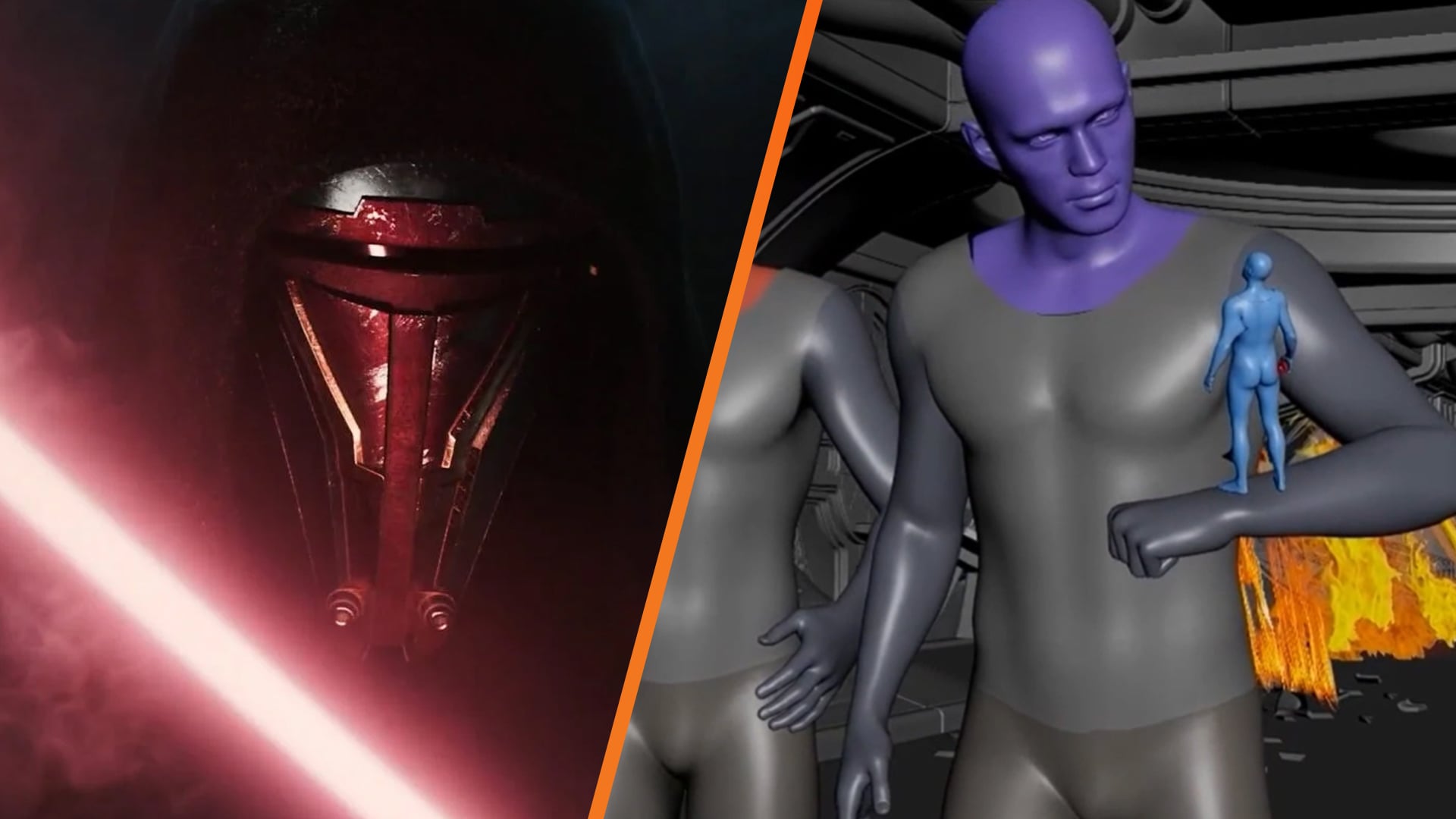
An early cinematic from the cancelled first iteration of the Star Wars: Knights of the Old Republic remake has leaked online, offering new details on the original Aspyr-led version of the project. The clip shows an early opening cinematic with placeholder assets and reveals the player character was intended to be voiced, but the remake’s current status remains unknown after being rebooted and moved to Saber Interactive. The article is largely informational with limited direct market implications.
This is less about one game and more about the economics of AAA remake pipelines: the leak reinforces that the biggest cost in large IP revivals is not content creation but process resets. Every reboot compounds burn on licensing, engineering, and vendor coordination, while the monetization clock keeps slipping; that asymmetry tends to favor the platform holders and rights owners more than the external dev partner. The market implication is that troubled remake franchises become option-like assets: high upside if executed, but a rising probability that sunk cost gets written off and reallocated to a smaller-scale spiritual successor.
The second-order winner is likely the successor project rather than the remake itself. Once a legacy fanbase becomes convinced the original remake is structurally compromised, attention and demand migrate to the lower-capex, cleanerly scoped alternative—especially if it is led by the same creative figurehead. That can compress the value of the remake IP while improving the attach rate and launch credibility of the new project, because consumers and press coverage increasingly frame it as the “real” continuation.
For publishers and platform partners, the tail risk is reputational: repeated delays and internal rewrites reduce trust in roadmap visibility, which can matter for preorders, showcase cadence, and partner allocation. The catalyst path is binary and slow-moving: either a formal resurrection/reveal within 6-12 months restores optionality, or silence plus more leaks hardens the market’s assumption that the project is dead. In the meantime, this is a signal to expect continued capital reallocation away from massive remake bets toward lower-risk, original-IP or spiritual-successor funding models.
The contrarian read is that cancellation may be less negative than it looks: killing a bad build early can preserve franchise value that a release-quality disaster would have destroyed. If management uses the reset to avoid a brand-damaging launch, the long-run payoff to the IP owner can actually improve. The overdone part of the bearish narrative is assuming all write-offs are value-destructive; in game development, stopping the wrong project can be a rational capital allocation decision.
AI-powered research, real-time alerts, and portfolio analytics for institutional investors.
Request DemoOverall Sentiment
neutral
Sentiment Score
-0.05
