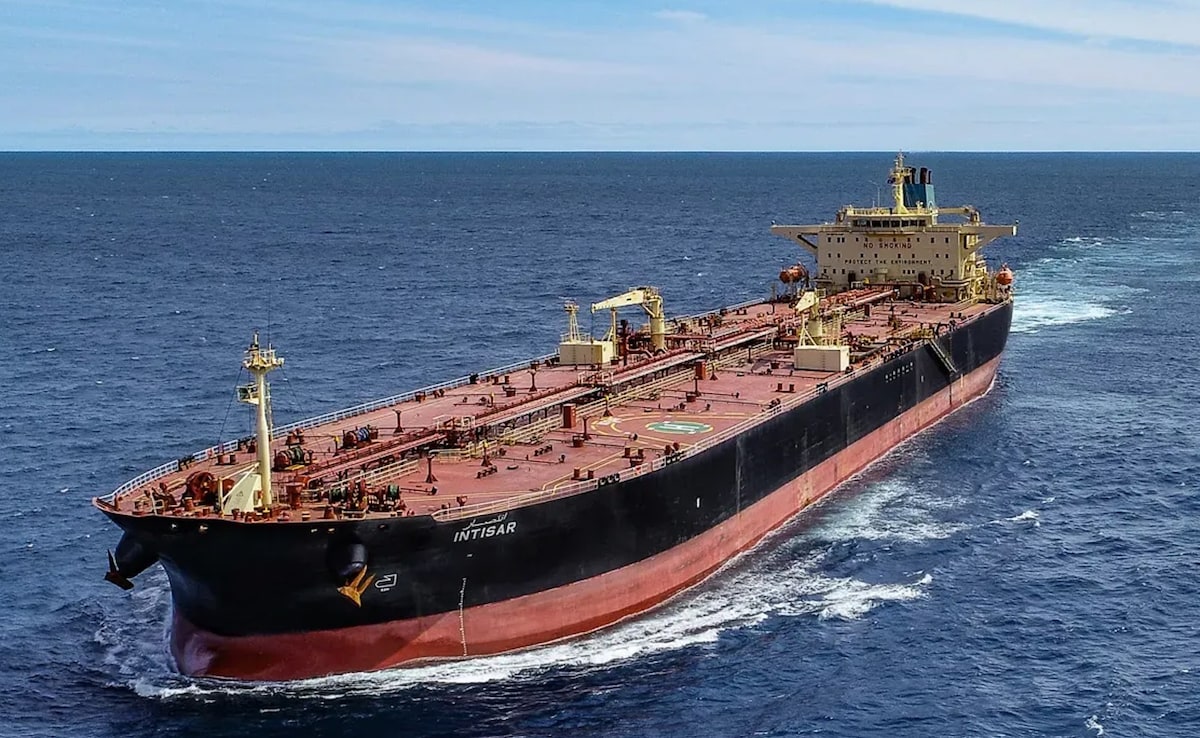
44,000 metric tons: India is discharging 44,000 mt of Iranian LPG from a sanctioned vessel at Mangalore and the Petroleum Ministry says refiners have secured full crude requirements and face no payment hurdles for Iranian crude. The ministry denied reports that an Iranian cargo was diverted from Vadinar to China and reiterated India imports crude from 40+ countries. India, which has not received a Tehran cargo since May 2019 amid prior US pressure, was aided by the US temporarily removing sanctions on Iranian oil last month to ease supply shortages.
Indian refining and coastal storage capacity is the latent choke-point here: marginal barrels that find their way into India will disproportionately lift refinery run-rates and inland product availability because of low transportation friction from nearby load ports. That amplifies refining margins for assets optimized for medium/sour barrels and compresses spot crude demand from more distant suppliers; think a regional reallocation that can shave 5-15% off incremental spot cargo bids within 30–90 days.
Shipping & insurance markets are the immediate transmission mechanism. When cargo origination becomes politically or contractually sensitive, voyage lengths, redirection costs and insurance premia move non-linearly; a handful of diverted cargoes can push VLCC/Aframax time-charter equivalents up 30–70% in weeks, then snap back when ambiguity is resolved. Freight spikes create transient arbitrage opportunities for owners with open capacity and for physical traders who can time storage-in-transit plays.
Key reversals are policy and counterparty-driven: a policy reversal, banking/insurance clampdown, or a higher bidder (notably China) would re-price local offtake within days and quickly re-route barrels, while a stabilizing diplomatic outcome would normalize spreads over 1–3 months. Monitor payment-rail robustness, P&I club statements and port discharge manifests as high-frequency signals — they lead price moves before headline diplomatic announcements.
AI-powered research, real-time alerts, and portfolio analytics for institutional investors.
Overall Sentiment
mildly positive
Sentiment Score
0.15
