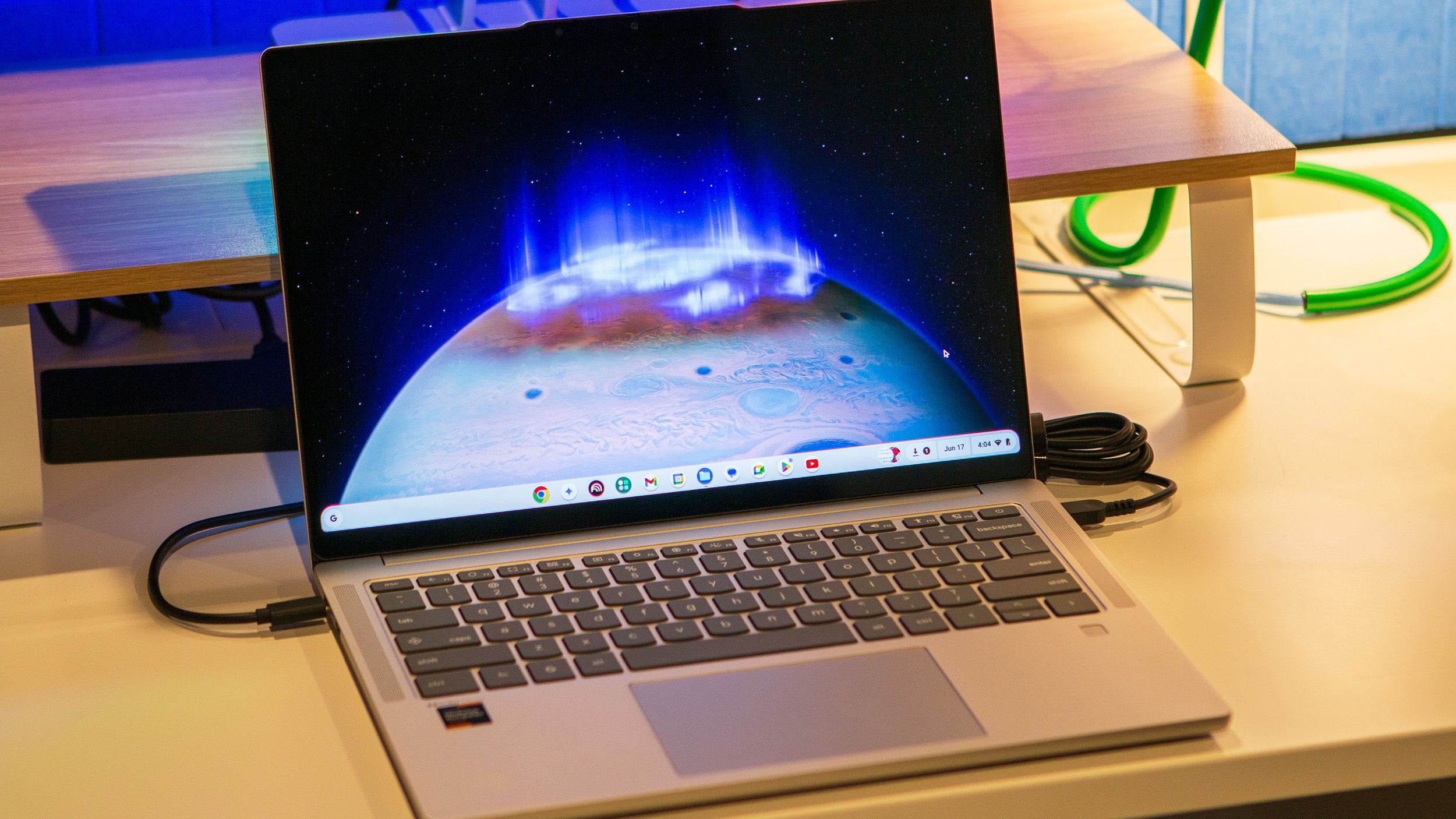
A preserved Chromium Issue Tracker leak shows a screen recording of Google’s internal 'Aluminium OS'—an Android-derived desktop platform expected to eventually replace ChromeOS—running on an HP Elite Dragonfly 13.5 build. The video surfaces UI changes (taller status bar, Android-style icons, centered start button, updated window controls) and confirms Google’s active work toward a unified desktop OS; while this validates progress and could influence OEM and Qualcomm plans for Android-powered PCs in 2026, the leak itself is unlikely to produce immediate material market moves.
Market structure: Google’s Aluminium OS positions GOOGL to capture higher wallet share from OEM device software, advertising and Gemini integration; expect incremental revenue recognition over 12–36 months rather than immediate top-line change. Qualcomm (QCOM) and Chromebook OEMs (HPQ et al.) are direct beneficiaries as demand for Snapdragon-based Android PCs could grow 20–40% year-over-year in early adoption phases; incumbent PC chip leaders (INTC) and Microsoft’s Windows ecosystem risk modest share erosion in low-cost and education segments.
Risk assessment: Near-term market impact is low (days–weeks) but medium-to-long term (6–36 months) execution, regulatory (antitrust/data privacy) and ecosystem risks dominate — a failed developer story or a major security flaw could wipe 30–50% off speculative gains. Hidden dependencies include OEM inventory cycles, Qualcomm silicon cadence, and developer support; key catalysts are CES/Google I/O demos, QCOM chipset launches and enterprise pilot disclosures.
Trade implications: Tactical exposure favors GOOGL and QCOM while being selective on HPQ; expect volatility around official product milestones so prefer defined-risk option structures (12-month LEAP spreads). Consider sector rotation into semiconductors and consumer hardware and away from legacy PC suppliers if adoption evidence appears (two consecutive quarters of >10% Chromebook/Android PC growth).
Contrarian angle: The market may overrate near-term displacement of macOS/Windows—histor parallels (Windows on ARM, Android tablets) show slow enterprise uptake; this creates a mispricing opportunity to buy QCOM exposure ahead of 2026 OEM commitments while being skeptical of HPQ’s margin upside. Unintended consequence: platform fragmentation could depress ARPU if Google sacrifices ad/Play revenue for OEM adoption.
AI-powered research, real-time alerts, and portfolio analytics for institutional investors.
Request DemoOverall Sentiment
neutral
Sentiment Score
0.12
Ticker Sentiment
