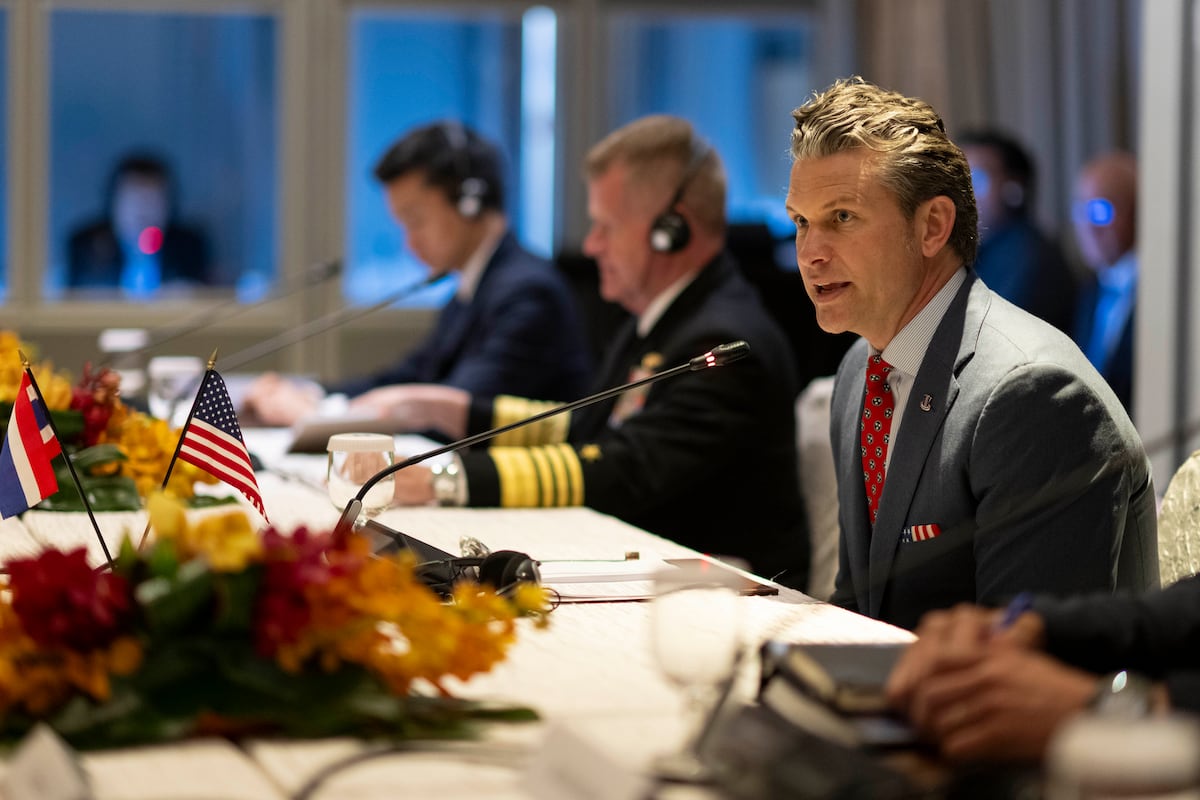
U.S. Defense Secretary Pete Hegseth, in a speech at the Shangri-La Dialogue in Singapore, asserted that China poses an "imminent" military threat and urged allies to increase defense spending, marking a shift from previous U.S. policy. Hegseth emphasized that allies should not rely solely on the U.S. for security and warned against deepening economic ties with China at the expense of security cooperation with the U.S. While affirming the U.S.'s commitment to the Indo-Pacific region and avoiding conflict, Hegseth criticized China's aggressive actions in the South China Sea and around Taiwan, stating the U.S. is prepared to "fight and win decisively" if deterrence fails.
U.S. Defense Secretary Pete Hegseth's speech at the Shangri-La Dialogue signaled a significant shift in the U.S. stance towards China, characterizing the military threat as potentially "imminent" and urging allies to substantially increase defense spending. This marks a notable departure from prior U.S. government assessments that downplayed the immediacy of conflict. Hegseth explicitly called for allies to shoulder a larger military burden, referencing a suggested target of 5% of GDP for defense expenditure, and cautioned nations against pursuing economic cooperation with China while relying on U.S. security guarantees, warning of the leverage this could cede to Beijing. While affirming the Indo-Pacific as America's "priority theater" and the continued value of alliances, the administration's approach emphasizes greater burden-sharing, drawing a parallel to Europe's recent increases in military spending. The speech highlighted China's assertive actions in the South China Sea and concerning Taiwan, with Hegseth stating the U.S. is prepared to "fight and win decisively" if deterrence fails, despite asserting no desire for conflict. This hawkish rhetoric, reflected in the provided "moderately negative" sentiment score (-0.5) and a "market impact score" of 0.6, suggests heightened geopolitical friction. The message was delivered amidst China's notable absence from the conference and some mixed signals from the Pentagon, including previous asset diversions and vacant key policy roles, and drew cautionary responses from figures like French President Macron regarding the pressure on nations to choose sides.
AI-powered research, real-time alerts, and portfolio analytics for institutional investors.
Request DemoOverall Sentiment
moderately negative
Sentiment Score
-0.50
