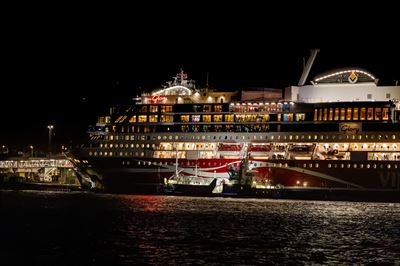
Viking Line has secured biogas supply to maintain an ambitious renewable-fuel mix in 2026, guaranteeing 50% biogas coverage for the first half of the year and operating its LNG-capable vessels Viking Glory and Viking Grace on the Turku–Stockholm route. The company reports nearly 50,000 tonnes of greenhouse gas reductions last year and is pursuing a fossil-free green shipping corridor with ports toward a 2035 target, signaling continued capital and procurement focus on low-emission fuels that may influence operating costs and ESG positioning for stakeholders.
Market structure: Viking Line’s 50% biogas procurement for H1 2026 signals growing commercial-scale demand for European biomethane and LNG bunkering. Direct winners are renewable fuel producers and dual-fuel retrofit/equipment suppliers (expect pricing power for biomethane and premium rates for green freight on short-sea routes); losers include legacy heavy‑fuel bunker suppliers and older ferry operators without retrofit plans. Expect regional biomethane demand uptick to tighten Nordic supply and push spot biomethane/RNG prices +10–30% over 12–24 months if other operators emulate Viking.
Risk assessment: Tail risks include a biogas supply shock (feedstock/production outage), sudden regulatory changes on methane accounting, or EU subsidy reversals which could collapse economics; a prolonged gas price spike could also favor LNG over biogas. Immediate market impact (days) is negligible; short-term (weeks–months) sees commodity and equipment order flow volatility; long-term (to 2035) rewards operators executing credible fossil-free corridors. Hidden dependencies: port bunkering capacity, LNG/biogas logistics and EU ETS trajectory (breach of €80/t CO2 accelerates switch).
Trade implications: Direct plays: long European renewable fuel producers and engine/system suppliers; hedges: short legacy ferry operators. Use pair trades to capture green-premium re-rating (long NESTE, short TAL1T). Options: buy 9–18 month call spreads on suppliers to cap downside while capturing a 15–30% rebound if EU policies or supply tightness materialize.
Contrarian angles: Consensus underestimates feedstock constraints — synthetic e‑methane and electrolyser/CO2 capturers may be the 3–7 year winners, not small RNG spot sellers. Reaction may be underdone for biomethane producers (prices rise) and overdone for small-cap ferry equities that already price in a large green premium. Historically, fuel-regime shifts create sustained margin winners among upstream renewable producers and equipment OEMs rather than incumbents.
AI-powered research, real-time alerts, and portfolio analytics for institutional investors.
Request DemoOverall Sentiment
moderately positive
Sentiment Score
0.45
