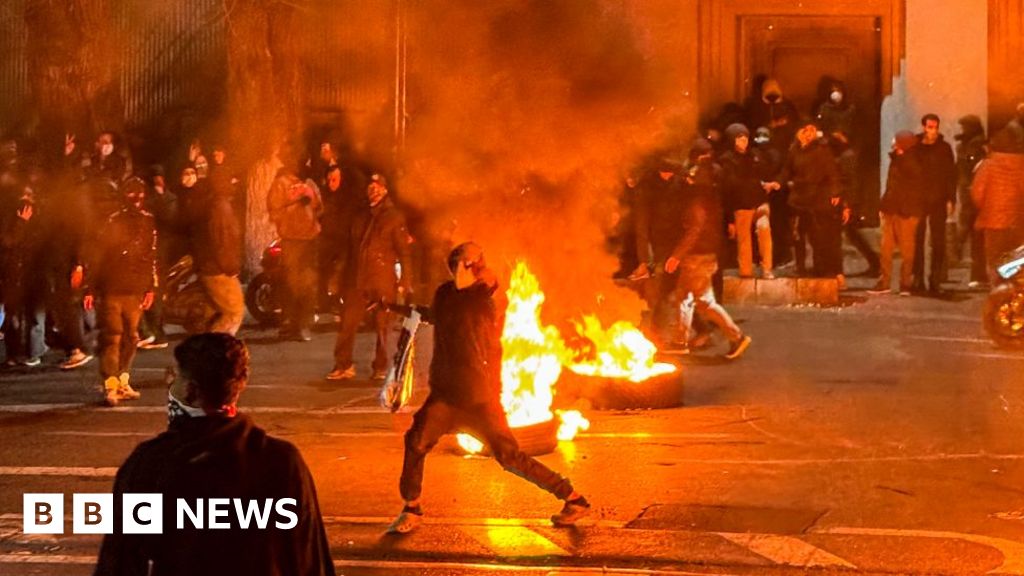
Major nationwide anti-government protests in Iran have escalated into widespread violence, with demonstrations spreading to more than 100 cities, hundreds reported killed or injured, BBC Persian verifying 26 identities (including six children) and at least 70 bodies brought to a single hospital whose morgue reached capacity. A near-total internet blackout, reports of security forces using live rounds and pellets, and explicit US warnings raise regional geopolitical risk and could increase volatility and risk premia for oil markets, emerging-market assets and any instruments with Iran exposure.
Market structure: Immediate winners are defense contractors (Lockheed LMT, Northrop NOC, RTX) and energy producers (Exxon XOM, Chevron CVX) from higher security spending and risk premia on oil; losers are Iran-exposed EM assets (EEM) and regional airlines/ports. Pricing power shifts toward integrated oil majors and large cap defense names; risk-premium repricing will widen spreads for EM sovereign debt and push gold (GLD) and USD higher. Cross-asset: expect oil Brent to gap +3–8% on localized supply concern, gold +2–5%, EM sovereign spreads +50–150bps, US 10y yields down 5–15bps as safe-haven flows bid Treasuries; implied vols in energy and EM FX to rise 20–40% short term.
Risk assessment: Tail scenarios include a US-Iran military exchange or closure of Strait of Hormuz (low prob ~5–15% within 3 months) which could remove >1.0 mb/d of supply and drive Brent +15–30% in weeks. Immediate (days): liquidity and volatility spikes; short-term (weeks–months): EM outflows and credit stress; long-term (quarters+): re-rating of defense budgets and onshoring supply chains. Hidden dependencies: marine insurance, shipping chokepoints, and secondary sanctions mechanics could amplify impacts; catalysts include US policy statements, Iranian regime durability, and OPEC production moves.
Trade implications: Tactical long in core defense equities and selective oil exposure is highest-conviction for 1–6 month horizons; hedge with US Treasuries or long-vol instruments if escalation occurs. Relative trades: long GLD vs short EEM for immediate risk-off; consider oil call spreads rather than outright crude to cap cost. Use options to express asymmetric outcomes: 2–3 month call spreads on Brent or calls on XOM/CVX, and VIX call spreads as a hedging sleeve if VIX >18.
Contrarian angles: Consensus may overstate permanent oil supply loss—history (2019–2020 Iran unrest) shows only transient spikes; if protests topple regime without regional war, sanctions uncertainty could ease in 6–12 months improving regional energy flows. The initial defense rally can be faded after 4–8 weeks if no kinetic escalation; conversely, cheapening EM credit in 3–6 months could offer deep-value entry points if spreads widen >200bps.
AI-powered research, real-time alerts, and portfolio analytics for institutional investors.
Request DemoOverall Sentiment
strongly negative
Sentiment Score
-0.65
