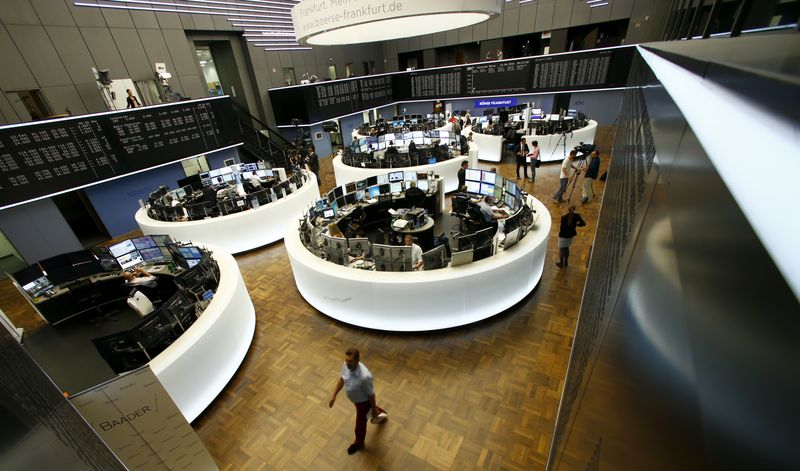
President Trump said he delayed strikes on Iranian power and energy infrastructure for five days amid 'productive' talks, triggering a sharp drop in oil: Brent -8.5% to $97.40/bbl and WTI -8.7% to $89.66. European equities reversed early losses (Stoxx 600 +0.6%, DAX +1%, CAC 40 +0.8%, FTSE 100 -0.2%) as markets reacted to de-escalation, but fresh Iranian strikes have cut power in Tehran and hit a Qatari gas facility, lifting European gas prices and keeping energy-supply risk elevated. The ECB warned prolonged fighting could reignite inflation and said policymakers stand ready to adjust rates, preserving upside rate risk; shipping through the Strait of Hormuz remains disrupted, posing continued supply-chain and energy security concerns.
The immediate market reaction understates durable structure changes: episodic closure risks to chokepoints rebuild counterparty risk premiums across marine insurance, trade finance and LNG routing. That blow-up in risk premia embeds a multi-month floor under spot freight and charter rates even if headline hostilities ebb within weeks, because insurers and P&I clubs reset underwriting cycles on quarterly timetables and require tangible claim-free periods before easing terms.
Winners are owners of spot-exposed energy and gas shipping assets and reinsurers writing catastrophe/maritime lines; losers are long-haul container shippers with fixed-term contracts, trade finance desks exposed to uncancellable routes, and EM importers facing fuel bill resets. A further second-order dynamic: sustained shipping insurance dislocation raises landed energy/commodity costs, prompting a 25–75bp upward shock to core inflation in rate-sensitivity economies over 3–6 months, increasing odds of policy rate repricing in the near-term.
Catalysts that would reverse the current repricing are discrete and binary: verifiable diplomatic guarantees within 7–14 days, a coordinated SPR release sized to dent physical tightness, or a rapid normalization in P&I pricing driven by reinsurer capacity injections. Tail risk remains a sharp escalation that triggers a correlated spike across oil, gas, and insurance losses; hedges should therefore focus on convex instruments that pay off on either persistent high premia or a sudden violent spike rather than linear directional exposure.
AI-powered research, real-time alerts, and portfolio analytics for institutional investors.
Request DemoOverall Sentiment
mildly negative
Sentiment Score
-0.30
