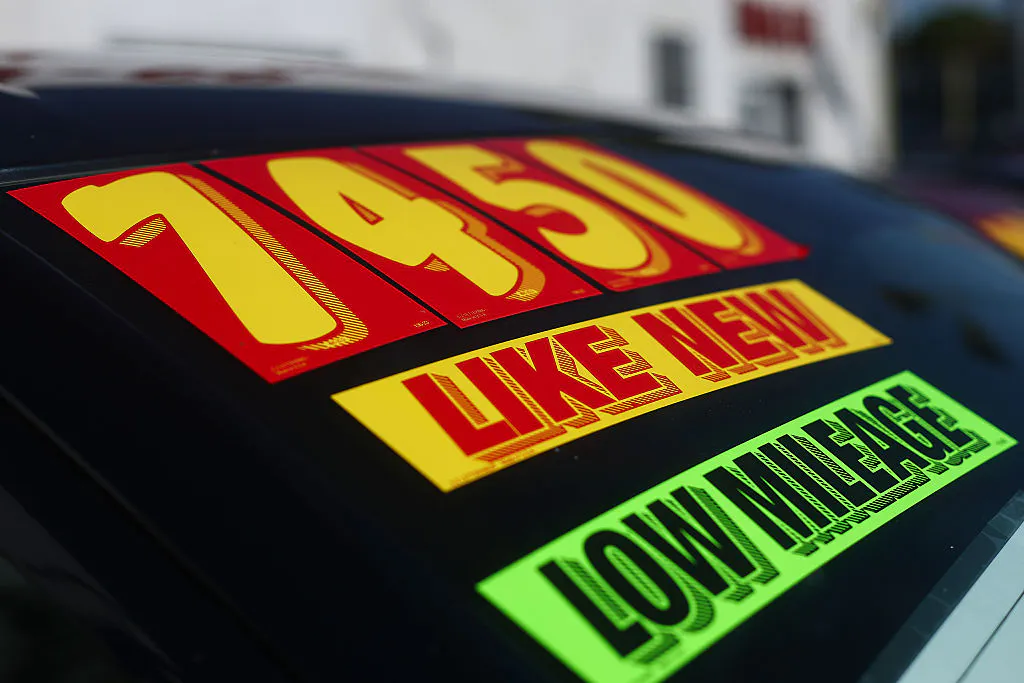
Used car prices fell 1.6% in April from March, the first monthly decline in 2026, but remain near 2023 highs. Cox Automotive said surging gas prices are supporting demand for older vehicles and shifting some consumers toward EVs; its EV index is up 7.2% year over year versus 1.1% for non-EVs. The data suggests modest sector-specific implications rather than a broad market catalyst.
This is less a clean “used cars down” signal than a relative-value setup across propulsion types. Higher fuel costs should widen the affordability gap between efficient ICE, hybrids, and EVs, but the first-order response in the used market is usually a rotation into older, cheaper internal-combustion inventory before EV share meaningfully inflects. That creates a near-term tailwind for retailers with broad price coverage and financing reach, while compressing turnover on higher-ticket used EVs if buyers still anchor on battery-depreciation risk.
For CarMax, the important second-order effect is mix. If gas stays elevated for several months, unit demand can improve without proportionate gross profit expansion because the incremental buyer will likely trade down in price, not trade up in margin. The earnings lever is therefore inventory velocity and financing attachment rates, not headline used-vehicle appreciation. If gas retraces, the signal reverses quickly: the “EV curiosity” cohort disappears first, and used-ICE demand normalizes faster than supply can reset.
The market may be underestimating how sticky this can be if energy remains volatile into summer driving season. Used-car pricing is a lagging inflation read; a sustained move in fuel costs can feed into consumer substitution with a 4–12 week delay, while wholesale pricing can overshoot on limited dealer inventory. The contrarian risk is that any short-lived gas spike invites a temporary demand pop that fades before it reaches retail earnings, leaving valuation multiples to compress on a miss.
On the competitive side, this is mildly constructive for firms with omnichannel sourcing and in-house financing, and less so for smaller independents that rely on local demand elasticity. If EV used values continue to outpace non-EVs, that can also pressure new-vehicle EV pricing indirectly, because residual value support makes lease economics more attractive and can mask weakening retail demand underneath.
AI-powered research, real-time alerts, and portfolio analytics for institutional investors.
Request DemoOverall Sentiment
neutral
Sentiment Score
0.05
Ticker Sentiment
