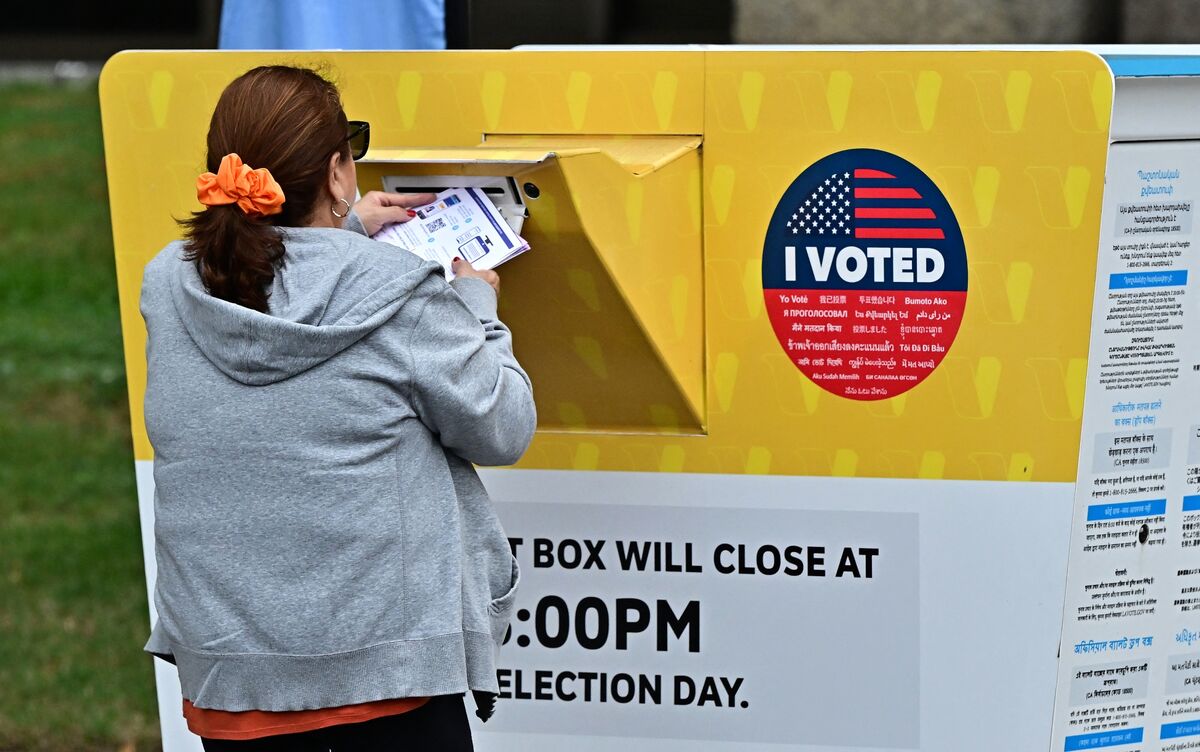
President Donald Trump announced his intent to sign an executive order ahead of next year’s midterm elections, aiming to eliminate mail-in ballots and voting machines due to alleged inaccuracy and cost. This potential action, if implemented, would dramatically reshape the U.S. electoral process, introducing significant political and market uncertainty for institutional investors.
Former President Donald Trump has announced his intention to sign an executive order to eliminate mail-in ballots and voting machines before the next midterm elections, citing concerns over their accuracy and cost. This declaration introduces significant potential for future political and regulatory volatility surrounding the U.S. electoral process. However, the associated market impact signal is exceptionally low at 0.05, indicating that investors currently assign a very low probability to the successful implementation or material market disruption from this proposal. The neutral sentiment score further suggests the market is treating this as political rhetoric rather than a firm policy trajectory with immediate financial implications. The lack of any specific corporate entities in the report underscores that the risk is systemic and political, not yet concentrated in any particular stock or sector. The primary takeaway is the disconnect between the proposal's potentially transformative nature and the market's current muted reaction, likely reflecting skepticism about the legal viability of such an executive order.
AI-powered research, real-time alerts, and portfolio analytics for institutional investors.
Request DemoOverall Sentiment
neutral
Sentiment Score
0.00
