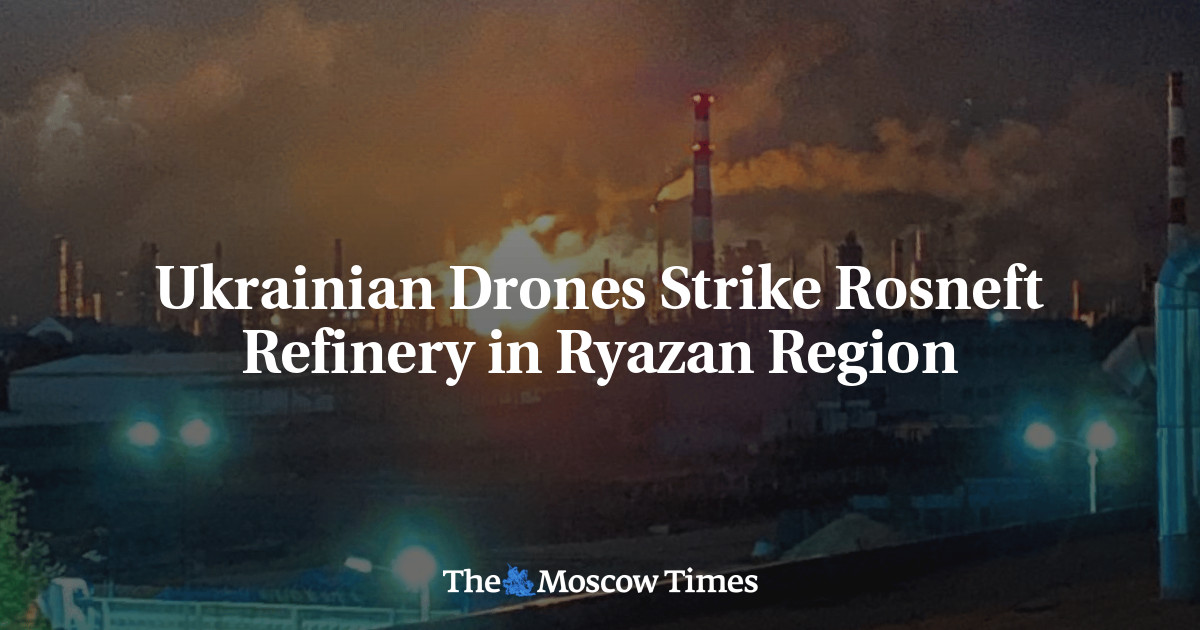
Ukrainian drones struck the Rosneft-operated Ryazan refinery, one of Russia’s five largest processing up to 17.1 million tons of crude annually, causing blazes and explosions. This incident is part of Ukraine's escalating campaign targeting Russia's critical oil infrastructure, a key revenue source for its war effort. Previous strikes last month reportedly idled approximately one-fifth of Russia's refining capacity, or 1.1 million barrels per day, contributing to domestic fuel price increases and underscoring the vulnerability of Russian energy assets.
A recent Ukrainian drone strike targeted the Rosneft-operated Ryazan refinery, one of Russia's five largest, which processes between 13.7 and 17.1 million tons of crude annually. This event is not isolated, but part of a sustained campaign against Russian energy infrastructure, marking the second attack on this specific facility following a similar incident in August that halved its production. The cumulative impact of this strategy is significant; a previous wave of strikes was estimated to have taken approximately one-fifth of Russia's total refining capacity offline, equivalent to about 1.1 million barrels per day, which subsequently contributed to a surge in domestic fuel prices. While Russian officials reported intercepting most drones and claimed no major damage, conflicting evidence from NASA's fire monitoring system and eyewitnesses indicates active blazes and explosions. This discrepancy introduces uncertainty regarding the immediate operational status of the refinery, but the pattern of successful attacks highlights a persistent vulnerability in Russia's critical infrastructure, posing a material risk to its domestic fuel supply and export capabilities for refined products.
AI-powered research, real-time alerts, and portfolio analytics for institutional investors.
Overall Sentiment
strongly negative
Sentiment Score
-0.70
