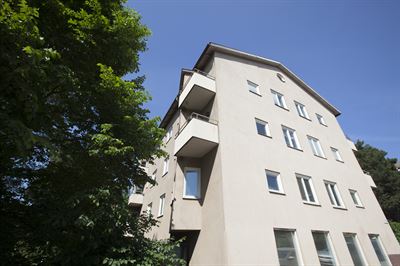
John Mattson has signed an unconditional agreement to divest Frisen 1 (22 apartments, ~915 sqm) at an underlying property value of SEK 48 million, SEK 6 million (15.3%) above its Q3 2025 carrying amount; possession transfers on 22 January 2026. The buyer is a newly formed tenant-owner association, the seller will receive SEK 24 million net liquidity, the transaction is estimated to boost earnings by ~SEK 5 million after costs and reversal of deferred tax, and the initial yield based on projected 2026 NOI is ~2.8%. The sale — the second residential conversion since November 2025 — is presented as portfolio optimisation to free capital for higher-return investments.
Market structure: John Mattson (JOMA) is the direct winner — divesting a SEK 48m asset at a 15.3% premium and freeing SEK 24m in liquidity while recognising ~SEK 5m earnings in Q1 2026. Buyer groups (tenant-owner associations) gain ownership of low-yield stock, reducing rentable supply locally and concentrating low-yield assets off JOMA’s balance sheet; large institutional landlords are neutral. The 2.8% initial yield highlights compression risk in residential Stockholm micro-markets and suggests modest tightening of credit spreads for small landlords, with negligible FX or commodity impact.
Risk assessment: Key tail risks are (1) regulatory changes that limit corporate-to-tenant conversions, (2) a 100bp+ rise in market cap rates (sensitivity: value ≈ NOI/cap rate — a move from 2.8% to 3.8% would cut value ~26%), and (3) execution risk if proceeds are mis-deployed. Immediate effects (days–weeks): share reaction to Q1 guidance; short-term (1–6 months): liquidity redeployment and possible NAV/EPS uplift; long-term (≥1 year): strategy hinge on repeatable conversions and interest-rate trajectory. Hidden dependency: repeatability requires willing tenant buyers and stable tax/transfer rules; reversal catalysts include adverse tax/regulatory announcements or a sharper-than-expected rate move.
Trade implications: Tactical, small-cap play — JOMA likely to benefit incrementally but transaction size is small vs SEK 14.5bn portfolio, so cap gains are modest unless management scales conversions. Direct trade: modest long JOMA exposure (see decisions). Relative value: long nimble small-cap landlords that execute conversions vs short larger diversified issuers with higher cap-rate sensitivity (example pair below). Options: 3–6 month calls or cash-secured puts to express mild bullishness while limiting downside.
Contrarian angles: The market may underprice the strategic option value of repeatable conversions — SEK 24m per sale is small now but could compound if management delivers several transactions (threshold: >SEK100m additional liquidity within 12 months). Conversely, the positive headline masks high cap-rate sensitivity; if rates reprice higher by 100–150bp the NAV hit could exceed gains from conversions. Watch for: frequency of conversions, announced use of proceeds, and Swedish residential cap-rate moves as leading indicators.
AI-powered research, real-time alerts, and portfolio analytics for institutional investors.
Request DemoOverall Sentiment
mildly positive
Sentiment Score
0.32
