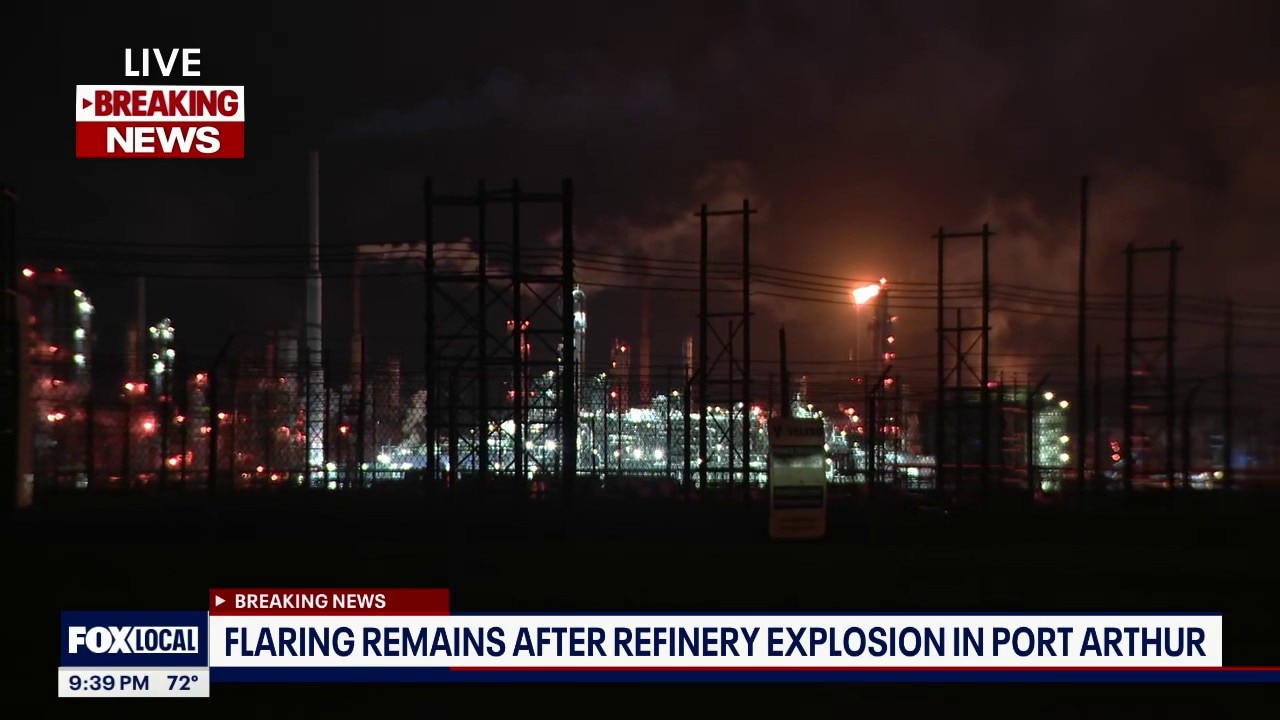
An explosion occurred at Valero's Port Arthur refinery on Monday evening; the resulting unit fire was extinguished by Tuesday morning and a shelter-in-place order for nearby residents was lifted. Valero reported all personnel accounted for and TCEQ deployed air monitoring teams; local roads were closed then reopened and Sabine Pass ISD canceled classes for Tuesday. Operational disruption appears localized and short-lived with no reported injuries, implying limited near-term impact to regional fuel supply or Valero's broader production.
An unexpected refinery capacity removal in PADD 3 typically produces a front-loaded impact on regional product cracks and logistics flows: gasoline and diesel cracks can widen $2–6/bbl in the first 7–30 days as inland terminals draw down inventories and pipeline nominations re-route. Markets price the easiest margin capture first (nearby merchant refiners and terminals), so expect a 3–6 week window where merchant refiners with spare throughput and barging/rail flexibility capture outsized cash flow while integrated majors hedge away spot exposure.
Second-order supply-chain effects matter more than headline outage size. Pipeline flow reversals and import parity economics mean Gulf Coast ports will attract spot foreign product cargoes if the domestic shortfall persists beyond two weeks, pressuring product tanker rates and potentially lifting backwardation in short-cycle refined products. Petrochemical crackers that rely on light feedstock could face feedstock swings and price volatility if gasoline blending economics change, tightening margins for downstream chemical names for 1–3 months.
Regulatory and insurance follow-through is the longer-duration catalyst: occupational/environmental investigations can extend capital downtime and create contingent liabilities that compress equity multiples over quarters, not days. Conversely, if restart timelines are short and imports bridge the gap within 10–14 days, the initial crack move will mean-revert sharply — that is the primary tail risk to any trade premised on sustained regional tightness.
For portfolios, the inefficiency window is small but actionable. Trade ideas should target short-dated payoff from crack widening while hedging the restart/import risk; avoid directional balance-sheet exposures that assume multi-quarter production loss unless regulatory filings suggest otherwise. Monitor pipeline nomination reports, PADD 3 terminal inventory prints, and short-term tanker flows as 48–72 hour alpha signals to scale positions.
AI-powered research, real-time alerts, and portfolio analytics for institutional investors.
Request DemoOverall Sentiment
neutral
Sentiment Score
0.00
