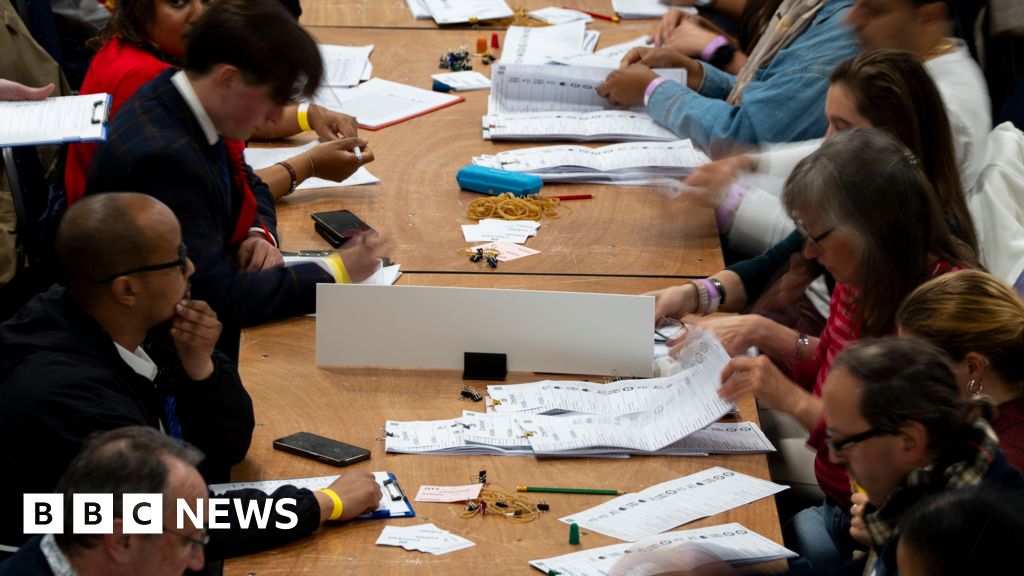
Early local election results show Reform UK making gains at the expense of Labour and the Conservatives, with Labour losing control of councils including Hartlepool, Tameside, Redditch and Tamworth. The Conservatives are also under pressure in several English councils, while the Liberal Democrats and Greens are targeting later-declaring contests in places such as Hampshire, Surrey, Hackney and Lewisham. The broader political test continues later today with results due from Scotland, Wales and more English councils, including the Senedd and Scottish Parliament.
The market read-through is not a broad “political noise” story; it is a signal that anti-incumbent fragmentation is now the base case across the UK and, by extension, that policy volatility around planning, housing, local taxation and public-sector labor relations is rising. That matters more for domestically levered UK assets than for global exporters: banks, homebuilders, listed REITs, local infrastructure contractors and retail-facing names are the ones most exposed to any shift in council-level permitting, business rates and municipal spending priorities. The second-order effect is that even modest gains by smaller protest parties can force larger parties into softer fiscal rhetoric, raising the probability of pre-election giveaways and slower deficit repair over the next 6–12 months.
For rates and FX, the near-term implication is a higher “UK risk premium” rather than a clean growth shock. If the results reinforce a fragmented mandate, gilts can cheapen on expectations of looser local and national fiscal discipline, but the move should be most visible at the long end and in sterling, not necessarily in front-end policy pricing. The cleaner catalyst is the sequencing: overnight council results are the first read, but Wales and Scotland outcomes later in the day can reprice narrative momentum; that creates a 24–72 hour window where headline-driven volatility may overshoot fundamentals.
The contrarian view is that protest voting is often a bad predictor of governance damage. Smaller parties can surge in local contests without translating into durable national policy change, and once the market has priced in “fragmentation,” the next surprise is often stabilization. In that sense, any knee-jerk move lower in UK domestics could become a fade if the eventual results show that gains are broad but shallow rather than concentrated enough to threaten control of key councils or future parliamentary arithmetic.
AI-powered research, real-time alerts, and portfolio analytics for institutional investors.
Request DemoOverall Sentiment
neutral
Sentiment Score
-0.10
