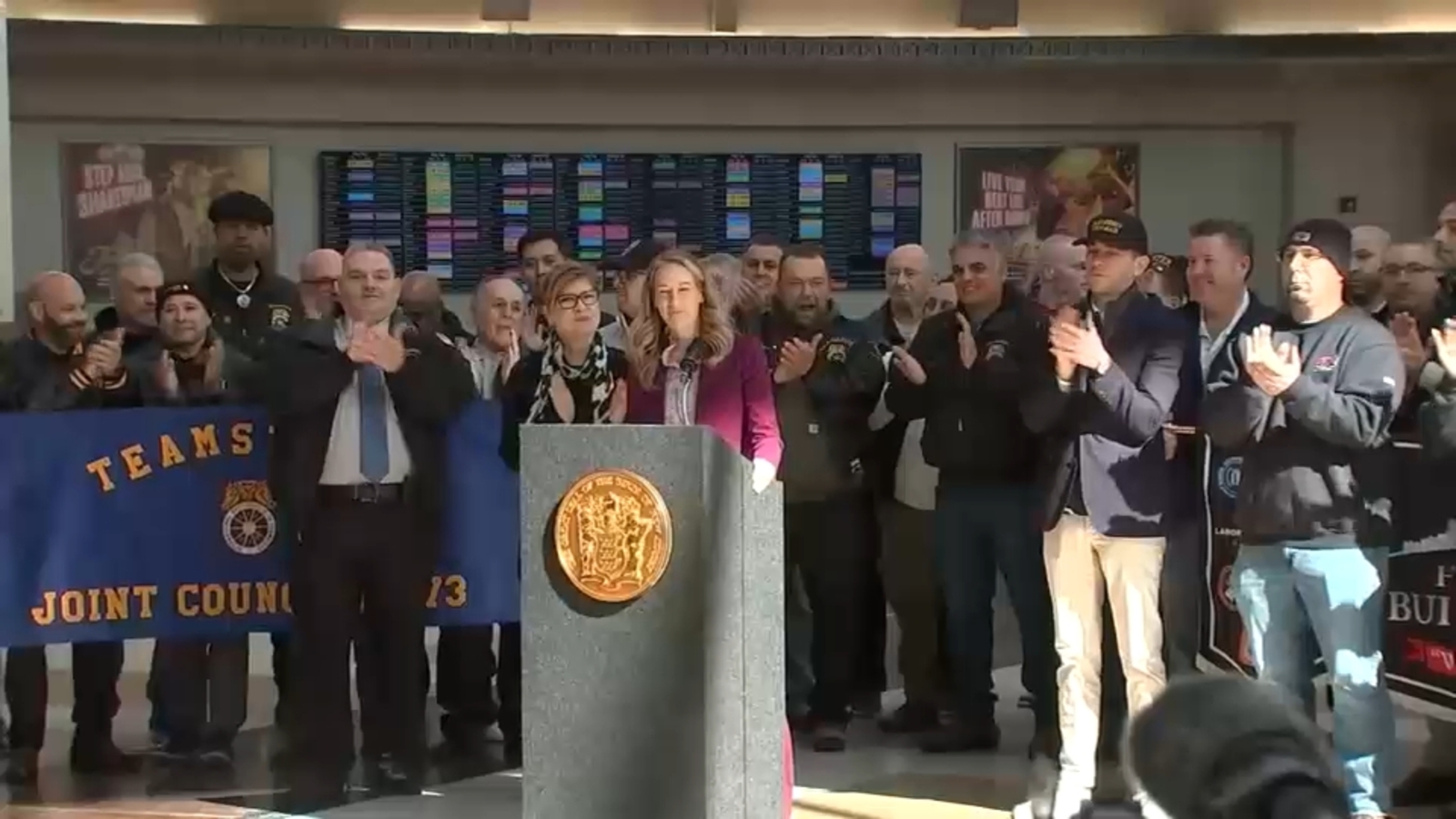
A federal court ordered the Trump administration to invalidate a suspension of Gateway Tunnel reimbursements after $30 million of a stalled $205 million disbursement was approved and is being processed; full funding remains delayed despite a congressionally authorized $16 billion project budget and over $1 billion in work underway. The funding uncertainty has halted work and idled roughly 1,000 union workers, prompting additional litigation (appeal hearing Feb. 23; federal claims oral argument Mar. 12) and raising the risk of construction delays for contractors, transit operations and regional commuters until remaining federal payments are restored.
Market structure: Short-term winners are civil-engineering contractors and infrastructure ETFs (e.g., PAVE) if the ~$205M tranche and ultimate $16B project resume on schedule; immediate liquidity of $30M is positive but represents <0.2% of total project value, so revenue recognition and backlog realization will be phased over quarters. Losers in the near term include regional subcontractors, steel and concrete spot sellers and small-cap suppliers who booked just-in-time cashflows and face work stoppages; localized pricing power for raw materials may soften if project activity is delayed by weeks.
Risk assessment: Tail risks include a protracted political withholding of funds through the March 12 Court of Federal Claims hearing (high impact, low probability) that could cause contractor defaults and a 50–200bp widening in NJ/NY muni spreads; immediate risk is operational (1,000 union workers idle) causing subcontractor liquidity stress within 2–6 weeks. Hidden dependencies: local tax receipts, union strike dynamics and supply-chain timing (steel lead times ~8–12 weeks) mean a delay now compresses activity into later quarters, boosting costs. Key catalysts: Feb 23 status report and Mar 12 oral arguments—treat these as binary event windows.
Trade implications: Favor modest long exposure to diversified infrastructure (2% portfolio in PAVE) ahead of court outcomes, hedged with short-dated puts to limit drawdown; selectively add 1–2% exposure to large engineering contractors (J, ACM) on expectation of backlog resilience, target +20% outperformance if funding restored by Q2. Use a relative-value short on cyclical steel (NUE) vs engineering firms into Mar 12—expect steel spot demand to be more sensitive to local project delays. Reduce NJ/NY muni duration by ~20% of muni allocation over next 7 days and hold cash/3-month T-bills to redeploy if spreads widen >25bps post-court.
Contrarian angles: Consensus assumes delays uniformly hurt all suppliers; instead, large diversified contractors with federal-backed contracts (Jacobs/AECOM) are under-owned and could re-rate as funding visibility returns—this is an underappreciated asymmetric opportunity. The market likely underestimates the optionality embedded in a resumed $16B program: a ~1% shift in contractor margins from schedule compression would translate to multi-quarter EBIT upside for top-tier firms. Conversely, if funding stays frozen until Mar 12, credit stress among small subcontractors could produce acquisition opportunities at 30–50% recovery multiples for strategic buyers.
AI-powered research, real-time alerts, and portfolio analytics for institutional investors.
Request DemoOverall Sentiment
mildly negative
Sentiment Score
-0.25
