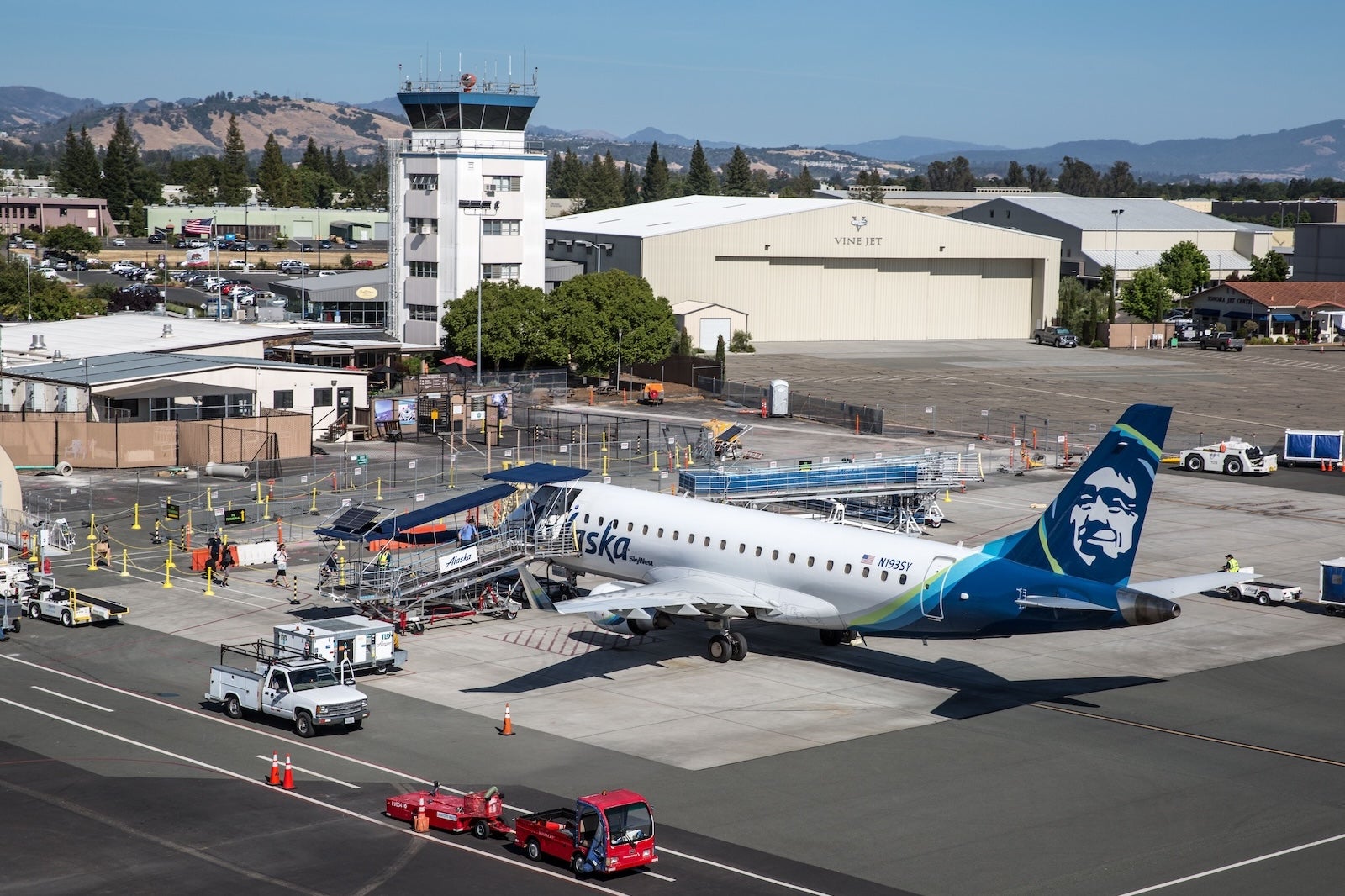
Alaska Airlines is adding three seasonal Sonoma County routes to Phoenix, Salt Lake City and Boise starting Nov. 1, while also resuming Long Beach service to Seattle on Sept. 8. The new STS routes will use Embraer 175 aircraft, and Alaska will link a dozen cities to Santa Rosa by November. The news modestly expands Alaska’s West Coast network and reinforces competitive pressure in Sonoma’s growing leisure travel market.
This is less about a single route announcement than a visible acceleration in the West Coast leisure network arms race. ALK is defending a high-margin niche where route density, loyalty hooks, and ancillary revenue matter more than pure fare levels; the timing suggests management is trying to lock in summer/fall booking behavior before Southwest’s Sonoma footprint becomes habitual. The incremental capacity is modest, but the strategic message is not: ALK is using short-haul, seasonal flying to protect brand share in a market where switching costs are low and customer acquisition is expensive.
The second-order effect is pressure on LUV’s attempt to monetize its Sonoma entry. If both carriers lean into the same winery-travel proposition, the likely outcome is lower yield per passenger rather than outright share transfer, especially on routes that are discretionary and highly price-elastic. That is constructive for consumer demand but not necessarily for unit revenue; the winner is likely the carrier with the stronger local loyalty base and better connecting-bank economics, which favors ALK over a more standardized network proposition.
Long Beach is a different signal: the return there is more valuable as a connectivity node than as standalone traffic. It strengthens the Alaska/Hawaiian combination by creating a narrow but defensible west-to-islands funnel; that should modestly improve network utility and reduce leakage to competing one-stop itineraries. BA is not a direct read-through, but more 737 utilization supports delivery and aftermarket demand at the margin if this kind of domestic network expansion persists.
Contrarianly, the market may be underestimating how quickly this could become a yield problem if capacity keeps compounding faster than local demand growth. The move is positive for traffic, but the real P&L test will show up over the next 2-3 booking cycles in fare compression, not in headline load factors. The catalyst to watch is winter season performance in Sonoma: if yields hold despite the overlap, ALK deserves a premium; if not, this becomes an efficiency story rather than a growth story.
AI-powered research, real-time alerts, and portfolio analytics for institutional investors.
Request DemoOverall Sentiment
mildly positive
Sentiment Score
0.25
Ticker Sentiment
