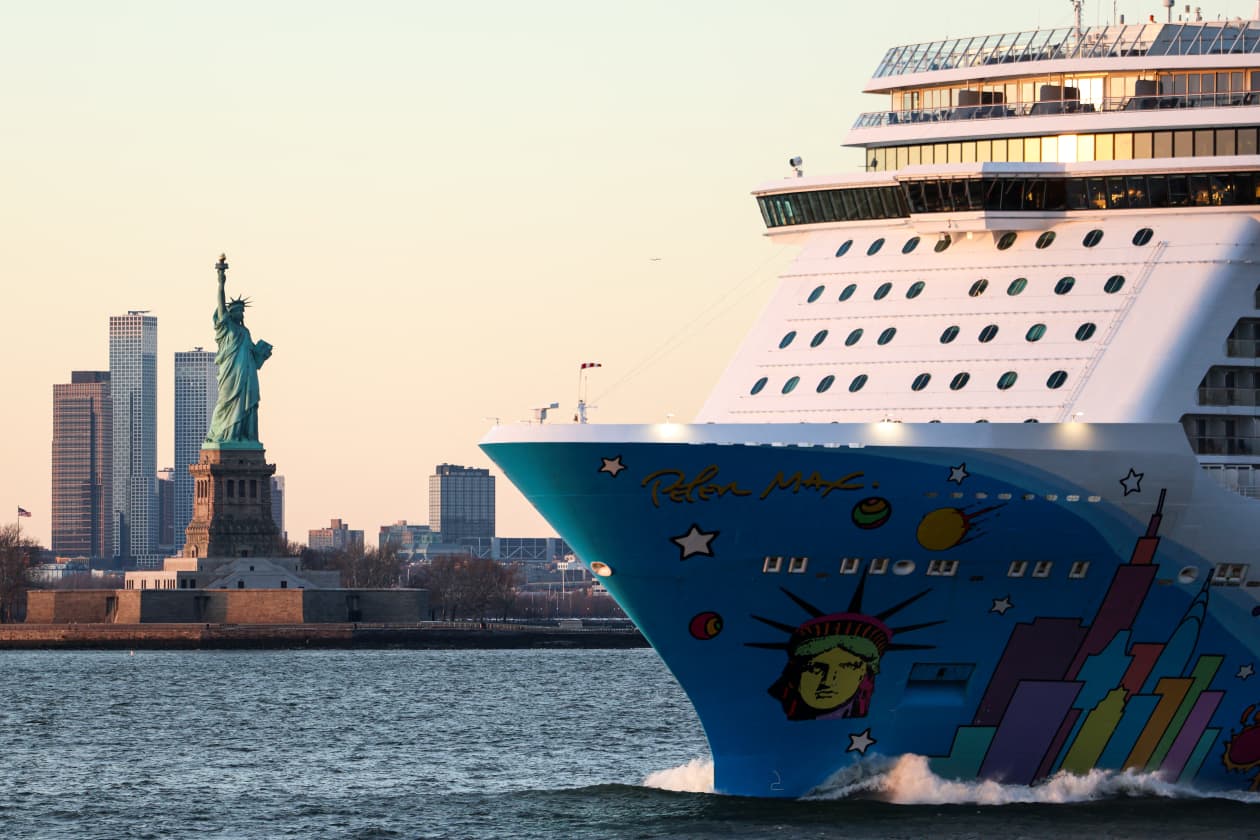
Cruise lines are increasingly adding post-booking fuel surcharges, with at least one Asian operator already applying the fee to future bookings. The change is driven by rising fuel costs tied to the Iran conflict and higher oil prices (gasoline roughly $4/gal), shifting fuel-cost risk onto consumers. Expect modest downside pressure on travel demand and cruise margins, but limited market-wide effects.
Cruise operators face a classic passthrough vs demand-elasticity decision: they can attempt to pass rising bunker costs onto already-booked customers, but doing so risks visible cancellations and reputational damage that depresses future bookings. Expect a near-term (0–3 month) spike in volatility around announcements as companies test consumer tolerance; over 3–12 months, booking calendars will show whether consumers accept modest surcharges or shift to shorter/lower-cost itineraries.
Winners are refiners and bunker suppliers that capture wider crack spreads if fuel stays elevated; mid-cycle, integrated refiners (VLO, MPC) should convert price strength to FCF faster than operators can materially cut capacity. Second-order beneficiaries include private-label insurers and chargeback processors that earn more from higher average transaction amounts, while port/shore-service providers could see working-capital stress if cruise lines extend payment terms.
Key catalysts: Brent above $85–90/bbl or a sustained geopolitical escalation would force broader, permanent surcharges and likely push consumer reactions into measurable booking declines (2–6% range over the next two quarters per $100 incremental out-of-pocket spend). Reversals can come quickly if oil normalizes (OPEC policy shift, diplomatic de‑escalation, SPR release) within 30–90 days or if regulators constrain retroactive fees, which would shift the burden back onto operators and press margins.
AI-powered research, real-time alerts, and portfolio analytics for institutional investors.
Overall Sentiment
mildly negative
Sentiment Score
-0.25
