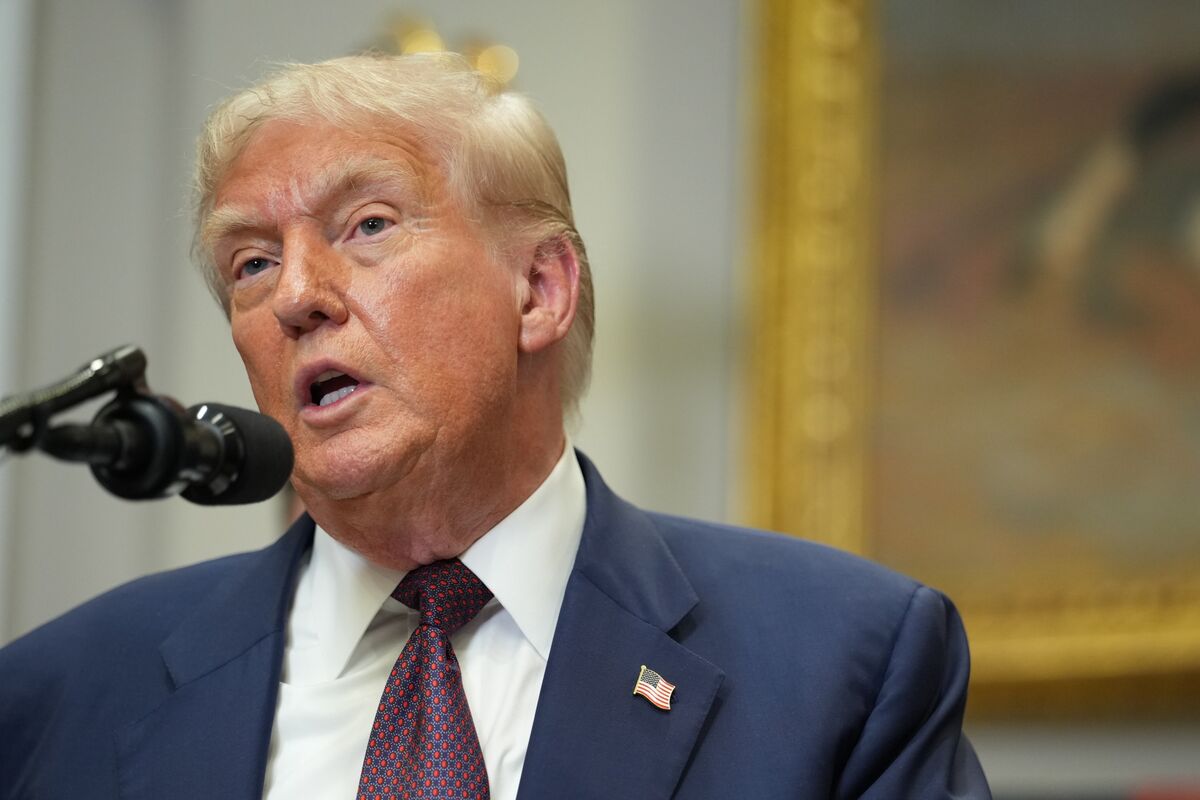
President Trump has announced new baseline global tariffs of 10%, with duties escalating to 15% or higher for imports from countries maintaining trade surpluses with the U.S. The White House issued this directive on Thursday, just hours before a self-imposed deadline. This policy marks a significant shift towards a broader global tariff regime, moving beyond previous country-specific measures, though the exact effective date of these new rates remains unclear.
The White House has announced a significant shift in U.S. trade policy, establishing a new global tariff framework that moves beyond previous country-specific measures. The policy sets a minimum global tariff of 10% and imposes a higher rate of 15% or more on imports from nations holding a trade surplus with the United States. This development introduces substantial uncertainty into global markets, reflected in the moderately negative sentiment and high market impact score. A key source of this uncertainty is the lack of a specified effective date for the new rates. The move will likely disrupt global supply chains, increase input costs for U.S. businesses reliant on imports, and risks provoking retaliatory tariffs from trade partners, escalating global trade tensions.
AI-powered research, real-time alerts, and portfolio analytics for institutional investors.
Request DemoOverall Sentiment
moderately negative
Sentiment Score
-0.40
