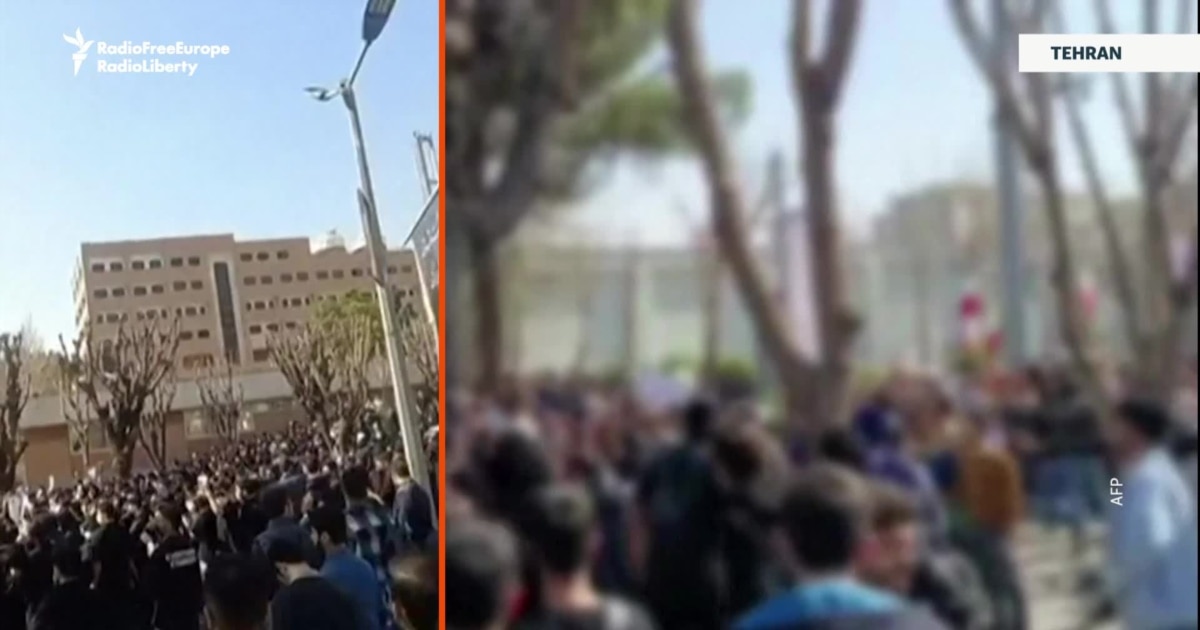
Anti-government demonstrations erupted at Tehran universities on Feb. 21 as students clashed with Basij forces amid nationwide memorials for victims of a brutal January crackdown that human rights groups say killed at least 7,000 people. The unrest coincides with an escalating US military buildup in the region — including two carrier strike groups, reported bombings of Iranian nuclear sites and threats of limited strikes — and diplomatic pressure over Iran's nuclear program, prompting some countries to urge citizens to leave. These developments raise short-term risk premia for regional stability and oil markets and increase geopolitical tail risks that could pressure emerging-market assets and investor positioning.
Market structure: Geopolitical risk raises near-term winners — defense contractors (LMT, RTX, NOC, GD) and liquid energy producers (XOM, CVX, XLE) — and near-term losers — airlines (JETS, AAL, UAL), regional EM equities (EEM) and insurers with shipping exposure. Pricing power shifts toward upstream oil and war-related services; insurance/shipping premiums can rise 20–100% quickly for Red Sea/Strait of Hormuz routes, compressing margins for trade-intensive sectors. Cross-asset: expect immediate spikes in Brent/WTI and oil implied vol (+30–80% IV), a risk-off bid into USD and US Treasuries (10y yield down 10–30bp intraday) and gold up 3–8% in days.
Risk assessment: Tail risks include a Strait of Hormuz closure driving Brent >$150/bbl within days and a sustained regional war prompting a 10–20% GDP hit to regional trade; downside tail is a limited skirmish that reverses price moves within 1–2 weeks. Time horizons: immediate (days) — oil/FX/vol shocks; short-term (weeks–3 months) — repricing of defense contractors and insurers; long-term (quarters+) — sanctions, trade rerouting and structural energy sourcing changes. Hidden dependencies: covert Iranian oil flows and China’s policy can mute sanctions; shipping reroutes raise costs non-linearly. Catalysts: US/Israel military actions, credible threats to tanker traffic, OPEC+ decisions, and US election rhetoric.
Trade implications: Tactical plays favor small, concentrated exposure: buy defense equities and energy call spreads for 1–3 month windows while hedging with gold and USD. Use pair trades to isolate sector risk (long XOM vs short JETS) and buy options (3-month Brent call spreads, 2–3 month puts on EEM) to cap downside. Position sizes should be modest (1–3% portfolio each) and rules-based: trim if oil reverses >15% in 10 trading days or if no escalation within 6 weeks. Liquidity-sensitive instruments (front-month Brent futures, JETS ETF, GLD, UUP, listed options) are preferred to avoid execution slippage.
Contrarian angles: Consensus may overprice permanent higher energy prices; historical Iran-related spikes (e.g., 2019–2020) mean-reverted in 4–8 weeks absent supply disruption — so avoid large outright long-dated energy exposures without hedges. Defense stocks often spike on headlines then give back gains absent policy/budget changes; consider taking partial profits on >20% moves. Unintended consequences: a sustained oil shock could force Fed hawkishness, tightening financial conditions and amplifying equity drawdowns — so pair energy longs with rate/credit hedges where appropriate.
AI-powered research, real-time alerts, and portfolio analytics for institutional investors.
Request DemoOverall Sentiment
strongly negative
Sentiment Score
-0.60
