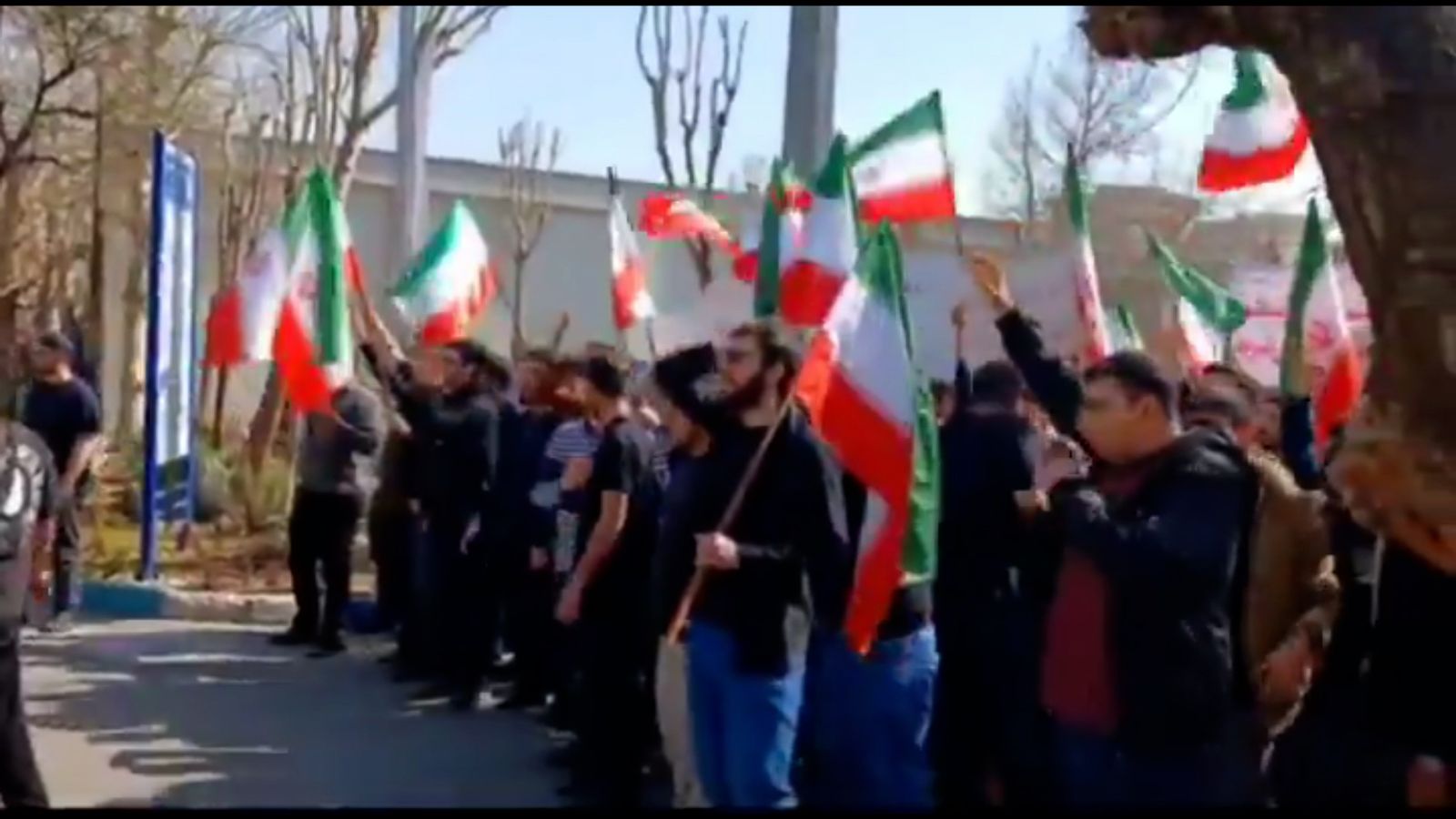
Widespread student protests in Tehran have erupted into violent clashes with Basij and security forces across multiple universities following a January crackdown that reportedly killed thousands, signaling elevated domestic instability in Iran. At the same time, US President Donald Trump said limited strikes are being considered and the USS Gerald Ford has joined the USS Abraham Lincoln en route to the Middle East, increasing the risk of military escalation. The twin developments raise regional geopolitical risk, with potential upward pressure on oil prices, upside for defense contractors and heightened volatility for emerging-market and Iran-exposed assets while complicating ongoing nuclear diplomacy.
Market structure: Near-term winners are defence primes (Lockheed LMT, Raytheon RTX, Northrop NOC) and upstream energy producers (XOM, CVX, XLE) because marginal security spending and even a 5–15% crude spike increase E&P free cash flow and backlog visibility. Clear losers are EM equities/currencies (EEM, TRY, ZAR) and travel/leisure (AAL, UAL, LUV) where routing/insurance costs compress margins and prompt risk-off flows into USD/JPY and gold. Commodity pricing power shifts to Middle East producers and storage/transport providers; refiners gain if cracks widen >$10/bbl.
Risk assessment: Tail risks include a limited US-Iran kinetic strike or Strait-of-Hormuz disruption that could remove 2–5% of global oil supply (oil +$15–$40) and trigger a flight to quality; probability near-term ~10–20% but fat-tailed. Immediate (days) moves: volatile oil, stronger USD, higher gold; short-term (weeks–months): defense order re-rates and EM outflows; long-term: sanctions and higher structural energy security premia over 6–24 months. Hidden dependencies: SPR releases, OPEC+ response, China import behavior, insurance market repricing for shipping all materially alter outcomes.
Trade implications: Favor tactical long defense (2–4% portfolio) and energy (1–3%) exposure with defined exits; hedge EM directional risk with 1–2% put protection on EEM or long VIX instruments if strikes occur. Use short-dated options to capture volatility spikes—buy 4–8 week call spreads on XLE or Brent and 30–90 day call spreads on LMT/RTX to limit premium outlay while capturing policy/incident-driven moves.
Contrarian angles: Consensus risk-off may overshoot—if diplomatic talks progress (probability 30–40%) or SPR is released, oil and defense could mean-revert within 4–8 weeks; consider pair trades that fade spikes (long AAL or regional airlines vs short RTX after a 20–30% defense run-up). Watch for overbaked premiums in defence after immediate headlines; historical parallels (2019 tanker incidents) show 6–10 week mean reversion.
AI-powered research, real-time alerts, and portfolio analytics for institutional investors.
Request DemoOverall Sentiment
strongly negative
Sentiment Score
-0.60
