
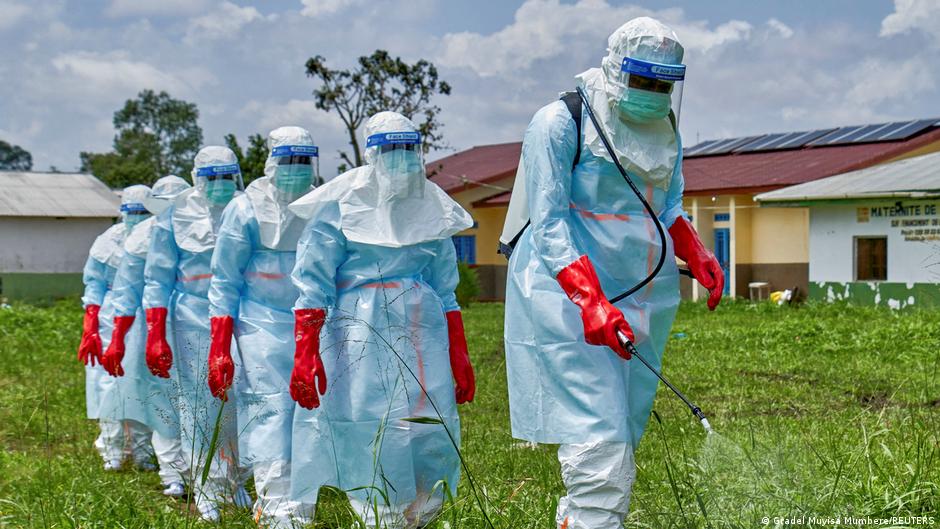
More than 900 suspected Ebola cases and 220 deaths have been reported in eastern DRC, with the WHO warning the outbreak will worsen before improving. Aid cuts, including reduced US support to the WHO and tighter German budgets, are limiting response capacity, with only 30% of demand currently being met and shortages in vaccines, testing kits, and protective equipment. The outbreak is unfolding amid prolonged conflict in Ituri and North Kivu, increasing the risk of broader regional spillovers.
The market implication is not the outbreak itself, but the financing wedge it creates for global health response capacity. The first-order loser is any multilaterally funded NGO or public-health implementer with African exposure; the second-order loser is the local logistics stack—air freight, cold-chain, field diagnostics, and security contractors—because response budgets are being squeezed just as operating complexity rises. The beneficiary set is narrow: providers of low-cost rapid tests, portable lab equipment, and crisis-comms vendors with existing frameworks may see incremental demand, but only if funding is reallocated quickly enough to matter.
The bigger macro signal is that aid retrenchment increases the probability of under-detected spillovers rather than reducing headline crisis counts. That raises tail risk for border closures, refugee flows, and episodic risk-off in European assets if the outbreak broadens into a regional security issue over the next 1-3 months. In fragile states, the market tends to underprice the delay between a containment failure and a policy shock; the real catalyst is not mortality data, but evidence of cross-border transmission or healthcare-worker absenteeism, which can force emergency spending and travel restrictions.
Consensus is likely still treating this as a humanitarian headline, but the investable angle is that shrinking donor budgets make the system less elastic, so the next outbreak has a higher marginal impact than the last one. That means the downside risk is convex: modest additional infection growth can trigger disproportionate policy response, while stabilization only arrives if financing is restored and local surveillance capacity is rebuilt. For public-health equities, the setup is mixed: near-term procurement names may pop, but broad healthcare beta is not the trade unless you believe this becomes a wider global-health funding repricing.
AI-powered research, real-time alerts, and portfolio analytics for institutional investors.
Request TrialOverall Sentiment
strongly negative
Sentiment Score
-0.75
Ticker Sentiment
