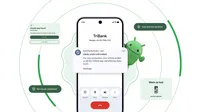
Android outlined a broad 2026 security and privacy expansion, including verified financial calls, Live Threat Detection upgrades, Android OS verification, stronger theft protections, and new AI isolation tools. The rollout spans Android 11+ through Android 17, with initial bank partners Revolut, Itaú, and Nubank and broader protections for devices, apps, and network security. The update is constructive for Android’s security posture and may modestly support adoption of Google’s ecosystem and partner apps, but near-term market impact should be limited.
This reads less like a consumer-feature update and more like a platform-wide hardening cycle that increases Android’s credibility with banks, enterprises, and regulators. The most important second-order effect is distribution leverage: once scam-call verification and theft protections are defaulted into the OS, the value shifts from point-solution security apps toward whoever can bind the trust layer at the operating-system level. That is structurally favorable for GOOGL because it raises switching costs for OEMs and makes Android security a broader enterprise and fintech sales conversation rather than a handset feature.
The near-term winner is also indirect monetization through reduced fraud friction in financial apps. Banks that participate can lower call-center losses and customer churn, which should increase willingness to co-market and preinstall more tightly integrated security workflows; that helps Android’s ecosystem stickiness, especially in emerging markets where fraud rates are highest. The less obvious loser is the long tail of third-party anti-fraud, caller-ID, and mobile security vendors whose value proposition is now being absorbed into native OS controls; their attach rates should compress over the next 2-4 quarters as default-on protections expand.
The contrarian point is that stronger privacy controls can slightly reduce ad-tech granularity and raise compliance overhead for app developers, but that drag is likely overstated relative to the trust dividend. The bigger risk is execution: if verification false-positives inconvenience legitimate banking calls or lock users out after theft events, headline sentiment could turn quickly. That said, the rollout cadence suggests an adoption curve measured in months, while the reputational and enterprise-security benefits should compound over years.
For GOOGL, this is a low-beta positive catalyst rather than a standalone re-rating event, but it supports a higher-quality multiple if investors start valuing Android as a security platform. The best read-through is not immediate EPS upside; it is reduced ecosystem risk and improved enterprise optionality heading into Android 17 adoption and managed-device policy rollouts.
AI-powered research, real-time alerts, and portfolio analytics for institutional investors.
Request DemoOverall Sentiment
mildly positive
Sentiment Score
0.40
Ticker Sentiment
