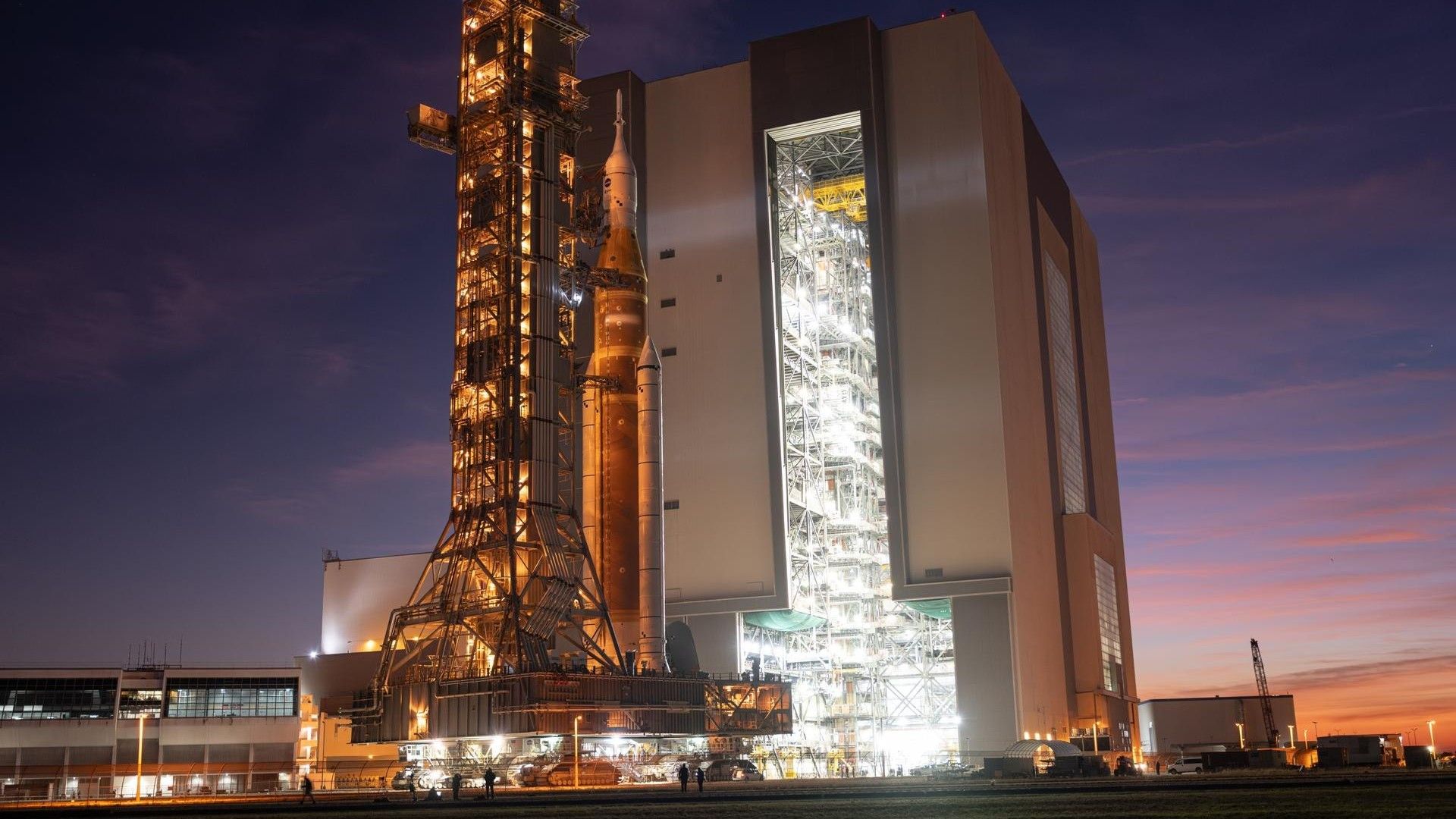
Engineers repaired a dislodged seal in the upper-stage helium quick-disconnect of NASA's Artemis 2 stack inside the Vehicle Assembly Building, restoring consistent helium flow and preserving potential April launch windows (Apr 1, Apr 3-6 and Apr 30) after a rollback from Launch Pad 39B following a wet dress rehearsal. Technicians are also replacing flight and flight-termination system batteries and charging Orion's abort batteries; program restructuring shifts the first Artemis lunar landing to Artemis 4 (targeted 2028), a timeline detail material to contractors but unlikely to move broader public markets.
Market structure: NASA repair and a maintained April window is a positive signal for large defense/space contractors (Lockheed Martin LMT, Northrop Grumman NOC, Raytheon/RTX) and specialty gas suppliers (Linde LIN, Air Products APD) because program continuity sustains multi-year service and parts revenue. Small-cap commercial space names (MAXR, SPCE) will get a sentiment lift on crewed-moon progress but remain volatility-prone; Boeing (BA) faces asymmetric reputational/execution risk that can compress its multiple relative to peers. Cross-asset effects are muted: expect a modest 5–15% bump in implied vol for small-cap space equities around launch windows, a localized 5–10% upward pressure on helium/specialty-gas spot prices, and no material sovereign bond or FX moves absent a major failure.
Risk assessment: Tail risks include a launch failure or a slip beyond Q3 2026 that could erase near-term gains and trigger 5–15% drawdowns in exposed contractors; a high-profile anomaly could prompt increased congressional oversight and contract repricing within 30–90 days. Hidden dependencies include single-source quick-disconnects, emergency-battery vendors and helium logistics (cryogenic trucking/storage) that can bottleneck operations and revenue recognition. Key catalysts are the April launch outcome, NASA rollout later this month, and FY budget actions in the next 60–120 days.
Trade implications: Favor overweight defense primes and industrial gas suppliers for 6–12 months while keeping position sizing disciplined (2–3% per name), use pair trades to neutralize macro beta, and buy staggered options around the April window to capture asymmetric upside while limiting cash at risk. Short speculative small-cap space exposure into the launch (30–90 days) using OTM puts or small size short positions to hedge event volatility; rotate into winners post-success over 3–12 months.
Contrarian angles: Consensus underweights the supply-chain winners (LIN/APD, battery makers) who can see durable revenue tailwinds if NASA scales Artemis cadence; the market may be underpricing a >3-month slip which would materially widen spreads on BA and small-cap space names. Historical parallels (post-Apollo contractor re-rating and later program cuts) show success drives multi-quarter supplier contracts but delays cause concentrated drawdowns — structure trades to capture success while limiting failure exposure.
AI-powered research, real-time alerts, and portfolio analytics for institutional investors.
Request TrialOverall Sentiment
mildly positive
Sentiment Score
0.35
