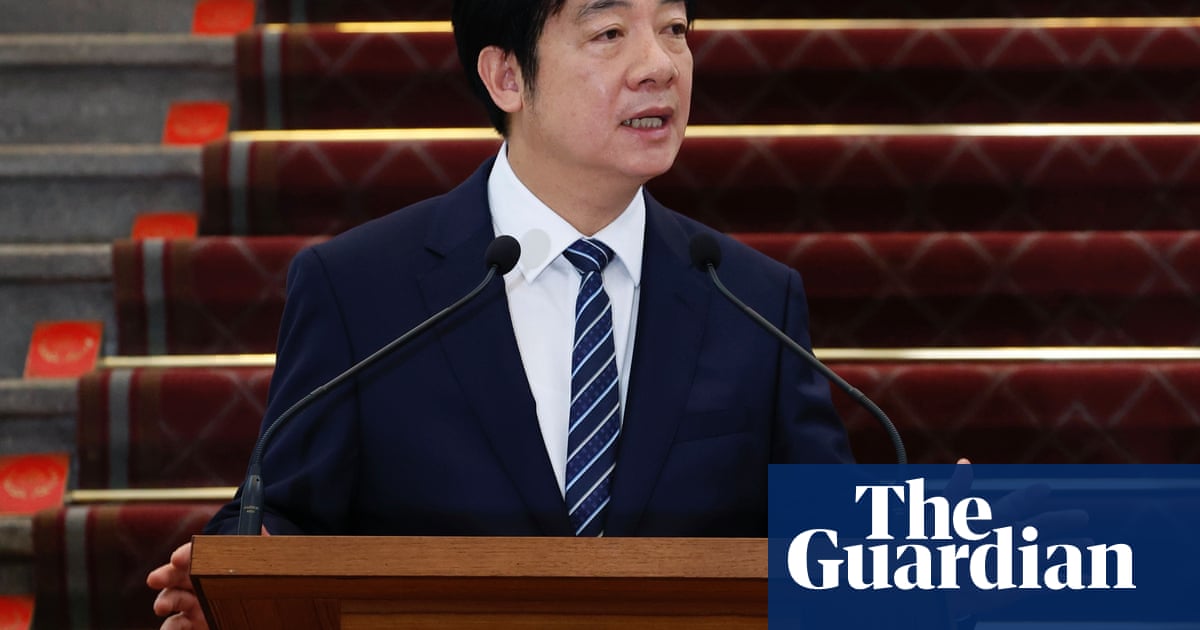
Taiwan's President Lai Ching-te reiterated calls for peace and dialogue with China on his first anniversary, emphasizing that war would have "no winners" while pledging to strengthen Taiwan's defenses; this comes amid increased Chinese military activity and domestic political divisions. China responded by accusing Lai of escalating cross-Strait tensions, while analysts suggest Lai's tempered tone in his anniversary speech, which focused on domestic issues, may reflect anxieties over potential US-China talks impacting Taiwan. To address domestic turmoil, Lai offered national security briefings to the opposition party leaders who have accused him of increasing tensions with China.
Taiwanese President Lai Ching-te's first-anniversary address underscored a complex geopolitical landscape, characterized by his calls for peace and dialogue with China while simultaneously vowing to bolster Taiwan's defenses against potential aggression, stating "in war there are no winners." This stance was met with immediate condemnation from Beijing, with state media accusing Lai of "deliberately escalating" cross-Strait tensions and pursuing "Taiwan independence." The backdrop to these diplomatic exchanges includes a significant uptick in Chinese military presence, averaging approximately 20 aircraft and 11 naval/coastguard vessels daily in Taiwan's air defence identification zone, actions Taiwan authorities had anticipated. Notably, Lai's formal speech diverged from previous, more assertive pronouncements on China, focusing instead on domestic priorities such as carbon emissions, strategies for US tariffs, and internal political divisions; his direct comments on China were reserved for the subsequent press conference. Analysts, such as Amanda Hsiao from Eurasia Group, suggest this more cautious public approach may reflect Taipei's anxieties about Taiwan's position in potential future US-China negotiations and concerns that Beijing might seek a softening of US support. Domestically, Lai faces considerable challenges, with opposition parties controlling the legislature and accusing his administration of heightening tensions and suppressing dissent, which has led Lai to offer national security briefings to the opposition KMT. Lai's administration has also increased scrutiny of Chinese-born individuals and statements supporting Beijing. The overall situation carries a negative sentiment score of -0.3 and a cautious tone, with a moderate market impact score of 0.4 reflecting the ongoing instability and its relevance to themes of geopolitics, domestic politics, and trade policy.
AI-powered research, real-time alerts, and portfolio analytics for institutional investors.
Request DemoOverall Sentiment
Negative
Sentiment Score
-0.30
