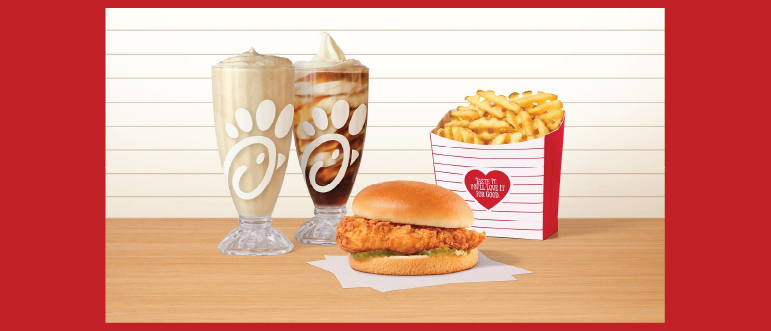
Major US quick-service brands rolled out a series of promotional product launches and limited-time items aimed at driving traffic and brand engagement: Chick-fil-A launched an 80th-anniversary “Newstalgia” campaign with permanent frosted sodas/floats and collectible retro cups (including 3,000 Golden Fan Cups that grant a year of free Chick-fil-A), Burger King introduced the Ultimate Steakhouse Whopper and a seasonal Cinnamon Apple Pie, Taco Bell unveiled a Luxe Value Menu with 10 items at $3 or less, Dunkin’ added protein-forward beverages with a celebrity partnership and new menu items, and Krispy Kreme offered a football-themed Championship Dozen for Jan. 19. These moves are promotional and consumer-facing rather than financial guidance, so they may modestly influence foot traffic and same-store sales trends but are unlikely to be materially market-moving on their own.
MARKET STRUCTURE: National QSRs with scale (YUM, QSR, MCD) and niche premium snack players (DNUT) are the primary beneficiaries—they can underwrite promotional trials and upsell higher-margin items (protein, iced/coffee hybrids). Independents and dine-in chains (DRI) are the likely losers as price-competitive, convenience-led offers accelerate share shifts and compress traffic for sit-down concepts. Expect modest upward pressure on dairy/coffee/cocoa demand near term (1–3 months) and little direct sovereign bond or FX impact; corporate credit spreads for casual dining could widen if SSS decelerates by >200bp.
RISK ASSESSMENT: Tail risks include a sudden 10%+ commodity shock (milk/coffee/sugar), franchisor-franchisee disputes over promotional margin splits, or nutrition/regulatory backlash that curbs high-calorie SKU rollouts. Timing: promotional lift is immediate (days–weeks), SSS and margin translation appear over the next 1–3 quarters, and structural share shifts play out over 12–24 months. Hidden dependencies include franchise economics, labor passthrough clauses, and cannibalization of core SKUs; key catalysts are monthly same-store-sales, earnings calls, and food-away-from-home CPI releases.
TRADE IMPLICATIONS: Favor scalable franchise models via long YUM and QSR; small tactical exposure to DNUT to capture event-driven lift but cap sizing (see decisions). Use pair trades to exploit model differences (franchise vs. dine-in). Options: employ limited-risk call spreads on DNUT around promo windows and consider protective collars on casual-dining shorts. Rebalance if SSS misses by >150–200bp or commodity cost/headwinds widen margins by >200bps.
AI-powered research, real-time alerts, and portfolio analytics for institutional investors.
Request DemoOverall Sentiment
mildly positive
Sentiment Score
0.25
Ticker Sentiment
CONTRARIAN ANGLES: Consensus understates cannibalization and transient nature of limited-time SKUs—historically LTOs boost traffic for 1–2 quarters then fade. Small-cap names like DNUT can overreact positively to holiday/game-day skews; upside may be front-loaded and mean-revert. Monitor franchisee commentary and labor-cost disclosures—if franchisee margins compress by >100bp, elevate short bias on dine-in peers.
