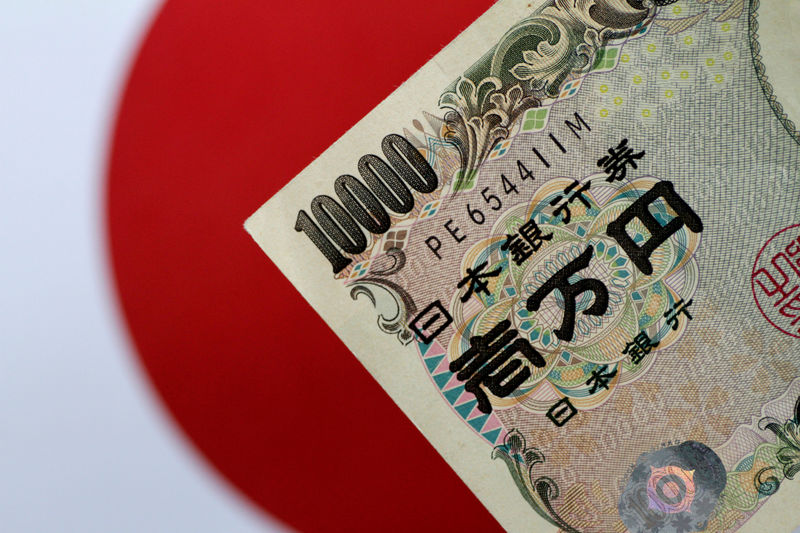
Bank of America says yen weakness versus commodity-linked currencies remains limited amid high FX volatility and warns that lower volatility combined with elevated oil prices would amplify downside risks for the yen. The bank favors an AUD/JPY trade and recommends selling USD/JPY around ¥157, citing intervention risk, and suggests fading market pricing that discounts a BoJ April rate hike versus RBA May hike expectations.
Diverging real rates between ultra-low-yield Japan and commodity-linked economies has created a one-way flow into carry and commodity exposures; with realized FX volatility compressed, the market is sitting on large short gamma positions that amplify moves when a shock arrives. Mechanically, a sustained 5–8% rise in commodity prices over 30–90 days would likely spur a nonlinear re-pricing of JPY crosses as leveraged carry funds and Tokyo-based exporters adjust hedges, producing outsized moves in spot versus a similar percentage change in fundamentals.
Second-order winners from that dynamic are commodity producers and local financial intermediaries that capture wider net interest margins and terms-of-trade gains, while importers in low-yield economies and domestic consumers in net-importer countries face margin compression and operational FX cost shocks. On the fixed-income side, persistent yen weakness pressures JGB real yields higher via imported inflation and hedging flows, which would steepen the global curve and re-route duration risk into US and Australian markets over 3–12 months.
Key catalysts that would abruptly reverse or accelerate this regime are central-bank communication shifts (surprise tightening guidance out of Tokyo or a dovish pivot from commodity-country central banks), abrupt commodity price reversals, or direct FX intervention by fiscal authorities. Probability-weight the intervention tail at ~15–25% over the next six months; absent intervention, expect episodic 3–6% swings in major commodity/JPY crosses every quarter driven by option expiries and quarterly re-hedging.
Execution should favor option structures that buy skew rather than naked forwards: that captures asymmetric payoff if the current compressed vol environment decompresses. For portfolio construction, pair directional commodity exposure with convex JPY hedges and prefer liquid instruments with tight implied–realized dispersion to avoid slippage during fast moves.
AI-powered research, real-time alerts, and portfolio analytics for institutional investors.
Request DemoOverall Sentiment
neutral
Sentiment Score
0.00
Ticker Sentiment
