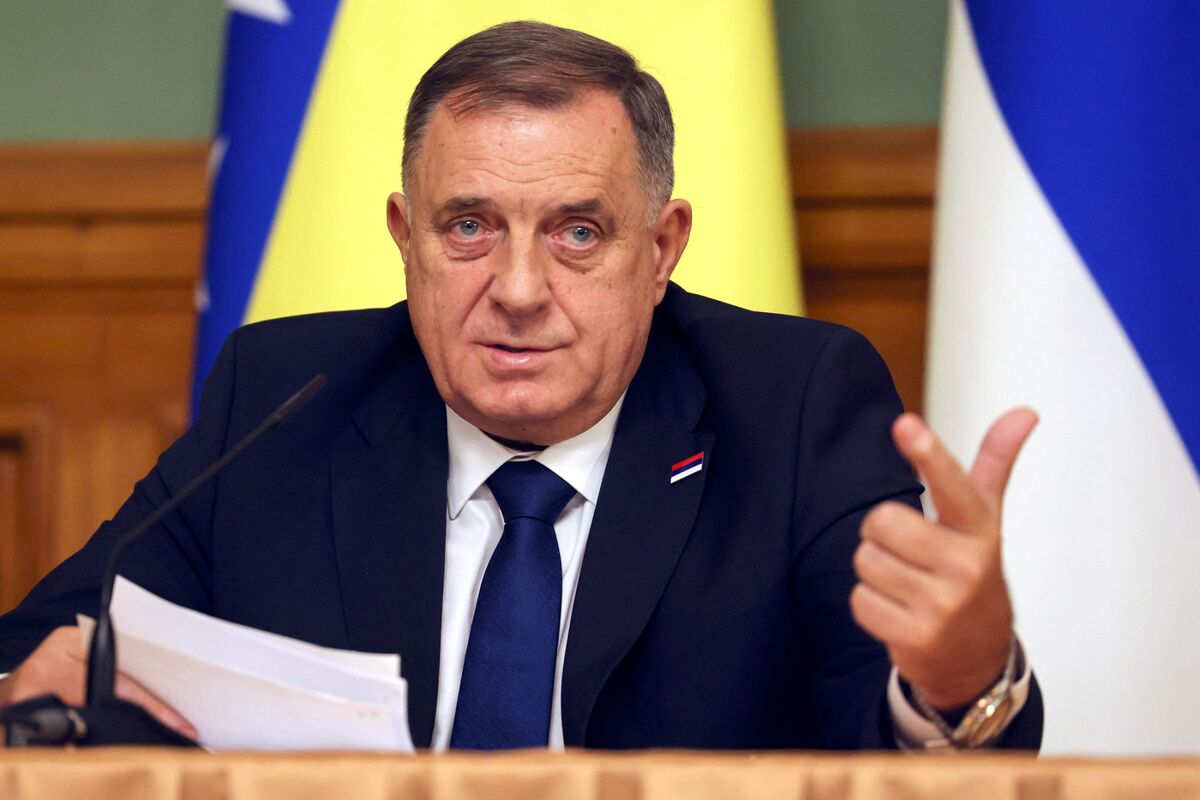
Serbs in Bosnia’s Republika Srpska are voting to replace Milorad Dodik, the nationalist leader whose push for greater autonomy kept the country politically stalled; Dodik agreed to step down from his official post under a US deal that lifted sanctions on him, his family and associates. Western officials warn he is unlikely to give up real power, so the election will determine whether formal change in office reduces his influence or whether his continued informal control perpetuates instability and complicates Western efforts to stabilize Bosnia.
Republika Srpska is holding a presidential election to replace Milorad Dodik, who agreed to step down under a US deal that lifted American sanctions on him, his family, associates and their businesses. Dodik's drive for greater autonomy previously kept Bosnia politically stalled, and the article frames the vote as a test of whether formal change in office will reduce his influence.
Western officials cited in the article warn he is unlikely to surrender real power, implying a strong risk that informal networks and influence will persist even without an official title. The coverage registers an uncertain, moderately negative tone (sentiment score -0.4) and a limited direct market-impact score (0.3), but highlights elevated geopolitical and governance risk for the country and the region.
For investors, the combination of a sanction-lifting deal and warnings of continued informal control creates reputational, legal and policy unpredictability: businesses and projects linked to Dodik or his network could face renewed scrutiny or sudden regulatory shifts despite the current reprieve. Key near-term indicators to watch are the election outcome, post-election appointments and any US/EU statements on sanctions or engagement, which will determine whether political normalization or continued stalemate materializes.
AI-powered research, real-time alerts, and portfolio analytics for institutional investors.
Request DemoOverall Sentiment
moderately negative
Sentiment Score
-0.40
