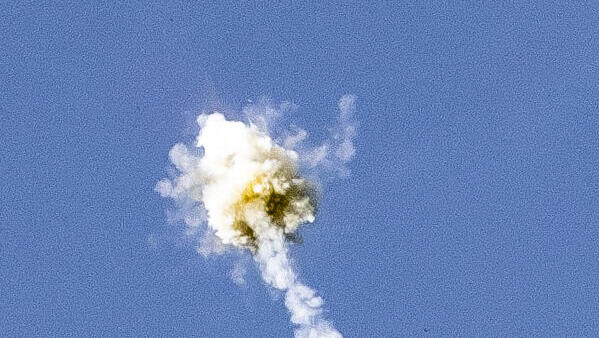
Air raid sirens and multiple launches from Lebanon targeted northern Israel, including Acre, Nahariya, Metula and Kfar Giladi; the IDF said some projectiles were intercepted while others landed in open areas, with no injuries reported. The article also highlights ongoing alerts across dozens of border communities and describes Israel’s tactical gains at Beaufort ridge, while noting the strategic situation remains unresolved. The developments point to elevated geopolitical risk and continued defense escalation along the Israel-Lebanon front.
This is a classic escalation-without-resolution setup: the tactical picture improves for the side pushing the line outward, but the strategic payoff is limited unless the threat can be suppressed over a wider depth and for a longer duration. That matters because markets usually price the first-order security gain quickly, but the second-order cost shows up later in force posture, reserve utilization, and the probability of a prolonged northern displacement regime rather than a clean normalization.
The immediate beneficiaries are defense systems and suppliers tied to interceptors, sensors, counter-UAS, electronic warfare, hardened communications, and civil-defense infrastructure. The more interesting second-order winner is not the obvious missile-defense prime, but the broader industrial base that supports layered protection: portable shelters, early-warning software, ruggedized telecom, power backup, and logistics/security contractors. If the northern front remains active for weeks, expect incremental demand to shift from one-off munitions toward recurring maintenance, replenishment, and domestic resilience capex.
The main risk is not a single event, but path dependency over the next 1-3 months: persistent alerts suppress return of residents and prolong closure-like conditions for commerce, tourism, and local manufacturing in northern Israel, while also keeping a premium on regional shipping and risk insurance. If the conflict broadens even modestly, the relevant trade is less about Israel-specific equities and more about Middle East risk premia in energy, freight, and defense. Conversely, a diplomatic de-escalation or enforcement mechanism that credibly moves launch capability farther north would unwind the urgency premium quickly.
Consensus may be underestimating how much of the benefit is already discounted in headline defense names while underpricing the spillover into domestic hardening and cyber/communications resiliency. The more durable trade is likely in infrastructure protection and command-and-control upgrades rather than in a short-lived spike in munitions sentiment. On the other hand, if the market is assuming the north stays disrupted indefinitely, that may be too bearish for Israeli consumer and logistics exposures once the deterrence envelope stabilizes.
AI-powered research, real-time alerts, and portfolio analytics for institutional investors.
Request TrialOverall Sentiment
strongly negative
Sentiment Score
-0.72
