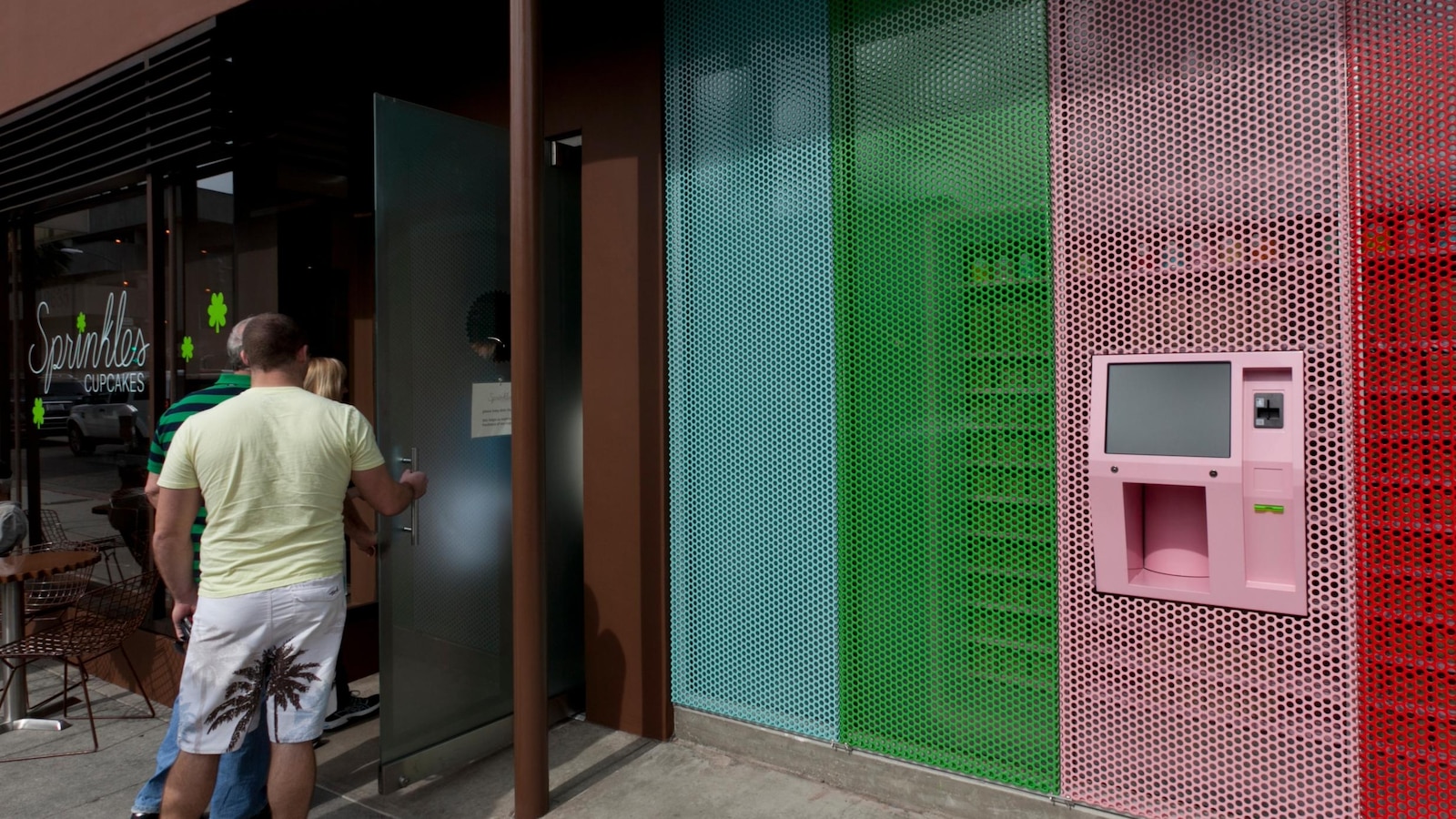
Sprinkles Cupcakes, famed for its “cupcake ATMs,” has shut down after roughly 20 years; founder Candace Nelson announced the closure on Dec. 30 and the company’s website no longer lists products or locations. Nelson sold Sprinkles to private equity firm KarpReilly LLC in 2012 after it had grown to about 10 locations; neither the firm nor Nelson provided a reason for the shutdown and KarpReilly did not comment. The story underscores reputational and operational risks tied to PE ownership of consumer-facing restaurant and retail brands and follows broader scrutiny as private equity deployed roughly $94.5 billion into restaurants between 2014 and 2024, per PitchBook.
Market structure: The Sprinkles shutdown is a microcosm of widening bifurcation between scale operators with supply-chain/pricing leverage (e.g., McDonald’s MCD, YUM Brands YUM) and small, premium impulse/foot-traffic dependent operators (mall/airport concessions, boutique chains). Expect modest market share consolidation over 6–24 months toward low-AUV, high-turnover formats; pricing power shifts in favor of branded scale operators that can raise prices +2–4% without material unit loss. Cross-asset: anticipate a 25–75bp repricing in restaurant/retail high-yield spreads if multiple PE-owned chains report distress; limited FX or commodity shock but localized sugar/flour buyer disruption is immaterial to global prices.
Risk assessment: Tail risks include a PE-driven wave of restructurings that spills into leveraged loan funds and CLOs, causing tighter financing and a 100–200bp increase in yields for CCC-BB paper over 3–9 months. Near term (days–weeks) watch retail foot-traffic data and TSA airport passenger trends; short-term (months) watch 2Q–3Q same-store-sales (SSS) and private equity covenant calls; long-term (quarters–years) structural demand shift away from novelty-to-experience spending if real wages stagnate. Hidden dependencies: mall landlord covenant health, concession agreements, and travel recovery are second-order levers that can accelerate closures.
Trade implications: Favor defensive consumer staples/scale restaurants and hedge credit exposure. Tactical ideas: rotate 1–3% into MCD/YUM over next 30–90 days; allocate 1–2% to WMT/KR as share-gain beneficiaries for packaged desserts. Hedge with 1% notional protection via HYG 3–6 month puts sized to cover potential 5–8% drawdowns in cyclical consumer credit; selectively short small/mid-cap casual-dining names (example pair: short BJRI, CAKE) where leverage ratios >3x and lease exposure to malls/airports.
Contrarian angles: Consensus frames PE ownership as pure downside — but PE can also rationalize loss-making footprints and extract free cash longer-term; indiscriminate shorting of the sector is overdone. Historical parallels (post-2008 consolidation) show 12–36 month outperformance for asset-light franchisors and grocery retailers; consider pair trades long franchisor/scale operator (MCD) vs short leveraged, real-estate-heavy operators. Unintended consequence: landlords with flexibility to re-tenant can see mid-term NAV upside — selective long on adaptive REITs (regional retail) is warranted if vacancy stabilizes below a 150bp spread vs prior peak within 12 months.
AI-powered research, real-time alerts, and portfolio analytics for institutional investors.
Request DemoOverall Sentiment
moderately negative
Sentiment Score
-0.40
