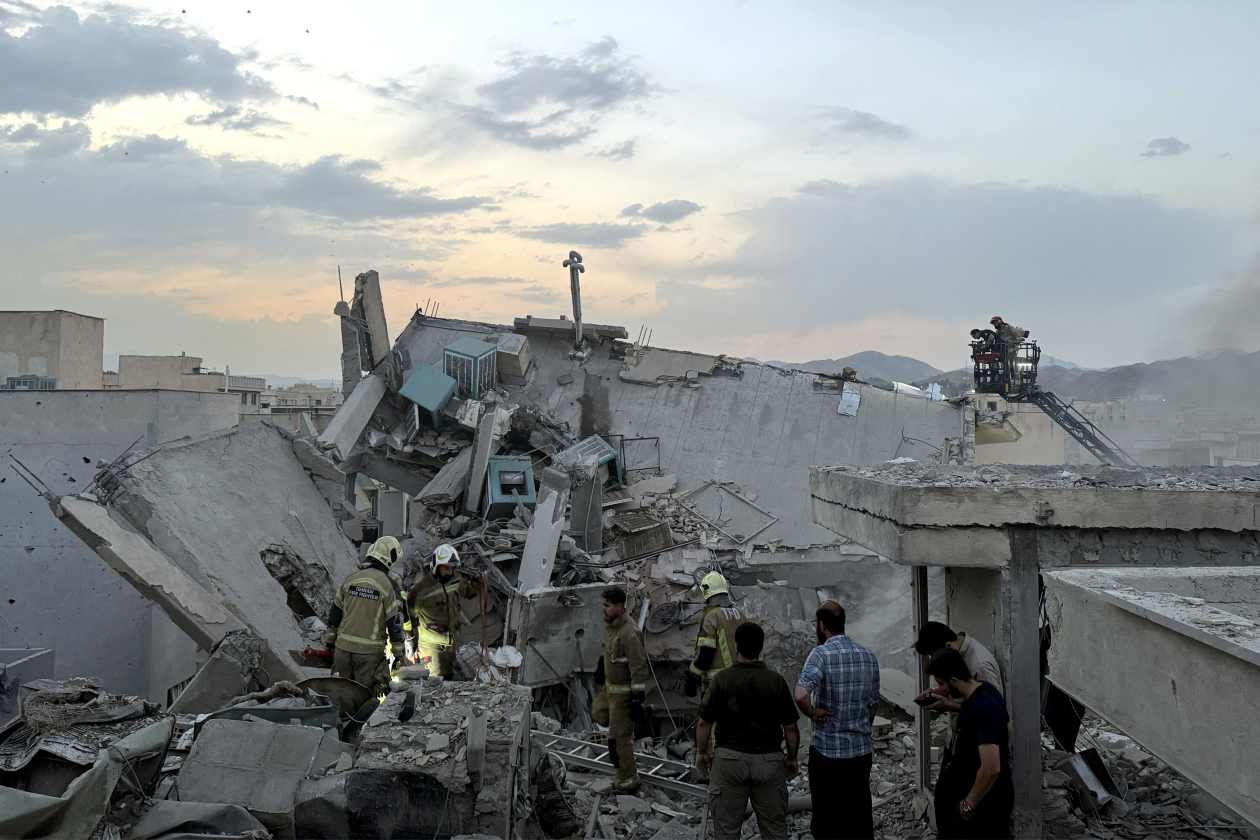
Following Israel's strike on Iran, Lazard analysts outline five potential scenarios for Iran's response and their impact on global markets. The most likely scenario, a direct Iranian attack on Israel, could increase oil prices by $10-$20 per barrel, while an attack on U.S. assets might push prices to $80-$90. A severe outcome involving attacks on Gulf oil infrastructure could see prices rise to $85-$105, and a worst-case scenario disrupting the Strait of Hormuz could send oil surging to $120 per barrel, though this is considered unlikely and potentially short-lived due to possible U.S. intervention.
Global markets face heightened uncertainty following Israeli strikes on Iranian nuclear sites and military officials, and subsequent retaliation by Iran. Lazard Geopolitical Advisory has outlined five potential scenarios for Iran's response, each with varying implications for oil prices and broader market stability. The immediate market reaction saw U.S. benchmark West Texas Intermediate crude for July delivery rise 7.4% to near $73 a barrel, after an earlier peak at $77.62, while stocks declined. Lazard's most likely scenario involves Iran directly targeting Israel, which could add $10 to $20 per barrel to oil prices and increase regional energy and goods costs. A highly likely alternative, an Iranian attack on U.S. military or diplomatic assets in the Middle East, could push oil prices to $80-$90 per barrel, posing medium to high risks to global markets. More severe, though less probable, outcomes include attacks on Gulf oil-and-gas infrastructure, potentially driving oil to $85-$105 per barrel and elevating global inflation expectations. The worst-case, albeit unlikely, scenario involves the disruption or closure of the Strait of Hormuz, which could cause oil prices to surge to $120 per barrel, leading to crisis-level oil-driven inflation and severe global supply chain disruptions; however, Lazard analysts suggest this would likely be short-term due to potential U.S. military intervention. The overall market impact, reflecting a strongly negative sentiment and high potential market disruption, will largely depend on the scale, nature, and duration of Iran's forthcoming actions.
AI-powered research, real-time alerts, and portfolio analytics for institutional investors.
Overall Sentiment
strongly negative
Sentiment Score
-0.70
Ticker Sentiment
