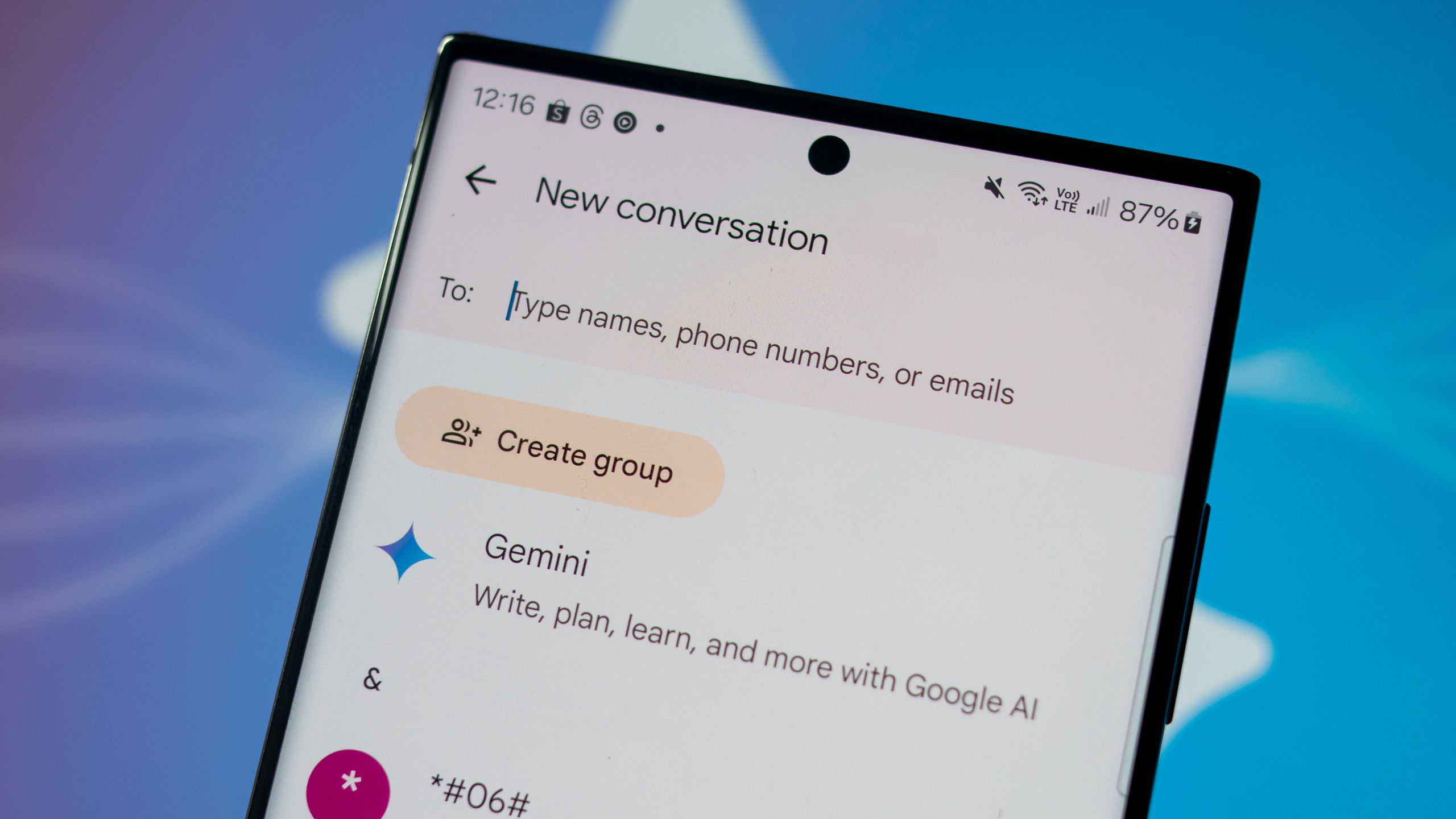
Samsung will discontinue its Samsung Messages app in July 2026 and require users to switch to Google Messages; after shutdown Samsung Messages will no longer send texts except to emergency service numbers or emergency contacts and the app will be removed from the Galaxy Store. Users will receive in‑app prompts to install and set Google Messages as the default (devices on Android 11 or lower are unaffected), and Samsung cautions some pre‑2022 devices may see temporary RCS disruptions while highlighting benefits like improved security, RCS support, AI features and better multi‑device connectivity.
This move materially consolidates the Android messaging endpoint under Google, turning a formerly OEM-differentiated UX into a platform-level channel for RCS, AI features, and business messaging. Expect a 12–36 month transfer window during which Google can (a) accelerate RCS-based Business Messaging rollouts to merchants and carriers, (b) fold Messages telemetry into product iteration cycles, and (c) cross‑up features (multidevice + assistant) that raise engagement per user by single-digit percentages.
Second-order winners are CPaaS and carrier aggregators that integrate with Google’s business messaging APIs — they face larger addressable demand but also compression if Google chooses to vertically integrate. Samsung loses a soft layer of services differentiation and incremental app-store revenue; OEMs that still ship bespoke apps may rethink whether bespoke UX is worth ongoing dev/support costs.
Key catalysts and tail risks: the rollout is a multi-quarter migration event peaking at the July 2026 hard date, with short-term RCS conversation disruptions as the biggest operational risk (devices pre-2022 and roaming scenarios). The largest asymmetric downside is regulatory/privacy pushback — EU/US scrutiny over data centralization or antitrust could force feature or revenue-sharing concessions, flipping expected revenue capture into a cost or divestiture.
Contrarian read: the market likely underestimates user opt-out to encrypted alternatives (WhatsApp/Signal) among privacy‑sensitive cohorts and the long tail of Android 11- devices — meaning Google’s monetization runway may be slower and more carrier-dependent than consensus assumes. Stagger entries and hedge regulatory tail risk rather than buying an unprotected one-way exposure.
AI-powered research, real-time alerts, and portfolio analytics for institutional investors.
Request DemoOverall Sentiment
neutral
Sentiment Score
0.05
Ticker Sentiment
